
How Far Can You Go? Why Auxiliary Fuel Tanks Change Everything
Auxiliary fuel tanks are extra storage systems that hold additional fuel separate from your primary tank — letting you travel farther without stopping to refuel.
Quick answer for boat owners and long-haul drivers:
| What You Need to Know | Key Facts |
|---|---|
| What they do | Store extra fuel; extend range by 25–100%+ |
| Capacity range | 20 to 3,000+ gallons depending on system |
| Fuel types | Gasoline or diesel (tank must match fuel type) |
| Common applications | Marine vessels, pickup trucks, aircraft, fleet vehicles |
| Key benefit | Fewer stops, longer range, fuel independence |
| Must meet | DOT Title 49 CFR 393.65 and applicable EPA standards |
You’re miles offshore. The fish are biting. Then you realize your fuel gauge is dropping faster than expected.
That sinking feeling is exactly why so many boaters, truck drivers, and remote explorers turn to auxiliary fuel systems. Whether you’re on a long fishing run, a coastal cruise, or a cross-country haul, running low on fuel in the middle of nowhere is more than inconvenient — it’s a real safety risk.
The good news? Adding extra fuel capacity doesn’t have to mean major modifications or expensive overhauls. Modern auxiliary fuel systems are designed to integrate with your existing setup, stay within safety regulations, and give you the range freedom to go farther with confidence.
Capacities can range from as little as 20 gallons all the way past 100 gallons — meaning a single auxiliary system could more than double your usable fuel supply.
I’m Ivan Jimenez, and through my work building authority content systems for industrial and technical brands — including projects with Techno Tanks — I’ve developed deep familiarity with auxiliary fuel tanks, their applications, and what buyers actually need to know before choosing one. Let’s walk through the top-rated options so you can find the right fit for your vessel or vehicle.
Understanding Auxiliary Fuel Tanks and How They Work
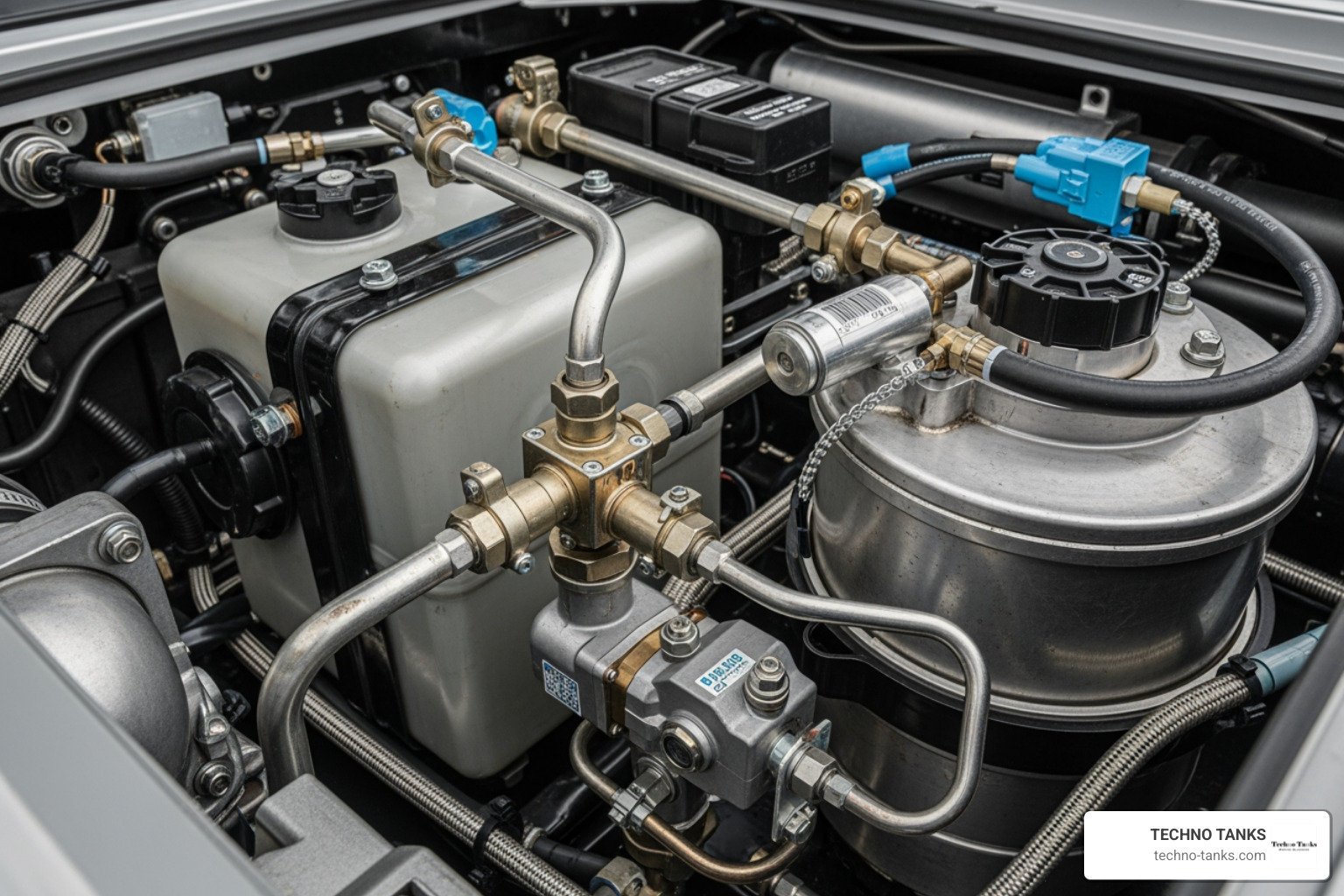
At its simplest, an auxiliary fuel system is a secondary reservoir designed to supplement your vehicle or vessel’s factory-installed tank. But it isn’t just a “spare jug” sitting in the back. These are engineered systems that integrate directly into your engine’s thirst for power.
How they work depends on the design, but the goal is always the same: move fuel from the secondary storage to the engine or the primary tank safely.
Principles of Auxiliary Fuel Transfer
There are three main ways these systems move fuel:
- Transfer Pumps: An electric pump moves fuel from the auxiliary unit into the primary tank. Some modern systems are incredibly smart; they use controllers that monitor your OEM fuel level. When the primary tank hits 1/4 full, the pump kicks on automatically.
- Gravity Feed: Primarily used in diesel truck applications, fuel flows down from an in-bed tank into the factory filler neck. This is simple but requires specific valves to prevent overfilling.
- Direct Feed: In some specialized racing or marine setups, the engine can pull fuel directly from the auxiliary tank via a selector valve.
Integration and Sensing
A major concern for many is how to know how much fuel is left. High-end systems now offer real-time monitoring through mobile apps or digital gauges, providing distance-to-empty alerts so you aren’t guessing in the middle of the ocean.
However, a big question often arises: should you choose a rigid tank or a flexible bladder? When looking at Fuel Bladder vs Fuel Tank, the choice often comes down to space and weight. Rigid tanks are permanent fixtures, while flexible bladders can be used for Temporary Fuel Storage and then folded away when the extra range isn’t needed.
Choosing the Right Auxiliary Fuel Solutions for Your Vehicle
Choosing a system isn’t just about picking the biggest box that fits. You have to consider capacity, material, and how that fuel will behave while you’re moving.
Capacity Options: 37 to 3000 Gallons
For a standard pickup truck, you might look at a 37-gallon to 100-gallon in-bed system. This can more than double your driving distance. However, for marine vessels or industrial needs, we often provide solutions ranging from 30 to 3,000 gallons. If you aren’t sure what you need, checking a Fuel Bladder Sizing Guide is the best place to start to ensure you don’t exceed your vehicle’s payload capacity.
Material Selection: The TPU Advantage
Traditional auxiliary tanks are often made of aluminum or aluminized steel. While durable, they are heavy and prone to condensation. At Techno Tanks, we utilize recyclable thermoplastic polyurethane (TPU). This material is a game-changer because it is:
- Lightweight: Reduces the impact on your vehicle’s gross weight.
- Durable: High-tensile flexible fabrics resist punctures and environmental wear.
- Collapsible: Once empty, the “tank” disappears, giving you your deck or truck bed space back.
You can find more technical details on these materials in our Fuel Bladder Specs.
Internal Baffling and Slosh Reduction
If you’ve ever carried a half-full jug of water, you know how much it sloshes. Now imagine 100 gallons of fuel doing that in your truck bed or boat deck. It can throw off your center of gravity and make handling dangerous. Quality auxiliary fuel tanks use internal baffles (or specialized fabric structures in bladders) to reduce this “slosh factor,” ensuring a smoother, safer ride.
Maximizing Range with Auxiliary Fuel Tanks
Why go through the effort of installation? The statistics tell the story.
- 25% Range Extension: In aviation, even a small 34-gallon auxiliary tank can extend a helicopter’s operational range by a quarter.
- Double the Distance: A 50-gallon auxiliary system in a diesel truck can effectively double the distance between fill-ups.
This isn’t just about convenience; it’s about economics. With Fuel Transfer Bladders, you can “fuel shop.” Instead of being forced to buy expensive fuel at a remote marina or a highway-side truck stop, you can fill up where prices are lowest and carry that savings with you for hundreds of miles.
Main Types of Auxiliary Fuel Systems for Trucks and Marine Vessels

Not all auxiliary systems are created equal. The “best” one depends entirely on what you are driving or piloting.
1. In-Bed and Deck Bladder Systems
For trucks, in-bed tanks are the standard. They sit behind the cab, often integrated with toolboxes. For boaters, Marine Fuel Bladders are the preferred choice. These sit on the deck and connect to the main fuel system, providing the extra “legs” needed for offshore fishing trips.
2. Transfer-Type vs. Direct-Feed
Understanding the plumbing is vital for a safe installation.
| Feature | Transfer-Type | Direct-Feed |
|---|---|---|
| Mechanism | Pumps fuel into the main tank. | Engine pulls directly from the aux tank. |
| Complexity | Higher (requires pumps/controllers). | Lower (requires a selector valve). |
| Safety | Very high; maintains OEM fuel pressure. | Requires careful routing to avoid air locks. |
| Best For | Long-haul trucks and daily drivers. | Racing, aviation, and some marine setups. |
3. Specialized Aviation Solutions
Aviation requires the highest standards. Aviation Fuel Bladders must be crashworthy and often self-sealing. For example, military-grade systems like those used on Black Hawk helicopters can withstand significant impacts without leaking, a technology that often trickles down into high-end civilian marine and off-road applications.
4. Space-Saving Collapsible Designs
One of the biggest innovations we’ve championed is Collapsible Fuel Tanks. Traditional metal tanks take up space 100% of the time. A collapsible TPU bladder only takes up space when it’s working. This is ideal for weekend warriors who need the range for a trip but need their truck bed or boat deck for other gear during the week.
Safety Standards and Regulatory Compliance for Auxiliary Systems
Safety is the elephant in the room. Fuel is heavy, flammable, and regulated. If your tank doesn’t meet the rules, you could face fines or, worse, a dangerous failure.
DOT and Federal Regulations
In the United States, the Department of Transportation (DOT) is the authority. Specifically, Parts and Accessories Necessary for Safe Operation; Auxiliary Fuel … outlines the requirements for highway use.
- Rollover Protection: Tanks must have valves that close if the vehicle flips to prevent spills.
- Pressure Testing: Every tank should be pressure tested (often underwater) to ensure there are no microscopic leaks.
- Material Thickness: For metal tanks, a minimum of 0.125-inch marine-grade aluminum is standard to ensure structural integrity.
Crashworthiness and Self-Sealing Tech
For those in extreme environments, the FAA’s AC 25-8 – Auxiliary Fuel System Installations provides guidance on how tanks should behave during an impact. This “crashworthy” mindset is why Military Fuel Bladders are built with such high-tensile strength. They are designed to deform and absorb energy rather than crack and spill.
Gasoline vs. Diesel
It is a common industry fact: many auxiliary tanks are for diesel only. Gasoline is more volatile and has stricter EPA requirements for vapor recovery. However, specialized Gasoline Fuel Bladders made from specific TPU formulations are available that meet these stringent standards, allowing gas-powered boats and trucks to enjoy the same range benefits as their diesel counterparts.
Installation and Performance Considerations
Installing auxiliary fuel tanks isn’t just about bolting them down; it’s about physics.
Center of Gravity and Weight Distribution
Fuel weighs roughly 6 to 7 lbs per gallon. If you add a 100-gallon tank, you are adding 700 lbs to your vehicle.
- Trucks: Place the tank as far forward in the bed as possible to keep the weight between the axles.
- Boats: Weight should be centered to maintain the hull’s plane.
- Aviation: Even a slight shift can impact the aircraft’s trim, which is why Dimensions and placement are calculated to the inch.
Integration Tips
When setting up your system, follow these Marine Bladder Operating Instruction Tips:
- Secure Mounting: Use high-strength tie-downs. A 500-lb tank becoming a projectile in a sudden stop is a nightmare scenario.
- Venting: Always ensure the vent line terminates outside the vehicle or cabin. You do not want fuel vapors accumulating in enclosed spaces.
- Clearance: Check for “pinch points” where fuel lines might rub against the chassis or deck.
For unique builds, Custom Fuel Bladders can be designed to fit the exact contours of your storage compartment, maximizing every square inch of available space without compromising the vehicle’s ergonomics.
Maintenance Practices
Maintenance isn’t hard, but it is mandatory.
- Inspect Fittings: Check for leaks or “weeping” at every connection point before a long trip.
- Vent Checks: Ensure vent lines are clear of debris or spider webs, which can cause pressure buildup.
- Clean Fuel: Use filters. Since auxiliary tanks might sit for a while between uses, ensuring you aren’t transferring sediment is key.
Frequently Asked Questions about Auxiliary Fuel Systems
What is the difference between a transfer tank and an auxiliary tank?
This is the most common point of confusion.
- Transfer Tanks: These are like giant, glorified gas cans. They are used to carry fuel to other equipment (like a tractor or a generator). They usually have a nozzle and hose.
- Auxiliary Tanks: These are plumbed directly into the vehicle’s own fuel system. They are meant for the vehicle’s consumption to extend its own range. For those moving diesel, Diesel Fuel Bladders can often serve both roles if outfitted with the right pump kit. Just be careful not to get Stuck with Bad Fuel by letting it sit for too long in a tank that isn’t being cycled.
Are auxiliary fuel tanks legal for gasoline applications?
Yes, but with caveats. You cannot just use any diesel tank for gas. Gasoline systems must be DOT-compliant for that specific fuel type, featuring specialized TPU or metal construction that can handle higher vapor pressures and prevent static buildup. Always verify the manufacturer’s certification before putting gasoline in an auxiliary system.
How do auxiliary tanks impact vehicle performance?
The primary impact is payload. If your truck has a 1,500-lb payload capacity and you add 700 lbs of fuel, you only have 800 lbs left for passengers and gear. However, for those using Offshore Fuel Solutions, the benefit of reaching distant, untouched fishing grounds far outweighs the slight change in handling. Modern baffling technology ensures that as long as you stay within your weight limits, the impact on handling is minimal.
Conclusion
At Techno Tanks, we believe that your adventures shouldn’t be limited by the size of your factory fuel tank. By utilizing patented, recyclable thermoplastic polyurethane, we’ve created a line of auxiliary fuel tanks that are lighter, more versatile, and easier to store than traditional metal boxes.
Whether you need a 30-gallon boost for a weekend cruise or a 3,000-gallon solution for an industrial project, our flexible systems provide the safety and reliability you need to push past the horizon. Don’t let the fuel gauge dictate your journey.
Ready to extend your reach? Fuel Your Next Adventure with a system built for the long haul.

