
Why Choosing the Right Portable Marine Tank Can Make or Break Your Trip
Portable marine tanks are removable fuel containers designed to extend your boat’s range without permanent installation. Here’s a quick overview of what you need to know:
| Topic | Quick Answer |
|---|---|
| Types | Rigid plastic/aluminum tanks (3–50 gal) and flexible fuel bladders (30–250 gal) |
| Best for extra range | Flexible bladders — collapse when empty, massive capacity options |
| Key regulations | Must meet EPA, CARB, ABYC, and USCG standards |
| Top materials | High-density polyethylene, aluminum, stainless steel, thermoplastic polyurethane (TPU) |
| Safety priority | Proper venting, secure tie-downs, above-deck placement |
Running low on fuel miles from shore is one of the most stressful situations a boater can face. Whether you’re chasing fish offshore or cruising along the coast, fuel range is everything.
The problem with most boats? Their built-in tanks simply weren’t designed for long-range adventures. And retrofitting a permanent tank is expensive, invasive, and not always practical.
That’s where portable marine fuel solutions come in. They give you flexibility — carry what you need, when you need it, without modifying your vessel.
This guide covers everything from small rigid tanks to large-capacity flexible bladders, so you can make the right call for your next trip.
I’m Ivan Jimenez, founder of Digital Ivan and Doral SEO, and I’ve worked closely with Techno Tanks to build content and visibility systems around marine fuel solutions, including portable marine tanks. That hands-on experience means this guide is built on real product knowledge, not just surface-level research — so you can trust what you’re reading as you plan ahead.
Understanding Portable Marine Fuel Solutions
When we talk about portable marine tanks, we are referring to any fuel storage system that isn’t bolted into the hull of your boat. Traditionally, this meant small plastic jugs or 6-gallon “day tanks.” However, as boating technology has advanced, so have our options for carrying extra “go-juice.”
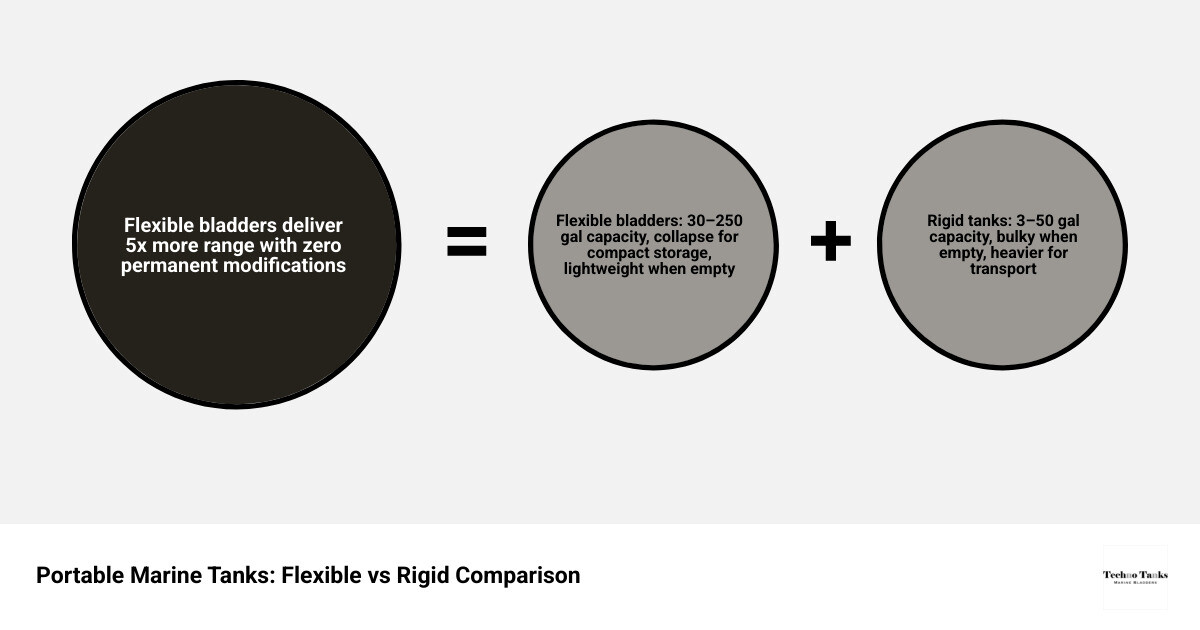
The modern mariner generally chooses between two paths: rigid portable tanks and flexible fuel bladders. While rigid tanks are great for small outboards and dinghies, they often fall short for serious offshore fishing or long-range yachting.
Flexible Bladders vs. Rigid Tanks
The primary difference lies in the footprint. A rigid tank takes up the same amount of space whether it is full of fuel or full of air. On a boat, where deck real estate is more valuable than gold, this is a major drawback.
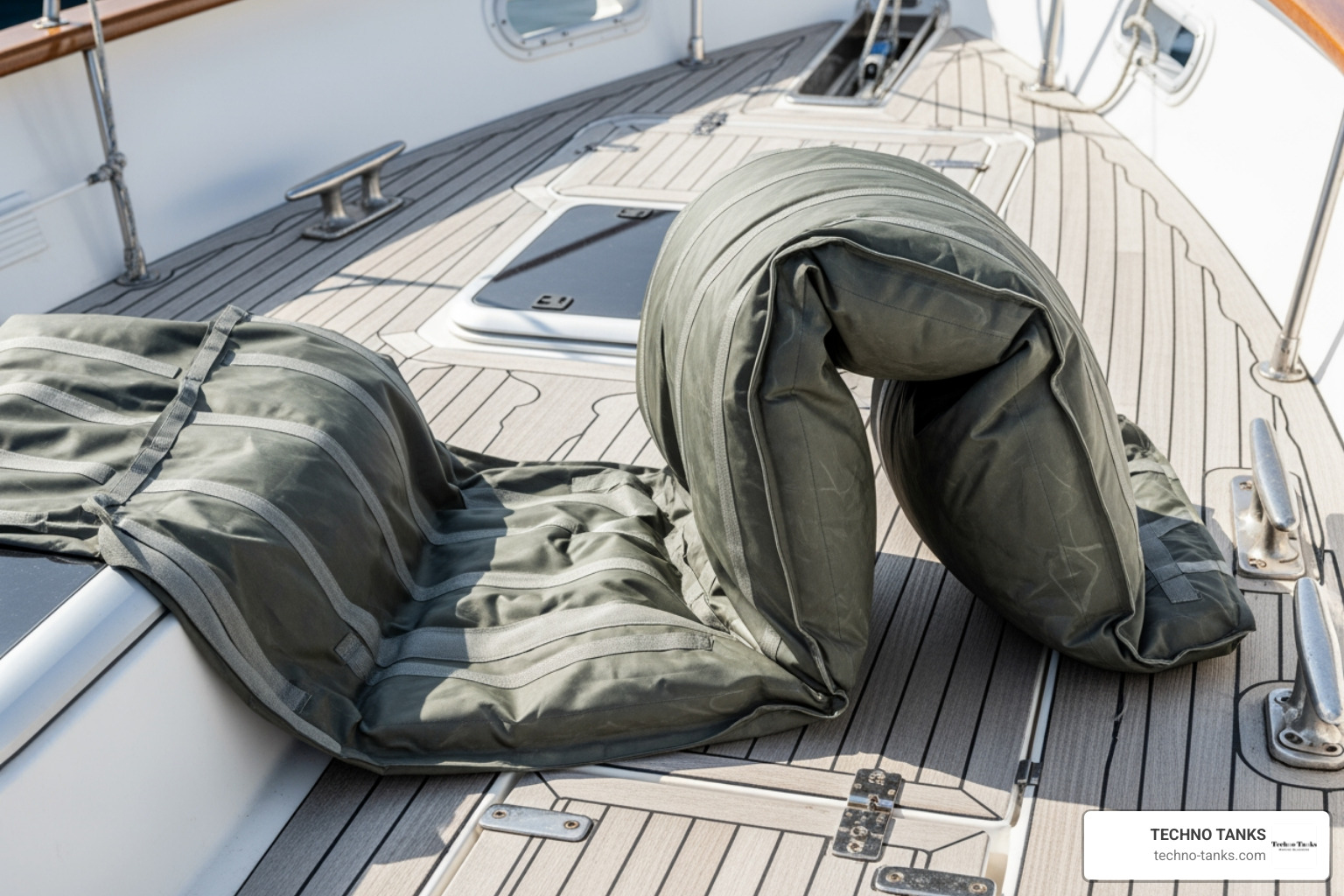
In the debate of Fuel Bladder vs Fuel Tank, flexible bladders emerge as the ultimate portable solution. They are designed to conform to the shape of your deck and, most importantly, they shrink as the fuel is consumed. Once the fuel is gone, you can roll them up and tuck them away, regaining your entire deck for fishing or lounging.
Key Advantages of High-Capacity Flexible Bladders
- Space Efficiency: They only occupy the space required by the fuel currently inside them.
- Massive Capacity: While rigid portable marine tanks usually max out around 12 to 20 gallons (with a few rare 50-gallon exceptions), bladders can easily hold 200 gallons or more.
- Weight Reduction: Being made of advanced fabrics rather than heavy plastic or metal, the dry weight of a bladder is significantly lower.
- Buoyancy: Because fuel is roughly 2/3 the density of water, a bladder will naturally float if it ends up overboard. In an emergency, an empty bladder can even be inflated with air to serve as a flotation device.
The Shift to Flexible Portable Marine Tanks
For decades, boaters were stuck with bulky, rigid containers. If you wanted an extra 50 gallons, you had to find a place to strap down five or six 10-gallon jugs. This wasn’t just a storage nightmare; it was a safety hazard.
The shift to Portable Marine Fuel Bladders has revolutionized how we plan long trips. These systems allow us to overcome the bulk issues of rigid containers. By using Collapsible Fuel Tanks, you can carry the exact amount of fuel needed for a specific crossing and then “erase” the tank from your deck once it’s empty.
Imagine heading to the Bahamas with an extra 100 gallons on deck. Once you arrive and transfer that fuel to your main tank, you roll up the bladder and store it in a small locker. You’ve just extended your range without permanently losing an inch of floor space.
Sizing and Capacity for Extended Range
Choosing the right volume is a balance between your engine’s burn rate and your destination’s distance. We offer a wide range of sizes to fit different needs:
- 30–60 Gallons: Perfect for center consoles looking to spend an extra few hours at the canyon.
- 100–250 Gallons: Ideal for sportfishers and yachts making long coastal runs or island-hopping where fuel docks are scarce.
- Custom Solutions: For unique hull shapes or massive expeditions, we can even provide bladders up to 3,000 gallons.
To find the perfect fit for your vessel, check out our Fuel Bladder Sizing Guide to ensure you aren’t carrying more weight than your boat can safely handle.
Regulatory Compliance and Material Standards
Safety on the water isn’t just about common sense; it’s about following strict legal standards. Portable marine tanks must navigate a complex web of regulations to ensure they don’t leak, explode, or pollute the environment.
EPA and CARB Requirements
Since 2011, the Environmental Protection Agency (EPA) and the California Air Resources Board (CARB) have enforced strict “low permeation” standards. In the past, plastic fuel tanks would actually “breathe,” allowing fuel vapors to escape through the plastic walls. This led to that “gasoline smell” in boat lockers and contributed to air pollution.
Modern portable marine tanks use multi-layer construction to virtually eliminate this evaporation. When you’re looking for a tank, ensure it meets EPA CFR 40 and California CCR 2468 standards. This ensures the tank is environmentally friendly and keeps your boat smelling like the ocean, not a refinery.
ABYC and USCG Standards
The American Boat and Yacht Council (ABYC) and the United States Coast Guard (USCG) set the bar for physical safety. This includes:
- Venting: Tanks must have a way to manage pressure changes caused by heat.
- Stowage: There are specific Regulations For Stowing Gasoline – Portable that generally require gasoline to be stored in well-ventilated, above-deck areas to prevent the buildup of explosive fumes.

Essential Features for Performance and Safety
Not all portable marine tanks are created equal. If you are trusting a container to hold 100 gallons of flammable liquid in the middle of a choppy sea, you need to know it’s built to last.
Advanced Venting and Pressure Management
Fuel expands when it gets hot. A tank sitting in the May sun will build up internal pressure. High-quality portable solutions often feature two-stage self-venting caps or automatic vacuum valves. These systems allow the tank to breathe without requiring you to manually open a vent—which is a lifesaver when you’re busy navigating.
Material Science: The TPU Advantage
While many smaller tanks use high-density polyethylene (HDPE), our flexible bladders utilize a patented thermoplastic polyurethane (TPU).
- Directional Molecule Technology: This provides incredible flexibility without sacrificing puncture resistance.
- UV Inhibitors: Marine environments are brutal. Our tanks feature a white matte finish that reduces heat absorption and includes stabilizers to prevent the sun from making the material brittle.
- Multi-layer Construction: This is the key to meeting Fuel Bladder Specs for low permeation and chemical resistance.
Ethanol Compatibility
Modern pump gas often contains up to 10% ethanol. Ethanol is “hygroscopic” (it attracts water) and can be chemically aggressive toward older rubbers and plastics. Any portable marine tank you buy today must be rated for ethanol and alcohol compatibility to prevent the inner lining from degrading and clogging your fuel filters.
Installation, Maintenance, and Safety Best Practices
Installing a portable tank isn’t just about tossing it on the deck and plugging in a hose. Proper setup is the difference between a successful trip and a dangerous spill.
Deck Placement and Stability
Weight distribution is critical. A 200-gallon fuel bladder weighs approximately 1,200 lbs. Placing that much weight in the wrong spot can severely affect your boat’s trim and stability.
- Centerline Placement: Whenever possible, place large portable tanks along the centerline of the boat.
- Above-Deck Only: For gasoline, always keep the tank on the deck. This allows vapors to dissipate into the air rather than settling in the bilge.
Secure Tie-Down Methods
A full fuel bladder is surprisingly stable due to its wide footprint, but in high seas, anything can move. Use the integrated D-rings on our bladders to secure them to the deck using heavy-duty ratcheting straps. Never rely on the fuel line to hold a tank in place!
Refueling and Fuel Transfer
For the easiest experience, we recommend using gravity or a siphon flow for Temporary Fuel Storage transfers.
- Avoid Electric Pumps: Unless they are specifically rated as explosion-proof, electric pumps can be a spark hazard.
- Fill in Place: Don’t try to fill a 50-gallon bladder on the dock and carry it onto the boat. Fill it exactly where it will be used.
For more detailed steps, see our Marine Bladder Operating Instruction Tips.
Frequently Asked Questions about Portable Fuel Systems
Can I mount a portable fuel bladder below deck?
The short answer is: No. Coast Guard regulations are very strict about this. Gasoline vapors are heavier than air; they sink. If a portable tank or bladder is below deck and develops even a tiny leak, those vapors will pool in the bottom of your boat, creating a literal “fuel bomb.”
Flexible bladders are optimized for above-deck use. This ensures better ventilation, easier monitoring for leaks, and safer gravity-fed fuel transfer. If you need permanent below-deck storage, you must install a certified, fixed fuel tank system.
How do I extract every drop of fuel from a flexible tank?
One of the best features of a flexible tank is that it doesn’t have “dead spots” like a rigid tank. To get the last bit of fuel out, use the “rolling” technique. As the bladder reaches its final few gallons, start rolling the fabric from the end opposite the outlet toward the fitting. This pushes every remaining drop into the fuel line.
If you have specific hull requirements, we can even design Custom Fuel Bladders with outlet positions optimized for your boat’s natural resting angle.
Are flexible tanks compatible with modern fuels?
Yes. Our TPU material is specifically engineered to handle the chemical makeup of modern fuels, including diesel and ethanol-blended gasoline. Unlike older rubber bladders that could “delaminate” or flake off into the fuel, modern TPU remains stable for years. For more information on investment costs, you can view our Fuel Bladder Pricing.
Conclusion
Whether you are a weekend warrior or a professional captain, portable marine tanks offer the freedom to explore further. While rigid tanks have their place for small-scale needs, the flexibility, capacity, and space-saving nature of flexible fuel bladders make them the superior choice for serious range extension.
At Techno Tanks, we are proud to be your partner in marine adventure. Our patented TPU technology provides a rugged, reliable, and—most importantly—recyclable solution for the modern boater. By choosing a high-quality portable system, you aren’t just buying a tank; you’re buying peace of mind for those long miles between the dock and the deep blue.
Ready to extend your horizon? Explore our full range of Marine Fuel Bladders and start planning your longest trip yet.

