
Why an 80 Gallon Fuel Tank Can Transform Your Time on the Water
An 80 gallon fuel tank gives boat owners something priceless: the freedom to go farther without worrying about running dry.
Quick Answer: What to Know About 80 Gallon Fuel Tanks
| Feature | Key Details |
|---|---|
| Capacity | 80 gallons (~302 liters) |
| Common types | Marine auxiliary bladders, permanent installed tanks |
| Materials | TPU, polyethylene, aluminum, steel |
| Fuel compatibility | Gasoline, diesel, or both (depends on model) |
| Typical dimensions | ~67″ x 27″ x 14.6″ (varies by design) |
| Price range | Varies by construction, fittings, and intended use |
| Compliance | ABYC, NMMA, USCG |
| Best for boaters | Flexible auxiliary bladders for range extension without hull modifications |
If you’re a boat owner who loves long fishing runs or extended cruises, you’ve probably felt that sinking feeling when the fuel gauge drops faster than expected. Fixed onboard tanks can only take you so far. And when you’re miles offshore, “so far” isn’t far enough.
That’s where an extended-range fuel solution comes in.
The right 80-gallon auxiliary tank – or better yet, a flexible fuel bladder – can extend your range without cutting into your deck space or requiring major vessel surgery. Whether you’re running a center console, a sportfisher, or a cruiser, carrying an extra 80 gallons means more time fishing and less time watching the horizon for a marina.
I’m Ivan Jimenez, founder of Digital Ivan and Doral SEO, and I’ve spent years building authority content in technical and industrial sectors – including marine fuel storage solutions like the 80 gallon fuel tank category. In this guide, I’ll walk you through the best options available so you can make a confident, informed choice.
Exploring 80 Gallon Marine Fuel Solutions

When we talk about an 80 gallon fuel tank, we aren’t just talking about a one-size-fits-all box. The marine world demands versatility. In May 2026, boaters have more choices than ever, ranging from permanent “belly” tanks tucked under the floorboards to innovative flexible bladders that sit right on the deck.
The 80-gallon capacity is widely considered the “sweet spot” for medium-sized offshore vessels. It provides enough fuel to significantly extend a trip—often adding 150 to 300 miles of range depending on your engine’s burn rate—without becoming so heavy that it negatively impacts the boat’s draft or handling.
The Advantages of Flexible Bladders Over Rigid Tanks
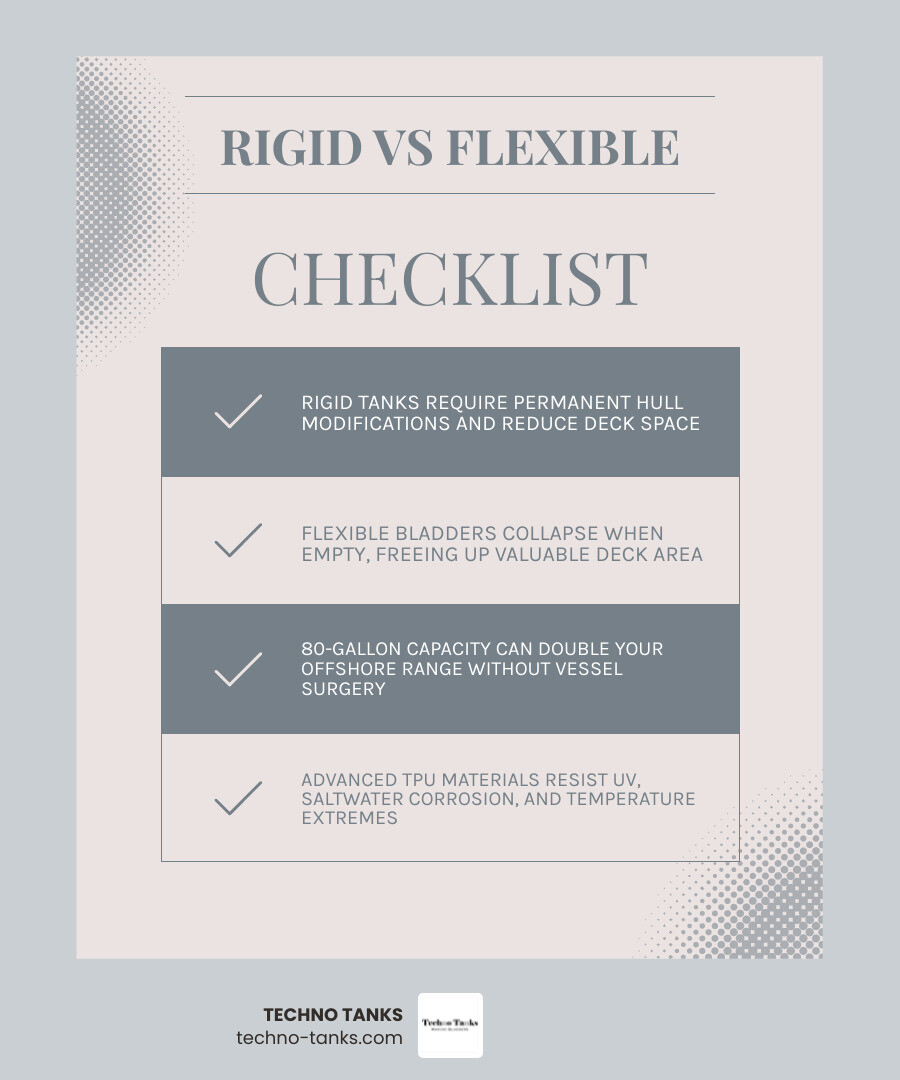
For many years, if you wanted an 80 gallon fuel tank, you had to commit to a permanent installation. Rigid tanks, often made of cross-linked polyethylene or aluminum, are buried deep in the hull. While they serve a purpose, they come with significant limitations.
First, there is the “dead space” issue. A rigid tank takes up the same amount of room whether it is full of fuel or completely empty. Second, installing a new rigid tank often involves “boat surgery”—cutting into the deck or hull, which is both expensive and permanent.
Flexible bladders change the game. We’ve found that the primary advantage is their ability to adapt. As you burn fuel, the bladder collapses. This eliminates the “free surface effect” (sloshing), which can destabilize a boat in rough seas. Furthermore, once the fuel is gone, you can roll up the bladder and stow it in a locker, reclaiming your deck space for fishing or lounging.
Flexible Auxiliary Bladders for Extended Range
A flexible 80 gallon fuel tank is designed for the modern explorer. These aren’t just “bags”; they are highly engineered fuel systems. They are designed to be deck-mounted, which means they can be integrated into your existing fuel system via a simple T-fitting or a dedicated siphon line.
One of the biggest draws for our customers is the ease of deployment. You don’t need a team of mechanics to install one. You simply lay it out on a flat area of the deck, secure it with tie-downs, and fill it up. If you are looking for a reliable, space-saving solution, you can explore our 80 Gallon Marine Fuel Bladder to see how it fits your vessel’s layout.
Material Matters: The Superiority of Advanced TPU
Choosing the right material for your 80 gallon fuel tank is the difference between a successful voyage and a dangerous leak. Traditionally, marine fuel storage has relied on aluminum, steel, and polyethylene. However, in the realm of flexible tanks, Thermoplastic Polyurethane (TPU) has emerged as a leading choice.
| Material | Durability | Weight | Corrosion Resistance | Flexibility |
|---|---|---|---|---|
| Advanced TPU | High | Ultra-Light | Excellent | Excellent |
| Polyethylene | Medium | Medium | Good | None |
| Aluminum | High | Heavy | Poor (Saltwater) | None |
| Steel | Very High | Very Heavy | Poor | None |
Durability and Weight of an 80 Gallon Fuel Bladder
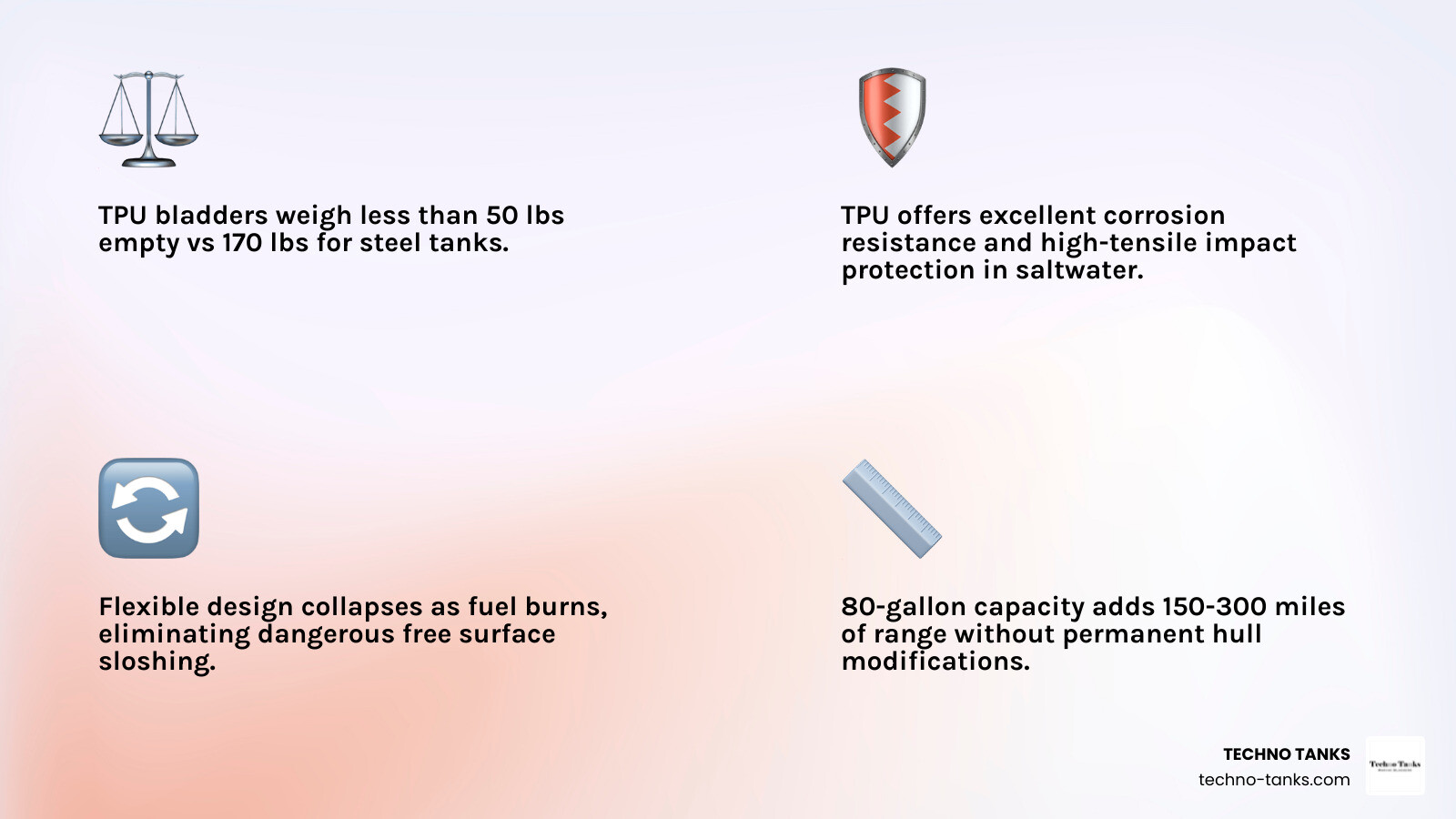
Weight management is critical on the water. A rigid 80-gallon tank can add significant empty weight before fuel is even loaded. Once filled, the total load rises dramatically, making placement and securement especially important.
By contrast, an 80-gallon TPU bladder is incredibly lightweight – often weighing far less than a comparably sized rigid tank when empty. This allows for better fuel economy and less strain on your vessel’s structure. Despite being light, the high-tensile reinforced fabrics used in our tanks offer impressive impact resistance. These materials are designed to withstand the pounding of offshore conditions without cracking or tearing.
Fuel Compatibility and System Integration
A common question we hear is: “What can I put in this tank?” Not all tanks are created equal, and compatibility always depends on the manufacturer’s rating and the specific fittings used.
Our advanced TPU bladders are engineered for multi-fuel compatibility. Whether you are running a diesel inboard or gasoline outboards, the material remains stable and vapor-tight. Integration is straightforward; most systems utilize a 3/8-inch or 1/2-inch withdrawal fitting. It is vital to use high-quality fuel return kits and ensure all fittings are ABYC-compliant to maintain a seamless connection to your engine’s fuel lines.
Compliance and Safety Standards for 80 Gallon Marine Bladders
Safety isn’t just a suggestion in the marine industry; it’s a requirement. When you carry 80 gallons of flammable liquid on a moving vessel, you must adhere to strict standards.
The American Boat and Yacht Council (ABYC) provides the gold standard for auxiliary fuel systems, specifically standards H-24 and H-33. These guidelines cover everything from venting to the strength of the materials. Additionally, for those who might use these tanks for land transport or refueling, the 49 CFR 393.67 Liquid fuel tanks regulation outlines the requirements for legal transport and pressure testing.
Safety Features to Look For
When shopping for an 80 gallon fuel tank, look for these non-negotiable safety features:
- Anti-slosh technology: In flexible bladders, the “no-air” environment naturally prevents sloshing, but internal baffles are common in rigid steel or aluminum tanks.
- Vapor Barrier Technology: This prevents fuel odors from permeating the material, which is especially important if the tank is stored near living quarters.
- Secure Tie-Down Points: Look for integrated D-rings or heavy-duty mounting tabs. An 80-gallon tank weighs over 600 lbs when full; you do not want it sliding around in a storm.
- Vented Caps: Proper venting prevents the tank from expanding or collapsing due to temperature changes or fuel withdrawal.
Installation and Maintenance for Long-Term Marine Use
Installing an 80 gallon fuel tank—specifically a flexible one—is a project most boaters can handle themselves. The key is placement. You want to position the tank as close to the vessel’s centerline and as low as possible to maintain stability.
Mounting and Securement
We recommend using a dedicated mounting kit that includes UV-resistant straps. Avoid placing the bladder directly on abrasive surfaces; a rubber mat or a smooth deck area is best. For static safety, always ensure your fuel system is properly grounded. Static electricity is a major risk during the refueling process, especially with gasoline.
Inspection and Longevity
Even the best materials require an occasional check-up. We suggest inspecting your fittings and seams at the start of every season. Check for any signs of “crazing” or wear near the tie-down points. One of the benefits of TPU is its recyclability and environmental friendliness, but its long-term durability is what makes it a smart investment. Most high-quality bladders will last for many years if they are rinsed with fresh water after use and stored out of direct sunlight when empty.
Frequently Asked Questions about an 80 Gallon Fuel Tank
Can I use an 80 gallon fuel bladder for both gasoline and diesel?
Yes, provided the tank is rated for both. Some tank designs are manufactured for a specific fuel type, while others are engineered for multi-fuel use. Our TPU bladders are designed to be compatible with both gasoline and diesel. The most important factor is avoiding cross-contamination. If you switch fuel types, the tank must be thoroughly drained and cleaned.
What are the typical dimensions of an 80 gallon marine fuel bladder?
A typical marine tank in this capacity may measure approximately 67″ L x 27″ W x 14.6″ H, though dimensions vary by manufacturer and design. Flexible bladders often share a similar footprint when full but have a much lower profile as they empty. Because they are flexible, they can often fit into slightly irregular spaces where a rigid box would not.
How do I ensure my 80 gallon bladder is legally compliant for marine use?
Look for labels indicating ABYC, NMMA, or USCG compliance. For auxiliary tanks, the U.S. Coast Guard requires specific venting and securement protocols. If your system is being integrated with your vessel’s primary fuel setup, make sure the installation method and components are rated for the intended marine use.
Conclusion
Investing in an 80 gallon fuel tank is about more than just numbers; it’s about the peace of mind that comes with knowing you have a “reserve” for the unexpected. Whether you’re chasing tuna 60 miles offshore or cruising through the islands, having that extra capacity changes how you boat.
At Techno Tanks, we believe in providing solutions that are as tough as the people who use them. Our flexible marine fuel bladders offer the ultimate in range extension, combining the strength of advanced TPU with the convenience of a collapsible design. You don’t need to cut into your hull to reach your dreams.
Ready to extend your horizon? Discover how we can help you by Fueling your dreams with an 80 gallon marine bladder today. Safe travels and tight lines!

