
What Are Heavy Duty Marine Bladders — and Do You Need One?
Heavy duty marine bladders are flexible, collapsible fuel storage tanks designed to carry gasoline or diesel aboard vessels without the cost, weight, or permanence of a rigid installed tank.
Here’s a quick overview for operators evaluating their options:
| Feature | Heavy Duty Marine Bladder |
|---|---|
| Primary use | Auxiliary or backup fuel storage aboard vessels |
| Common capacity range | 30 gallons up to 300+ gallons (custom sizes available) |
| Key material | Military-grade thermoplastic polyurethane (TPU) |
| Placement | Above deck (USCG regulations prohibit in-hull placement) |
| Fuel compatibility | Gasoline, diesel, bio-diesel, ethanol, methanol, and more |
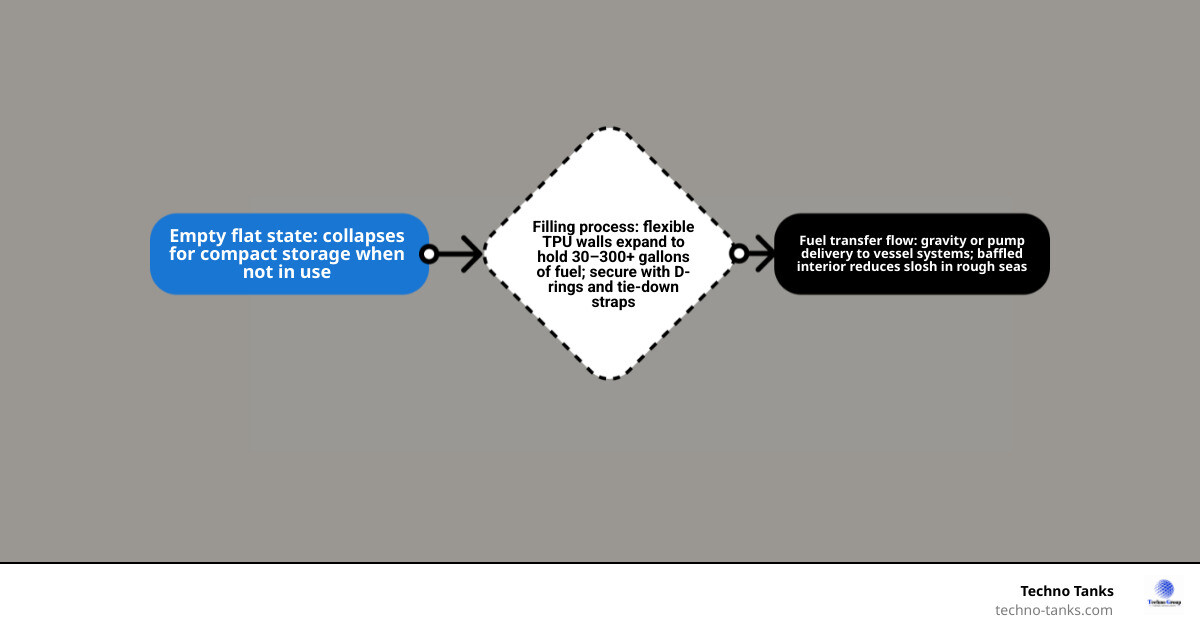
| When empty | Collapses flat for compact storage |
| Baffled option | Available — reduces fuel slosh in rough conditions |
| Typical warranty | 5 years |
Whether you’re extending range on a long offshore run, carrying backup capacity on a commercial workboat, or planning an expedition that takes you beyond reliable fuel sources — a well-built marine bladder is often the most practical solution on the market.
Rigid tanks are permanent. They require installation, take up fixed space, and can’t be removed when capacity isn’t needed. A heavy duty marine bladder gives operators flexibility — deploy it when you need it, fold it flat when you don’t.
Techno Tanks offers marine fuel bladders in multiple standard capacities, with custom configurations available for applications that do not fit a standard size. The correct bladder depends on fuel type, required capacity, available deck or storage space, transfer method, and the vessel-specific installation.
This guide covers everything a serious buyer needs to know: materials, design types, sizing, safety, installation, fuel compatibility, and how to request accurate pricing for your specific application.
For offshore range extension and auxiliary marine fuel storage, start with Techno Tanks offshore fuel bladder solutions. That page is the commercial reference point for selecting a system; this guide explains the sizing, handling, and configuration questions to work through before choosing one.
Understanding Heavy Duty Marine Bladders vs. Rigid Tanks
For commercial operators and long-range cruisers, evaluating fuel storage means weighing the pros and cons of permanent rigid tanks against flexible, collapsible systems. Rigid tanks constructed from aluminum, stainless steel, or rotomolded plastic are excellent for baseline fuel needs, but they lack adaptability.
When a vessel requires temporary range extension, installing a secondary rigid tank is rarely practical. It demands permanent deck space, introduces structural modifications, and adds constant dead weight to the vessel even when empty.
In contrast, heavy duty marine bladders offer a dynamic alternative. Built using a collapsible design, these tanks expand as they are filled and shrink as fuel is consumed. This means that once the auxiliary fuel is transferred to the main tank, the bladder can be rolled or folded up, reclaiming 90% of the deck space it occupied when full.
Additionally, because fuel is roughly two-thirds the density of water, a filled bladder provides natural buoyancy. If a vessel takes on water or if an emergency occurs, an empty bladder can even be lightly inflated with air to serve as an auxiliary flotation device.
| Performance Metric | Traditional Rigid Fuel Tanks | Heavy Duty Marine Bladders |
|---|---|---|
| Space Efficiency | Permanent footprint; takes up space when empty | Collapsible; folds flat to reclaim 90% deck space |
| Weight Distribution | Fixed location; adds permanent dead weight | Temporary; weight is eliminated once fuel is consumed |
| Installation Complexity | High; requires structural mounting and plumbing | Low; deck-secured via tie-downs and gravity/siphon fed |
| Corrosion Risk | High (especially aluminum in saltwater) | Zero; advanced polymers do not corrode or rust |
| Customization Cost | High; custom metal fabrication is expensive | Moderate; flexible manufacturing allows tailored dimensions |
Using collapsible fuel tanks allows operators to match their fuel capacity directly to the specific requirements of each voyage, optimizing vessel weight distribution and fuel economy.
Technical Specifications and Material Construction
The harsh realities of saltwater environments, high UV exposure, and constant physical abrasion demand uncompromising material quality. A heavy-duty marine bladder must withstand not only internal chemical degradation from aggressive fuels but also external physical punishment from rough seas.
Techno Tanks utilizes a patented thermoplastic polyurethane (TPU) engineered with military specifications and directional molecule technology. This creates a multi-layered, fuel-resistant fabric that remains highly flexible while offering exceptional puncture and tear resistance.
Unlike cheaper PVC-coated fabrics, which can degrade rapidly under direct sunlight and have a shorter lifespan of 5 to 8 years, high-grade TPU-coated polyester is UV-stabilized and hydrolysis-resistant, delivering an operational lifespan of 8 to 12 years in marine conditions.

To guarantee leak-free operation, these bladders feature radio-frequency (RF) welded or high-temperature taped seams. These construction methods fuse the polymer layers at the molecular level, creating a bond that is stronger than the parent fabric itself.
Furthermore, the fittings are a critical point of engineering. Standard heavy-duty bladders are equipped with patented dual-action aluminum flanges fitted with Viton seals, which are highly resistant to chemical degradation from gasoline, diesel, and bio-fuels. These flanges ensure a hermetic seal under both positive pressure during filling and vacuum pressure during fuel extraction.
For complete technical specifications on fabric thickness, tensile strength, and hardware options, operators can review the detailed fuel bladder specs sheet.
Key Design Variations in Heavy Duty Marine Bladders
When selecting a heavy-duty marine bladder, operators generally choose between two primary design configurations based on their vessel’s layout and available deck space:
- Pillow Style Bladders: These feature a classic, low-profile design with a wider footprint. Because they distribute the fuel weight over a larger surface area, they offer excellent stability on uneven deck surfaces and are highly resistant to shifting in heavy seas. They are ideal for wide-open bow decks, cockpit floors, or large swim platforms.
- Space Saver Bladders: Designed specifically for vessels with restricted deck space, Space Saver models utilize a square or rectangular footprint that stands slightly taller when full. This design maximizes storage volume per square foot of deck space, making them ideal for narrow walkways, side decks, or compact utility areas on sportfishers and workboats.
Selecting the right configuration is critical to maintaining safe passage and clear crew workspaces. For a comprehensive comparison of how these geometries behave under different loads, refer to the resources on marine fuel bladders and heavy duty marine fuel bladders.
Sizing and Capacity Options for Heavy Duty Marine Bladders
Vessel compatibility depends heavily on matching the bladder’s filled dimensions with the physical layout of the deck. Techno Tanks offers a wide range of standard capacities to suit various vessel types, from center consoles to commercial transport ships:
- 30 Gallons (114 Liters): Ideal for small center consoles or emergency reserves. Filled dimensions are approximately 33.5″ x 22″ x 12.5″, with an empty weight of just 17.5 lbs.
- 100 Gallons (378 Liters): A popular choice for mid-sized sportfishing boats and cruising catamarans.
- 200 Gallons (757 Liters): Designed for larger yachts and commercial workboats. Filled dimensions scale to 66″ x 61″ x 15″, with an empty weight of 39.5 lbs.
- 250 to 300 Gallons (946 to 1,135 Liters): High-capacity units for long-range offshore transits. A 300-gallon bladder typically measures 68″ x 63″ x 19.5″ when full.
- Custom Sizes (Up to 3,000+ Gallons): For specialized commercial operations, military logistics, or bulk fluid transport, custom-engineered bladders can be designed to fit specific hull compartments or deck configurations.
When planning an installation, always measure the flat deck area and ensure that the surrounding cleats or securing points can support the loaded weight of the bladder (diesel weighs approximately 7.1 lbs per gallon, while gasoline weighs roughly 6.1 lbs per gallon). For a deeper dive into scaling capacity and calculating deck loads, consult the complete guide to marine bladder tanks and storage.
Operational Safety, Stability, and Regulatory Standards
Operating with large volumes of fuel on deck introduces serious safety responsibilities. The primary dynamic challenge of carrying liquid cargo above deck is the free surface effect — the movement of fuel inside the tank that can shift the vessel’s center of gravity.
To mitigate this risk, heavy-duty bladders should be manufactured under strict quality guidelines, such as ISO 9001:2015 standards, to ensure seam integrity and pressure tolerance. Furthermore, the United States Coast Guard (USCG) maintains clear regulations regarding portable fuel storage:
- Above-Deck Placement Only: USCG regulations strictly prohibit the installation of auxiliary fuel bladders inside the hull or below deck on recreational and passenger vessels. This is because below-deck compartments lack the natural ventilation required to prevent the accumulation of explosive fuel vapors.
- Secure Lashing: All bladders must be physically secured to the deck using high-strength tie-down straps rated for the maximum wet weight of the bladder.
- Vapor Containment: Systems must feature appropriate venting to prevent pressure buildup caused by thermal expansion, particularly when operating in tropical climates.
Understanding these safety protocols is vital for emergency preparedness and regulatory compliance. Detailed safety checklists can be found in the guide on emergency fuel systems.
Baffled vs. Un-Baffled Configurations
To combat the destabilizing forces of liquid shifting in rough seas, buyers must decide between baffled and un-baffled bladder designs.
- Un-Baffled Bladders: These consist of a single open chamber. They are highly cost-effective, lighter when empty, and fold down into the most compact footprint. They are best suited for calm inland waters, short coastal runs, or vessels where the bladder is emptied quickly into the main tank before entering rough sea states.
- Baffled Bladders: These feature internal fabric chambers or perforated walls that restrict the rapid movement of fuel from side to side. By dampening the kinetic energy of the sloshing liquid, baffled bladders significantly improve vessel stability, steering response, and crew safety in heavy swells.
While baffled designs carry a higher initial investment, they are highly recommended for offshore operations where rough weather is a constant variable. To learn more about how internal baffling affects boat handling, read through the analysis of bladder myths and drawbacks.
Installation, Securing, and Maintenance Best Practices
Proper deployment and maintenance are critical to maximizing the lifespan of your flexible tank and ensuring safe fuel transfers.
- Deck Preparation: Before placing the bladder, inspect the deck area thoroughly. Sweep away any debris, sand, fish hooks, or metal shavings. If the deck has non-skid textures or sharp fittings nearby, lay down a heavy-duty ground tarp or rubber mat to act as a protective barrier.
- Securing the Bladder: Never fill a bladder without securing it first. Use heavy-duty ratchet straps or marine-grade lashing lines rated for the tank’s full weight. Thread the straps through the integrated D-rings on the perimeter of the bladder and secure them to structural deck cleats or pad-eyes. Ensure the straps are snug but not overly tight, allowing the bladder to settle naturally as it fills.
Fuel Transfer: For optimal safety, use gravity or siphon flow to transfer fuel to your main tank. If using an electric pump, ensure it features an explosion-proof motor rated specifically for the fuel type being handled. To extract the maximum volume of fuel, gently roll the empty edges of the bladder toward the discharge flange as the fuel level drops.
Post-Use Maintenance and Storage: Once empty, disconnect the hoses and secure the dust caps on the flanges. If switching fuel types or preparing the bladder for long-term storage, rinse the interior with a mild neutralizing agent if recommended, allow it to dry completely to prevent mold or fuel degradation, and fold or roll the unit flat. Store the dry bladder in a cool, dark, and well-ventilated locker away from direct sunlight and pests.
For step-by-step operating instructions, refer to the marine bladder operating instruction tips.
Fuel Compatibility and Handling Guidelines
Heavy-duty TPU marine bladders are chemically engineered to handle a broad range of petroleum products and bulk liquids. However, handling gasoline requires different safety protocols than handling diesel:
- Diesel Fuel: Highly stable with low volatility. Diesel can be stored in standard TPU bladders for extended periods without significant vapor venting requirements.
- Gasoline: Highly volatile with a low flashpoint. When storing gasoline, ensure the bladder is equipped with an EPA-compliant vapor vent valve to safely relieve thermal pressure. Always avoid static-generating materials during transfer, and ensure the vessel’s electrical systems are grounded.
- Alternative Fuels & Liquids: High-quality TPU is also compatible with bio-diesel, ethanol, methanol, lubricants, and even non-potable water. Never use a standard water bladder for fuel storage, as the inner lining will quickly dissolve, leading to catastrophic fuel contamination and structural failure.
For more information on chemical resistance and maintaining the integrity of your fuel system, consult how to extend fuel bladder lifespan with 5 easy changes.
Frequently Asked Questions about Marine Bladders
Can heavy-duty marine bladders be used below deck?
No. According to USCG safety standards and industry best practices, auxiliary marine fuel bladders must always be deployed above deck. Below-deck compartments (such as engine rooms or bilges) lack the continuous, natural ventilation needed to safely disperse fuel vapors. Placing a bladder below deck creates a severe risk of vapor accumulation, which can be ignited by engine heat or electrical sparks. Keeping the bladder on deck also allows for easy visual inspection, gravity-assisted fuel transfer, and rapid cleanup in the event of an accidental spill during filling.
How do you secure a full bladder in rough seas?
Securing a full bladder requires utilizing the heavy-duty D-rings integrated into the bladder’s reinforced perimeter seams. High-strength, marine-grade ratchet straps or tie-down lines should be routed through these D-rings and anchored directly to the vessel’s structural deck cleats or heavy-duty pad-eyes. It is critical to secure the bladder before filling, as a full bladder weighing anywhere from 200 to over 2,000 lbs is nearly impossible to reposition. The straps should be checked periodically during transit, as the bladder’s volume will decrease during fuel transfer, requiring the straps to be tensioned to prevent the shifting of cargo.
What is the typical lifespan of a TPU marine bladder?
When manufactured from high-grade thermoplastic polyurethane (TPU) and properly maintained, a heavy-duty marine bladder has an expected operational lifespan of 8 to 12 years. This longevity is significantly superior to cheaper PVC alternatives, which tend to dry out, crack, and delaminate within 5 to 8 years under constant UV exposure. To maximize the lifespan of a TPU bladder, always use a protective ground tarp to prevent deck abrasion, rinse and dry the unit thoroughly before folding, and store it in a cool, dry, and vented locker when not in use.
Conclusion
For commercial operators, yacht captains, and offshore cruisers, heavy duty marine bladders represent the ultimate balance of utility and flexibility. By providing temporary auxiliary capacity without the permanent weight, space, and cost penalties of rigid tanks, these collapsible systems allow you to confidently extend your vessel’s range and operational capabilities.
Techno Tanks is committed to engineering high-performance, military-spec TPU fuel bladders tailored to the demanding realities of marine deployment. Because every vessel, fuel type, and mission profile is unique, Techno Tanks fuel bladder pricing depends on size, fuel type, configuration, application, custom requirements, and project scope.
To find the perfect fit for your vessel and receive accurate pricing tailored to your specific fuel storage, transfer, sizing, and use-case requirements, contact our technical team today to request a custom quote.
For more information on bulk liquid transport and fuel transfer logistics, explore our specialized guides on why you should use Techno Tanks for bulk liquids and our advanced fuel transfer bladders systems.

