
When One Tank Is Never Enough: The Real Cost of Running Dry on the Water
Quick Answer: Best Custom Marine Fuel Tanks Compared
| Tank Type | Best For | Key Advantage | Main Drawback |
|---|---|---|---|
| Flexible TPU Bladder | Odd spaces, range extension, vintage boats | Conforms to any shape, no deck cutting | Less common, fewer local suppliers |
| Aluminum Rigid | Standard replacements, high-volume builds | Durable, widely available, familiar | Corrosion risk, heavy, hard to ship |
| Plastic (XLPE/Nylon Barrier) | Complex OEM shapes, production boats | Lightweight, ethanol-compatible | Permeation concerns, limited repair options |
Custom marine fuel tanks are the difference between a fishing trip that ends at the dock and one that takes you to where the fish actually are. Whether you’re running a 40-year-old center console with a corroded original tank, or you’re trying to squeeze extra range out of a cruiser with an oddly shaped bilge bay, stock replacement tanks almost never fit the way you need them to.
The problem is real and frustratingly common. Boat owners on forums describe cutting through their own deck just to pull a failed tank — only to discover the replacement options from the manufacturer no longer exist. Others report paying nearly as much in freight as they did for the tank itself, because rigid aluminum or plastic tanks are bulky, heavy, and awkward to ship.
The good news: the custom tank market has matured significantly. As of May 2026, manufacturers build to meet a wide range of regulatory standards — including ABYC, USCG, EPA, NMMA, CARB, and CE — and options range from 4 gallons to over 1,000 gallons, in materials and shapes that simply weren’t available to most boat owners a decade ago.
This guide compares your best options so you can make a confident, informed decision before you spend a dollar.
I’m Ivan Jimenez, founder of DIGITAL IVAN and DORAL SEO, and I’ve spent years researching industrial and marine product categories — including custom marine fuel tanks — to help brands like Techno Tanks build content that actually answers the questions buyers are asking. In the sections below, I’ll break down everything you need to know to choose the right tank, avoid common pitfalls, and get your boat back on the water reliably.
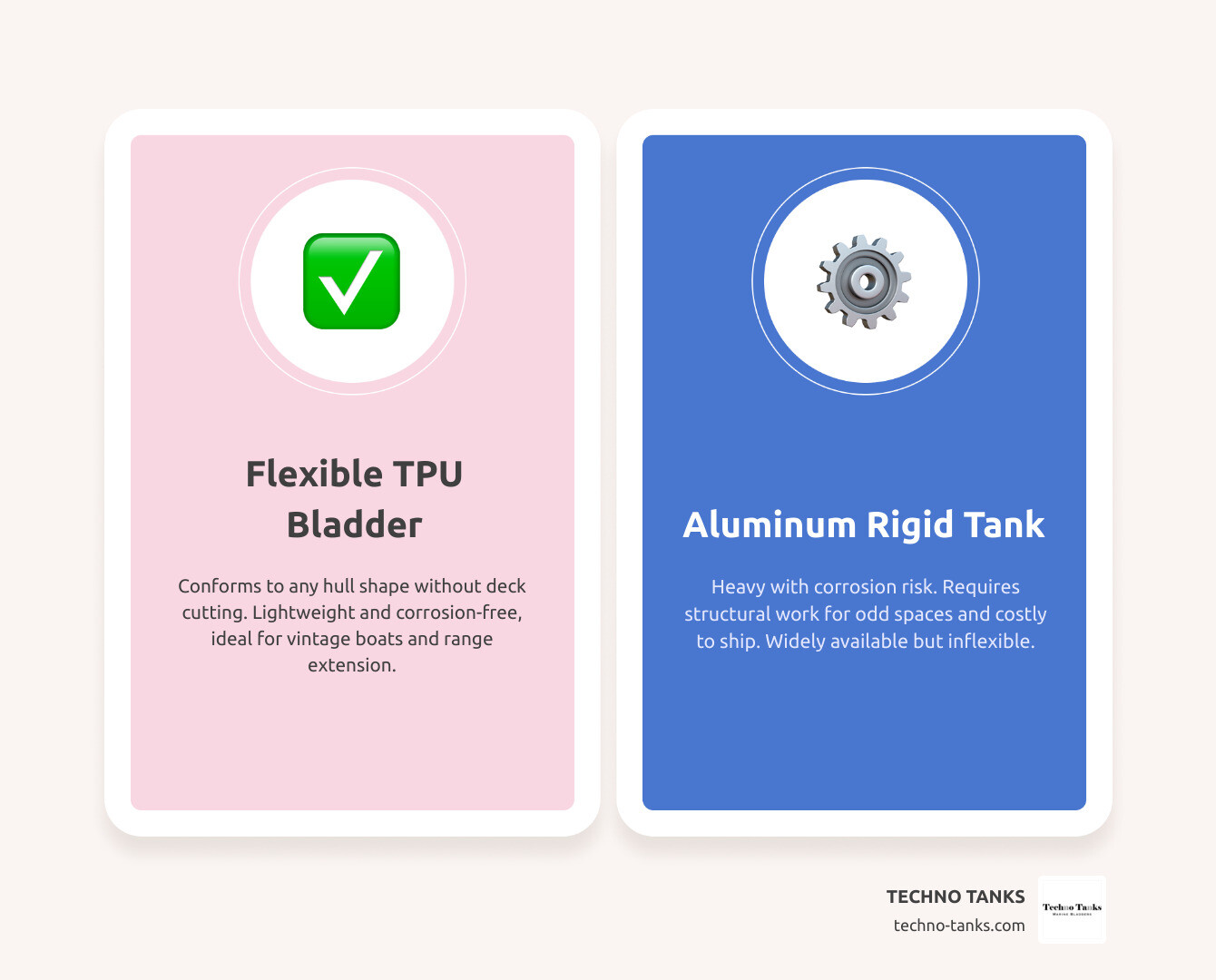
Custom Marine Fuel Tanks: Why Flexible TPU is the Superior Choice
When people compare fuel storage options, the conversation usually starts with aluminum versus plastic. That is useful, but it leaves out the option that often solves the hardest fitment problems: flexible TPU fuel bladders.
For many boats, especially older hulls and space-constrained builds, a rigid tank is like trying to park a pickup truck in a kayak rack. Technically possible in your imagination, not so great in real life.
Here is the practical comparison:
| Feature | Flexible TPU Bladder | Aluminum Rigid Tank | Plastic Rigid Tank |
|---|---|---|---|
| Fit in odd spaces | Excellent | Limited | Limited to moldable shapes |
| Corrosion resistance | Excellent | Moderate to good, but corrosion remains a risk | Excellent |
| Weight | Light | Heavy | Light |
| Shipping efficiency | Excellent | Poor to moderate | Moderate |
| Best for replacement in tight bays | Excellent | Sometimes difficult | Sometimes difficult |
| Repairability/service approach | Replaceable modular solution | Weld-repair sometimes possible | Limited repair options |
The Limitations of Traditional Materials
Aluminum remains a common choice for custom marine tanks for good reasons: it is proven, available, and strong. For many standard installations, it works well. But it is not magic. Aging aluminum tanks commonly fail from pitting corrosion, trapped moisture, poor drainage, vibration, or contact with wet foam and debris. That is why older boats so often end up with leaking seams, contaminated fuel, or pickups clogged by corrosion flakes.
Plastic has strengths too. Barrier plastic tanks can resist corrosion and are widely used in OEM production. They also handle ethanol blends better than older plastics. But plastic tanks still have tradeoffs. Permeation control became a much bigger issue after EPA emissions rules tightened in 2011, which is why low-permeation designs now use multilayer construction such as nylon barriers with cross-linked polyethylene. Plastic can be excellent in the right engineered application, but repair options are limited and one-off custom geometry is not always simple outside large-scale molding.
Rigid tanks also share one basic weakness: they are rigid. If the space is irregular, has a curved hull surface, or requires insertion through a small access opening, a perfect rigid replacement may be impossible without cutting structure. That is the dreaded “cut-the-deck” moment boat owners talk about, and nobody smiles when the saw comes out.
The Techno Tanks Advantage: Custom Flexible TPU
At Techno Tanks, we focus on flexible marine fuel bladders built from patented, recyclable thermoplastic polyurethane. In plain English: strong, fuel-compatible material that can use awkward spaces far better than a rigid box can.
Our approach makes sense when you need:
- More cruising or fishing range
- A custom fit in an odd-shaped compartment
- A replacement for a discontinued tank layout
- A lighter, easier-to-ship fuel storage solution
- A tank that avoids unnecessary structural surgery
Flexible TPU tanks can be engineered to conform to hull contours and unusual spaces while still supporting the fittings, venting, and fuel delivery layout your system needs. That can mean turning wasted inches into useful fuel capacity.
When Flexible Tanks Make More Sense Than Rigid Tanks
Flexible tanks are especially attractive for:
- Range extension on fishing boats and cruisers
- Yacht tenders and support craft
- Temporary or seasonal fuel carriage
- Vintage boats with obsolete replacement parts
- Installations where a rigid tank cannot pass through the access opening
- Boats needing 30 to 3000 gallons of custom capacity
This is not to say rigid tanks never make sense. They do. But if your real problem is shape, access, or avoiding invasive removal work, flexible TPU is often the better answer.
How to Choose the Right Size and Shape for Your Custom Tank
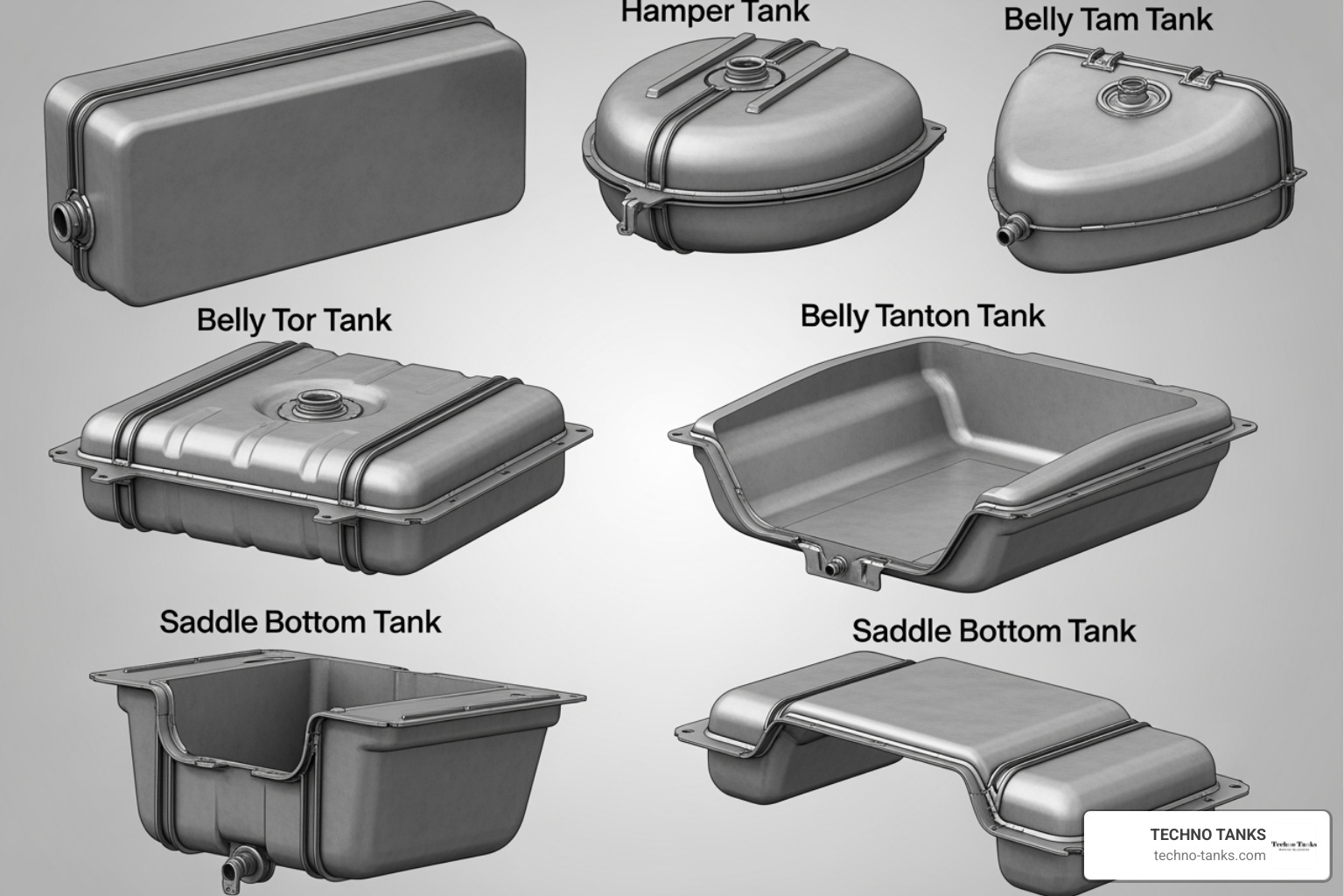
The best tank is not simply the biggest one that physically fits. It is the one that fits the space, supports the fuel system, respects vent and fill routing, and can actually be installed and serviced.
Rigid tank makers often offer familiar shapes such as rectangular, bow, belly, V-bottom, and saddle-bottom designs. Those shapes work well in many applications. Flexible tanks approach the same problem differently: instead of forcing the boat to match the tank, we shape the tank around the available envelope.
Sizing and Shape Rules for Custom Flexible Tanks
When planning a custom tank, we recommend checking these factors first:
- Maximum usable envelope, not just old tank dimensions
- Access opening size for installation and removal
- Fuel type: gasoline and diesel have different fitting rules
- Fill hose routing and bend radius
- Vent hose routing and exit location
- Clearance for sender, fittings, and service access
- Tie-down points and support surfaces
- Any nearby pumps, wiring, or structure that could chafe the tank
If you are replacing an old tank, start with the footprint and fitting layout of the original. Then ask whether the new design can improve access, add capacity, or simplify hose routing. This is often where custom work pays off.
Flexible tanks also manage slosh differently than rigid tanks. Rigid tanks typically rely on internal baffles, especially as tank size increases. With flexible systems, the tank geometry and supported installation approach reduce the need for traditional baffling methods used in metal tanks.
Durability and Material Guidance for Marine Environments
In rigid aluminum tanks, material thickness matters a lot. Industry guidance commonly points to:
- 1/8 inch minimum for tanks under 50 gallons
- 3/16 inch as a better target for 50 to 100 gallons
- 3/16 inch minimum for tanks over 100 gallons, with 1/4 inch upgrades for higher loads or harsher locations
Those guidelines exist because marine tanks take abuse from slamming, vibration, and unsupported spans. Forward hull locations often see higher impact loads, so underbuilt tanks can suffer over time.
With flexible TPU systems, the durability conversation shifts from plate thickness to puncture resistance, tensile strength, seam design, abrasion prevention, and correct support. A well-designed flexible tank can outperform rigid options in high-vibration environments because it is not concentrating stress at welded corners and hard seams in the same way a metal tank does.
Fittings, Pickups, Returns, and Sending Units
The fitting plan matters almost as much as the tank body.
Common decisions include:
- Remote fill versus direct fill
- Standard vent sizing, often 5/8 inch hose
- Typical fill sizing, often 1.5 inch hose
- Number of pickups and returns
- Sender type and gauge compatibility
- Separate lines for twin engines and generator feeds
For gasoline systems, a major rule of thumb is that fittings generally need to be on or above the tank top. Diesel systems usually allow more flexibility in fitting placement and returns, which can make custom design easier.
If your boat has twin engines and a generator, count every pickup and return before ordering. That sounds obvious, but it is one of the easiest mistakes to make when everyone is excited and measuring with one hand while balancing on a stringer with the other.
Compliance, Safety, and Build Quality Standards That Matter
A custom tank should not just fit. It should also meet the standards that apply to marine fuel storage and installation.
The main names you will see include:
- ABYC
- USCG
- EPA
- NMMA
- CARB
- CE
- ISO 10088
- 33 CFR 183.510
Different manufacturers and tank types reference different combinations of these standards, but the broad point is the same: design, emissions, fittings, venting, labels, and testing all matter.
How Custom Flexible Tanks are Built to Meet Regulations
Since the EPA emissions changes that began reshaping tank design in 2011, marine fuel systems have become more sophisticated. Low-permeation materials, vent studies, approved hardware, and construction review are now a normal part of serious tank design.
For custom systems, compliance usually involves:
- Verifying fuel compatibility
- Reviewing material construction and permeation performance
- Confirming fill and vent hardware
- Ensuring fitting placement follows fuel-type rules
- Checking labels and identification
- Matching the tank to the installation environment
This is one reason “generic metal shop” and “marine fuel tank fabricator” are not the same thing. Research and user reports consistently show that many general fabricators can weld metal, but not all can properly test and document marine fuel tanks.
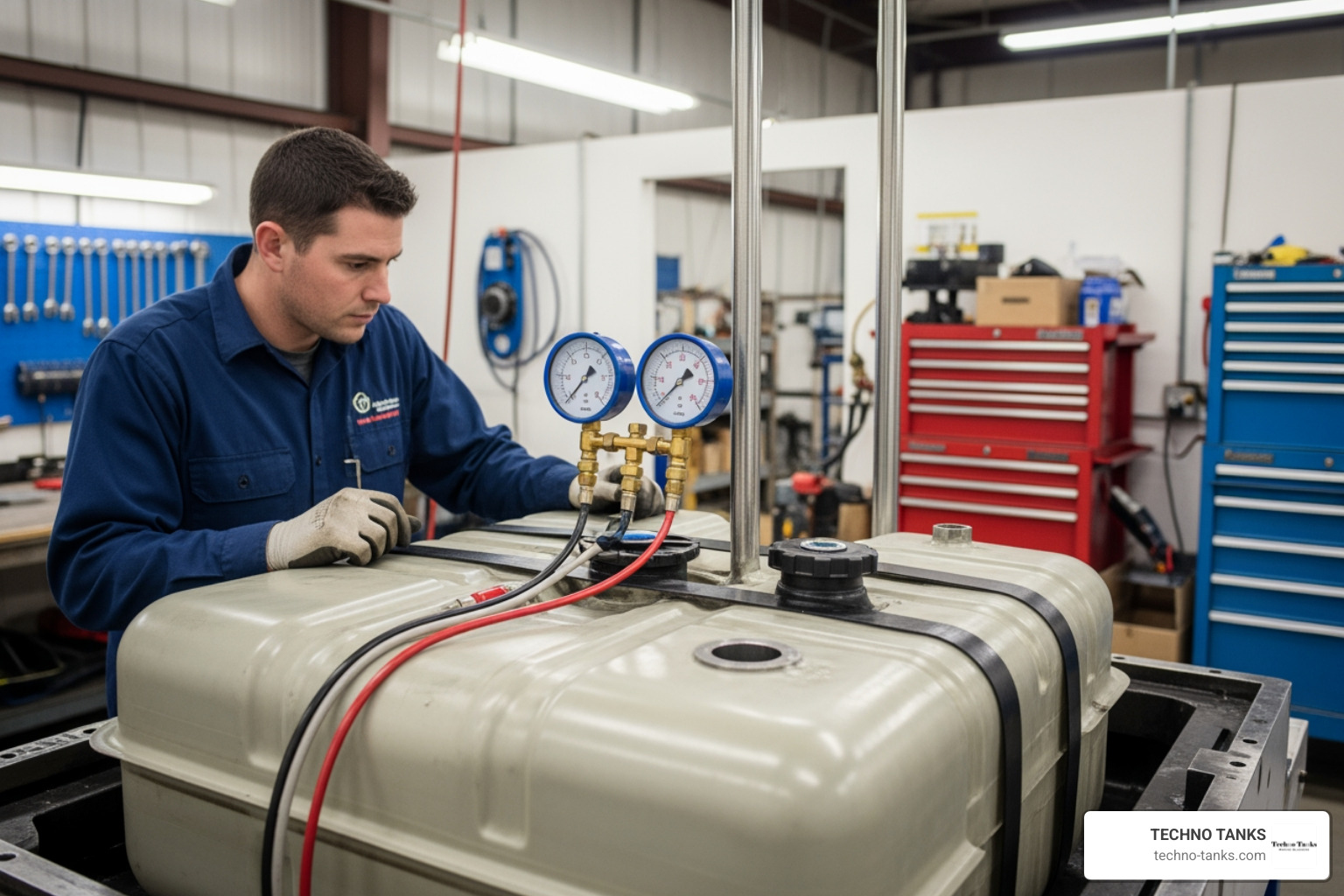
Pressure Testing and Seam Integrity
Pressure testing is a standard quality checkpoint. In the market, we see common benchmarks such as:
- 3 psi testing under 33 CFR 183.510(a)
- 5 psi testing from builders that use a higher internal quality target
For rigid tanks, testing verifies weld integrity, fittings, and general leak resistance. For flexible tanks, seam integrity is equally critical. High-quality seam welding and controlled fabrication matter because the seams must handle motion, fuel weight, and environmental stress without failure.
A good custom tank program should include final testing and clear traceability. Fancy marketing is nice, but leak-free fuel storage is nicer.
Installation Details That Affect Compliance and Tank Life
Even a perfectly built tank can fail early if installation is poor.
Watch for:
- Proper support across the base
- Abrasion protection at contact points
- Drainage and moisture management
- Inspection access
- Secure tie-downs or retention
- Isolation from sharp edges and hardware
- Clean hose routing with no crushing or kinks
These details matter for all materials. Aluminum hates trapped moisture. Plastic dislikes poor support. Flexible tanks need chafe prevention and proper restraint. Good installation is not glamorous, but neither is diesel in the bilge.
Ordering Process, Lead Times, Shipping, and Total Cost
Ordering a custom tank is usually simpler than people expect, provided the measurements are accurate.
Typical Process for Ordering a Custom Flexible Marine Fuel Tank
The process typically looks like this:
- Measure the installation space carefully.
- Photograph the tank bay from multiple angles.
- Note fuel type, engine count, pickups, returns, sender needs, and fill/vent locations.
- Submit sketches, templates, or drawings.
- Review the approval drawing or CAD layout.
- Confirm materials, fittings, and final dimensions.
- Fabrication and final testing.
- Shipment or pickup.
Across the market, standard lead times for custom tanks often fall around 1 to 4 weeks depending on workload and complexity. Research also shows examples of expedited one-week builds with added cost, and 7 to 10 business day lead times from some fabricators for straightforward jobs.
Prototype timelines for more involved custom work can be longer. In engineered plastic tank programs, prototype design can take as little as six weeks.
What Affects Price the Most
Pricing depends on much more than gallons alone.
The biggest cost drivers are:
- Material type
- Tank size and capacity
- Shape complexity
- Number of fittings
- Sender and hardware options
- Compliance-related design requirements
- Rush production
- Shipping method and destination
In owner reports, custom aluminum tanks often land around $10 per gallon as a rough field estimate, but that is only a ballpark. Real examples in research range from under $600 for a 60-gallon custom tank to much higher totals for larger or more complex builds.
For aluminum, moving up in thickness often adds only around 10 to 15 percent to the total tank cost, which can be worth it for durability. For flexible TPU tanks, the material grade, reinforcement approach, and fitting package typically influence final price more than raw gallon count alone.
Mirrored pairs for twin-engine boats can sometimes reduce per-unit design cost because the engineering work is shared.
Shipping and Delivery Advantages of Flexible Tanks
Shipping is where flexible systems can really shine.
Rigid tanks are bulky, vulnerable to handling damage, and frequently require LTL freight. Residential or limited-access freight delivery can add roughly $200 or more to the shipping bill based on common market examples. Large rigid tanks can be expensive to move simply because they take up so much space even when empty.
Flexible tanks are lighter and collapsible, which helps by:
- Reducing freight volume
- Lowering damage risk in transit
- Making storage easier before installation
- Simplifying international or long-distance shipment
That does not make shipping free, sadly. But it does make it far less painful than wrestling a giant empty aluminum box across the country.
Why Custom Flexible Tanks Beat Stock Rigid Tanks for Older Boats
Older boats are where custom solutions prove their value fastest.
Common Problems with Aging Rigid Tanks
The usual list includes:
- Pitting corrosion in aluminum
- Leaking welds or seams
- Clogged pickups
- Sludge and contaminated fuel
- Sender failure
- Vent restrictions
- Outdated emissions layouts
- Obsolete factory dimensions
Many old tanks were also lighter-built than ideal. Some modern custom builders specifically note that they use 1/8 inch minimum material because thinner .090 tanks are too common in aging OEM applications.
How a Flexible Tank Solves Fitment and Reliability Issues
A custom flexible tank helps when:
- The original tank shape is no longer available
- The opening is too small for a rigid replacement
- You want to revise fittings for better service access
- You need more range in the same compartment
- You want to avoid cutting the deck or surrounding structure
This is where custom marine fuel tanks become less about replacement and more about improvement. A well-planned redesign can modernize the system with cleaner hose runs, more usable capacity, and a layout that is easier to inspect.
Practical Design Ideas for Multi-Tank Systems and Special Layouts
If your layout includes port and starboard tanks, transfer logic and balance matter. So do return lines, selector valves, and engine feed strategy. A good starting point is this multi-tank fuel system discussion, which shows how quickly plumbing decisions become system-level decisions.
It is also useful to see how custom fabrication thinking applies in real-world refits, such as this Custom hand-built boat fuel tank example.
The lesson from both: tank shape is only half the story. System design matters just as much.
Frequently Asked Questions About Custom Marine Fuel Tanks
Are custom flexible tanks worth it over rigid replacement tanks?
Yes, especially when fitment is the main problem. A flexible tank can avoid deck cutting, use odd spaces better, improve available range, and reduce shipping headaches. If a standard rigid replacement fits perfectly and is easy to install, rigid may still be fine. But in many older boats, “perfectly” is not on the menu.
How long do custom TPU marine fuel tanks last?
Service life depends on material quality, fuel compatibility, installation support, abrasion prevention, and inspection routine. The key advantage over aluminum is that TPU does not suffer corrosion in the same way metal does. Long life still requires proper installation and periodic inspection.
What should you send a fabricator before ordering?
Send as much useful detail as possible:
- Exact dimensions of the bay
- Photos from multiple angles
- Old tank drawing, if you have it
- Fuel type
- Fill and vent layout
- Engine and generator count
- Pickup and return needs
- Sender preference
- Deadline or trip schedule
The better the information, the smoother the design review.
Conclusion: Choosing the Best Fuel Storage for Cruising and Fishing
If your goal is dependable range, better fitment, and less installation drama, flexible fuel storage deserves a serious look. At Techno Tanks, we build flexible marine fuel bladders from patented, recyclable TPU in sizes from 30 to 3000 gallons, giving boaters a smarter option for cruising and fishing trips where stock rigid tanks come up short.
For many boat owners, the best tank is not the one that looks most familiar. It is the one that fits the space you actually have, supports the fuel system you actually run, and gets you back on the water without turning your boat into a demolition project.
And once your fuel range is sorted, you can spend more time planning the fun part. For a little inspiration, here is More info about fishing destinations.

