
Why the Right Portable Marine Gas Tank Can Save Your Trip
A portable marine gas tank is one of the most practical tools a boat owner can carry — and one of the most overlooked until you’re dead in the water miles from shore.
Quick Answer: What to Know About Portable Marine Gas Tanks
| Feature | What to Expect |
|---|---|
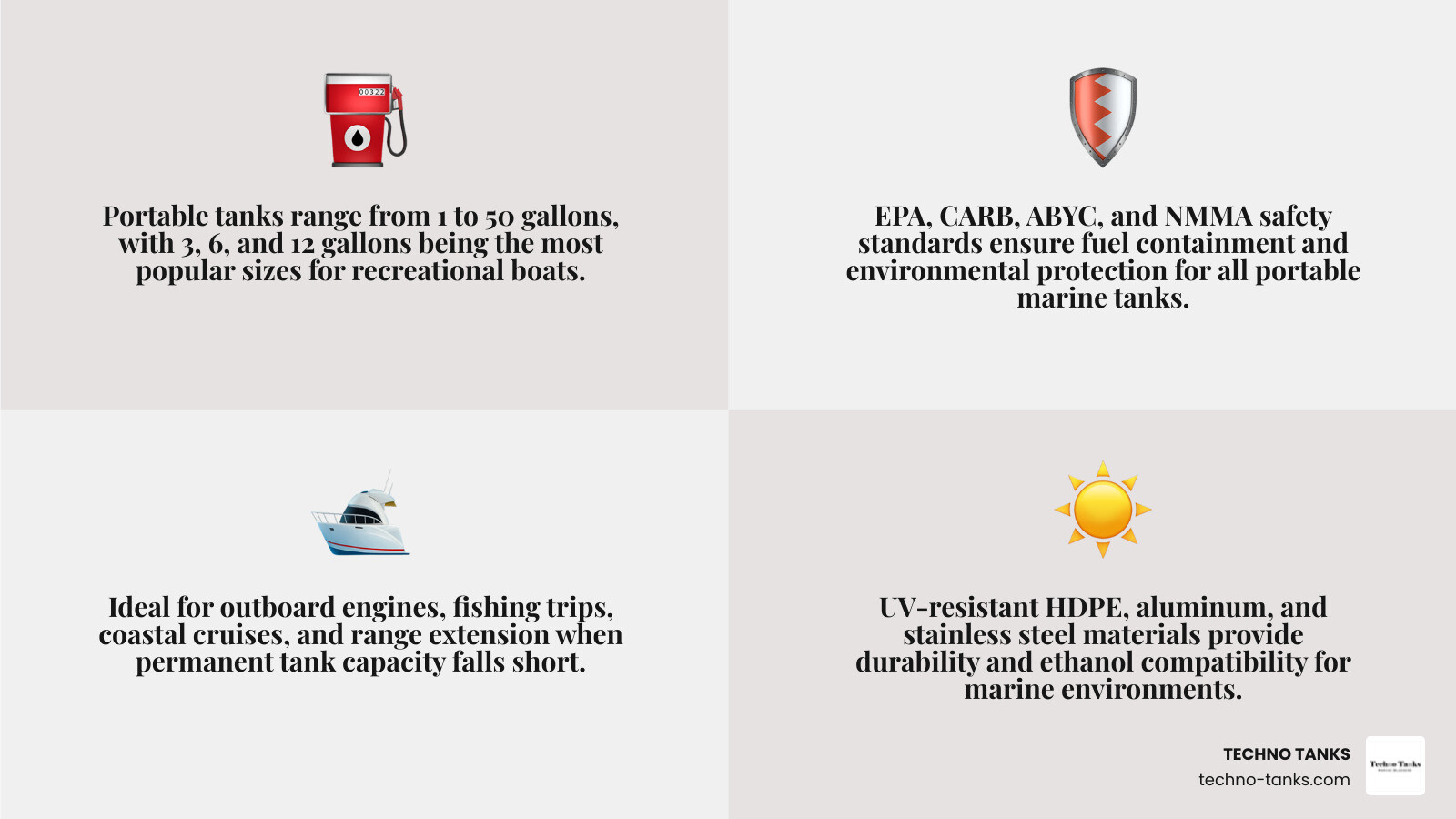
| Capacity range | 1 gallon up to 50 gallons (portable) |
| Common materials | HDPE polyethylene, aluminum, stainless steel |
| Key standards | EPA, CARB, ABYC, NMMA, U.S. Coast Guard |
| Best for | Outboard engines, fishing trips, cruising, range extension |
| Top sizes | 3, 6, and 12 gallons for most recreational use |
| Must-have features | UV resistance, self-venting cap, ethanol compatibility |
Running out of fuel on the water isn’t just inconvenient — it can be dangerous. Whether you’re on a long fishing trip or a leisurely coastal cruise, having a reliable extra fuel supply is a basic safety decision.
Portable tanks give you flexibility that permanent tanks simply can’t. You can refill them at a fueling station, move them as needed, and carry exactly as much fuel as your trip requires — without major modifications to your boat.
In this guide, we break down the best portable fuel options available in 2026, what to look for before you buy, and how to use them safely.
I’m Ivan Jimenez, founder of Digital Ivan and Doral SEO, where I build authority content systems for companies in industrial and technical sectors — including portable marine gas tank suppliers like Techno Tanks. I’ve spent years researching marine fuel storage solutions to help boat owners find the safest, most practical options on the market.
Understanding Portable Marine Fuel Storage: Capacities and Use Cases
When most people hear “portable tank,” they think of the classic rigid plastic outboard tank. That is still the standard for many small boats, but it is not the only option in 2026. Portable marine fuel storage now includes compact hard tanks, under-seat models, and flexible bladders for temporary auxiliary capacity.
For quick day trips, a small rigid tank is usually enough. For longer runs offshore, extended trolling, or range-sensitive cruising, portable storage becomes less about convenience and more about trip planning.
Portable tanks generally range from 1 gallon to 50 gallons. For larger boats, flexible temporary storage can go much higher, which is where solutions like Marine Fuel Bladders become especially useful.
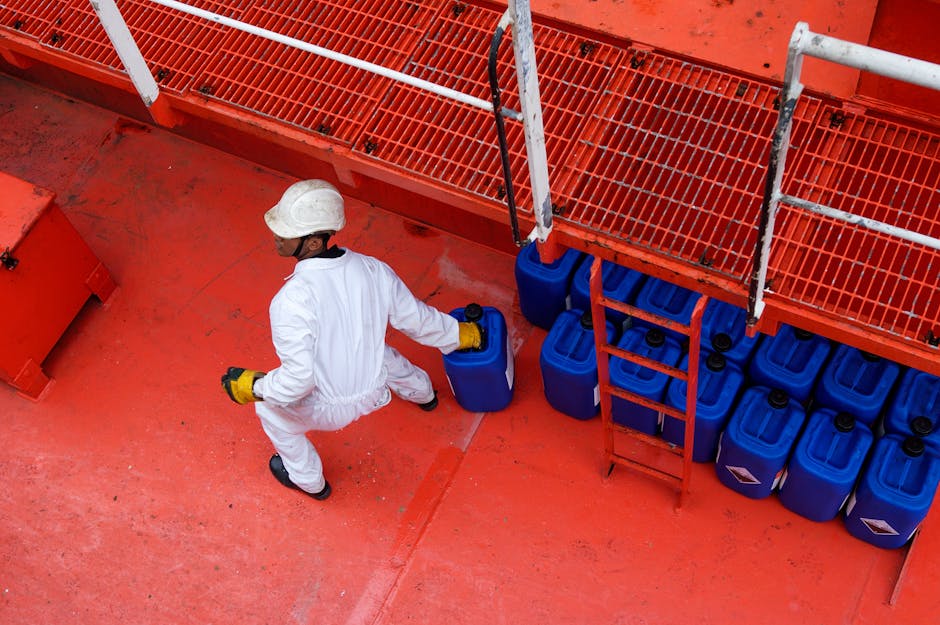
Here is a simple way to think about capacity by trip type:
| Trip type | Typical portable capacity | Best fit |
|---|---|---|
| Short day boating | 1 to 3 gallons | Emergency backup or very small craft |
| Inshore fishing | 3 to 6 gallons | Dinghies, tenders, small outboards |
| Full-day recreation | 6 to 12 gallons | Common recreational outboard use |
| Range extension | 12 to 50 gallons | Auxiliary supply for longer runs |
| Extended cruising | 30 to 3000 gallons | Temporary flexible storage for larger vessels |
For a deeper look at sizing, we recommend Popular Marine Fuel Bladder Sizes and Their Uses.
Common Capacities for Portable Marine Fuel Storage
The most common rigid portable marine fuel tank sizes are 3, 6, and 12 gallons.
- 3 gallons:
- Best for very small craft, short trips, and backup fuel
- Often low-profile and easy to carry
- 6 gallons:
- A sweet spot for many outboard-powered boats
- Often fits under seating
- A known under-seat example has dimensions of 19.3″ x 12.2″ x 10.2″
- 12 gallons:
- Better for pontoon boats, longer days on the water, or high-consumption engines
- Needs more careful placement because weight adds up fast
Low-profile under-seat tanks are popular because they preserve cockpit space. One example dimension in research for a 3-gallon under-seat unit is 19.3″ x 12.2″ x 6.8″, which shows how compact these can be.
If you need more than a standard rigid tank can reasonably provide, move up to a purpose-built auxiliary solution. Our Fuel Bladder Sizing Guide can help match storage volume to vessel size and trip length.
Specialized Designs for Small Craft and Extended Trips
Not every boat has room for a square plastic box with a hose coming out of it. Small craft often need low-profile layouts, while larger boats may need temporary fuel storage that can be deployed only when needed.
This is where flexible systems shine:
- They can be stowed more efficiently when empty
- They work well for temporary deck-mounted use
- They help extend range without committing to permanent tank modifications
- They are useful for fishing trips, repositioning voyages, and seasonal operations
If space is tight, Collapsible Fuel Tanks are worth a close look. For many boaters, they solve the classic problem of wanting more range without wanting a permanent bulky tank taking over the deck like an uninvited guest.
Essential Materials and Safety Regulations for Marine Fueling
Material choice matters because marine fuel storage deals with vibration, UV exposure, salt, temperature swings, and ethanol-blended gasoline.
The most common rigid tank materials are:
- HDPE polyethylene
- Aluminum
- Stainless steel
Each has different strengths.
- HDPE polyethylene:
- Lightweight
- Corrosion resistant
- Common in portable tanks
- Often UV-stabilized
- Frequently built with low-permeation multi-layer construction
- Aluminum:
- Strong and relatively light
- Common in marine applications
- Can work well for fuel systems when properly built and installed
- Stainless steel:
- Highly corrosion resistant
- Durable
- Usually found where premium durability matters more than cost
Flexible marine fuel storage adds another category. Techno Tanks specializes in recyclable thermoplastic polyurethane, which offers durability, flexibility, and strong resistance to marine conditions. If you want to compare flexible and rigid formats, see Fuel Bladder vs Fuel Tank.
For gasoline applications specifically, Gasoline Fuel Bladders can be a smart choice when range extension is the main goal.
Securing Portable Marine Fuel Storage
A portable tank is only portable until rough water turns it into a sliding hazard. Proper installation is really about secure placement.
For rigid portable tanks:
- Place the tank where it does not upset boat balance or stability
- Keep it away from heat sources and ignition sources
- Avoid blocking walkways, hatches, or emergency access
- Use manufacturer-approved tie-downs, straps, or cradle systems
- Make sure fuel lines are routed cleanly with no kinks or trip hazards
For flexible portable storage:
- Use on a suitable deck area or approved temporary location
- Protect the bladder from abrasion and puncture points
- Distribute weight with the vessel’s trim in mind
- Secure with the right tie-down arrangement to prevent movement in chop
We always recommend reviewing current safe stowage practices and practical boater discussions such as Regulations For Stowing Gasoline – Portable – Cruisers Forum. You can also see our overview of Portable Marine Gas Tank options for temporary onboard use.
Compliance and Environmental Standards
A portable marine gas tank should not just fit your boat. It should meet current safety and emissions expectations.
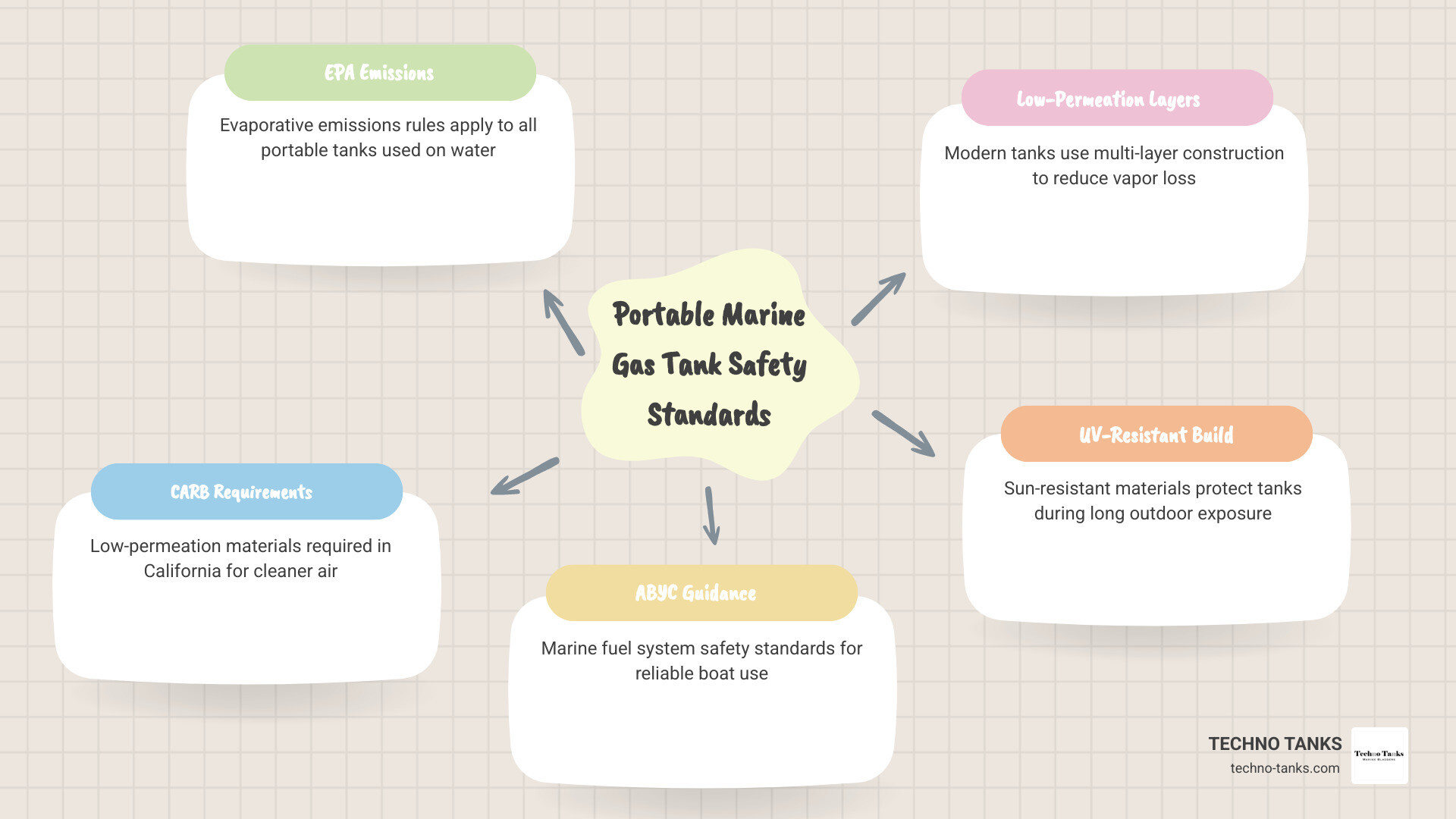
Common standards and compliance points include:
- EPA rules for evaporative emissions
- CARB low-permeation requirements
- ABYC guidance for marine fuel system safety
- NMMA-related compliance expectations
- U.S. Coast Guard standards for applicable tank categories
Research shows many modern portable tanks use:
- Multi-layer low-permeation construction
- UV-resistant materials
- Self-venting or vacuum-valve cap designs
- Ethanol-compatible materials
Closed fuel systems are more common now than older manually vented setups, so venting design matters. For a useful overview of modern certified tanks, see About Your EPA Certified Fuel Tank | West Marine .
Maintenance and Troubleshooting Marine Fuel Storage Systems
Fuel problems rarely show up at the dock when you have coffee in hand and a full phone battery. They usually appear when the weather changes, the fish are biting, or you are already late. Basic maintenance goes a long way.
Portable fuel storage should be checked regularly for:
- Cracks, swelling, or abrasion
- Damaged caps or fittings
- Fuel line wear
- Primer bulb issues
- Sediment or water contamination
- Venting problems
For temporary and auxiliary systems, our Temporary Fuel Storage page covers practical considerations for using removable fuel safely.

Resolving Common Problems with Portable Marine Fuel Storage
Here are the most common issues we see and how to approach them.
1. Venting problems
Symptoms:
- Engine starves for fuel
- Tank seems to collapse inward
- Flow improves when cap is adjusted
Cause:
- Improper venting or a faulty self-venting cap
Fix:
- Confirm whether your tank uses manual venting or a modern automatic vacuum valve design
- Inspect the cap and replace it if it is damaged
- Never defeat emissions or safety features just to “make it work”
2. Fuel outlet clogs
Symptoms:
- Weak fuel flow
- Engine surging
- Intermittent shutdown
Cause:
- Debris at the pickup, fitting, or line connection
Fix:
- Inspect fittings and pickups
- Clean or replace blocked components
- Use clean fueling practices to avoid introducing dirt in the first place
3. Transfer flow interruptions
This issue matters more for auxiliary and bladder systems.
Symptoms:
- Slow transfer
- Inconsistent flow
- Air entering the line
Fix:
- Check hose routing for kinks or high loops
- Verify fittings are tight
- Use the correct transfer setup for the fuel type and volume
If your application involves moving fuel rather than feeding directly to an engine, our Fuel Transfer Bladders page explains the use case in more detail.
4. Capacity monitoring confusion
Many small portable tanks do not include an accurate gauge. That leads to classic boater math, which is usually optimistic and occasionally comedic.
Fix:
- Track engine burn rate
- Record fuel use by trip length
- Use visual level checks where the design allows
- Keep a reserve margin rather than planning to arrive on fumes and confidence
Proper Cleaning and Winterization
Cleaning a marine fuel tank is not glamorous, but it is cheaper than replacing a carburetor.
Best practices:
- Empty old fuel safely
- Use approved containers for disposal or recycling
- Clean only with materials compatible with the tank
- Let the tank dry fully before storage
- Inspect seals, caps, and pickup fittings before putting it back in service
For rigid tanks:
- Drain completely
- Rinse only if recommended by the manufacturer
- Avoid harsh chemicals that can damage plastic or internal components
For flexible bladders:
- Follow manufacturer-specific procedures
- Ensure the bladder is fully drained and dried
- Store away from sharp objects and prolonged sun exposure when not in use
Winterization checklist:
- Remove stale fuel
- Stabilize remaining fuel if storing short term
- Disconnect and inspect lines
- Clean external surfaces
- Store in a cool, dry, ventilated place
- Recheck fittings before spring launch
Additional details on construction and handling are available on Marine Fuel Bladder Specs.
Why Flexible Fuel Bladders Are Ideal for Extended Range
If your boating style includes offshore fishing, long-distance cruising, or trips where refueling options are limited, flexible fuel bladders deserve a serious look.
This is where Techno Tanks stands apart. We manufacture flexible marine fuel bladders for boats and yachts specifically to extend range without forcing a permanent redesign of the vessel.
Key advantages of our approach:
- Capacity from 30 to 3000 gallons
- Patented design
- Recyclable thermoplastic polyurethane construction
- Strong fit for temporary and auxiliary marine fuel needs
- Useful for both fishing trips and cruising applications
Compared with small rigid portable tanks, a bladder system can provide dramatically more fuel for the same mission profile. It is not a replacement for every small outboard tank, but it is often the better answer when “bring a little extra” turns into “we need meaningful additional range.”
Flexible bladders are especially practical when:
- You need temporary extra fuel, not a permanent tank installation
- Deck space is available during the trip
- The vessel’s primary use changes seasonally
- You want to minimize unused bulky equipment when extra fuel is not needed
Learn more about our Marine Fuel Bladders and see whether a flexible solution fits your range requirements better than a conventional hard tank. You can also compare planning options with Popular Marine Fuel Bladder Sizes and Their Uses.
If you are weighing formats, Fuel Bladder vs Fuel Tank gives a helpful side-by-side view.
Frequently Asked Questions about Marine Fueling
How do I safely vent portable marine fuel storage?
First, identify whether your system uses a manual vent or a modern self-venting or vacuum-valve cap. Many current compliant tanks are designed so you do not manually open a vent the way older tanks required. Always follow the tank manufacturer’s instructions.
In general:
- Never block or modify the venting system
- Inspect caps regularly for damage
- Keep tanks out of direct excessive heat where possible
- Watch for signs of pressure build-up or tank deformation
- Store and use tanks in well-ventilated areas appropriate for marine fueling
What is the best way to clean out old fuel residue?
Drain the tank fully, dispose of old fuel properly, and clean the interior only with methods suitable for the tank material. Avoid improvising with aggressive solvents. For many users, careful draining, inspection, and replacement of contaminated fuel lines solves more problems than over-cleaning.
If residue, varnish, or contamination is severe, it may be smarter to replace worn fittings or the tank rather than trying to rescue a badly degraded setup.
When should I choose a portable fuel bladder for my boat?
Choose a portable fuel bladder when you need temporary extra fuel capacity, especially for longer trips where a standard 3-, 6-, or 12-gallon rigid tank is not enough. They are a strong fit for:
- Extended-range fishing trips
- Cruising passages
- Yacht range extension
- Seasonal or mission-based auxiliary storage
- Boats where permanent tank installation is impractical
If you are unsure what size makes sense, our Fuel Bladder Sizing Guide is a good place to start.
Conclusion
In 2026, the best portable marine fuel solution depends on how you boat, how far you run, and how much flexibility you need.
For many recreational boaters, a rigid portable marine gas tank in the 3- to 12-gallon range covers day-to-day needs. These tanks are easy to refill, easy to move, and widely used for outboard-powered boats. Just make sure the tank is made from durable materials, secured properly, and compliant with current safety and emissions standards.
For serious range extension, though, flexible storage often makes more sense. That is where Techno Tanks can help. Our recyclable TPU Marine Fuel Bladders are built for temporary marine fuel storage in capacities from 30 to 3000 gallons, giving boaters and yacht owners a practical way to go farther with confidence.
If you are ready to choose the right portable fuel solution for your next trip, explore these resources next:
- Portable Marine Gas Tank
- Marine Fuel Bladders
- Fuel Bladder Sizing Guide
- Temporary Fuel Storage
- Fuel Bladder vs Fuel Tank
When range matters, fuel planning is not the boring part of boating. It is the part that gets you home.

