
What Are Auxiliary Marine Tanks — and Why Do They Matter for Extended-Range Operations?
Auxiliary marine tanks are supplemental fuel storage systems used to extend the operational range of vessels and aircraft beyond what their primary fuel capacity allows.
Quick answer for operators evaluating auxiliary fuel options:
| Factor | Key Detail |
|---|---|
| What they are | Secondary fuel storage systems added to vessels or aircraft |
| Primary purpose | Extend range, carry backup fuel, or enable temporary fuel transfer |
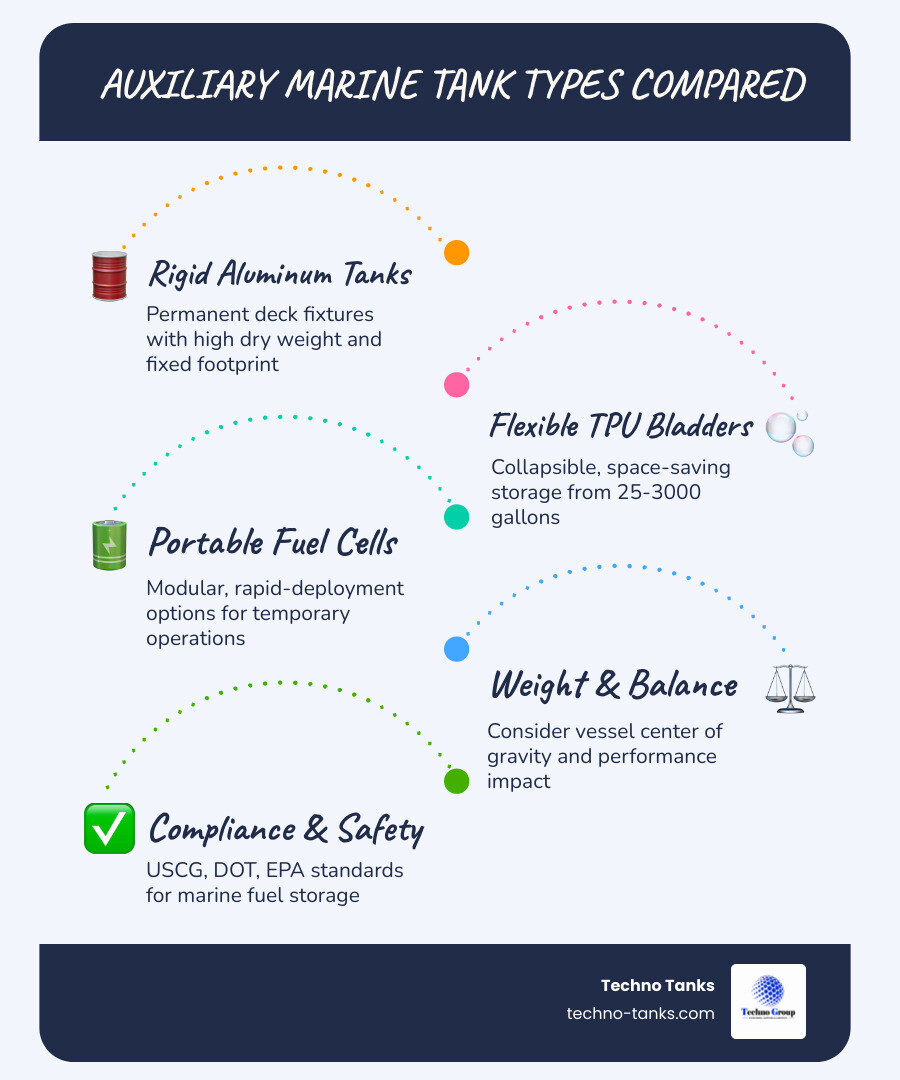
| Common types | Rigid aluminum tanks, flexible TPU bladders, portable fuel cells |
| Capacity range | 25 to 500+ gallons for civilian use; larger for commercial and military applications |
| Key considerations | Fuel compatibility, weight distribution, safety compliance, deployment speed |
| Best for | Offshore operators, expedition crews, commercial marine, emergency response |
For marine helicopter crews operating hundreds of nautical miles from the nearest fuel source, range is not a comfort issue — it is a mission-critical constraint. A maritime patrol aircraft like the Boeing P-8 Poseidon, for example, can remain on station for over four hours at distances exceeding 1,200 nautical miles from base, in large part because of purpose-built auxiliary fuel systems. The same principle applies to commercial vessels, offshore expedition boats, and search-and-rescue craft: when your primary tank reaches its limit, your mission ends — unless you’ve planned ahead.
That planning increasingly involves flexible fuel bladders rather than permanent rigid tanks. Bladders offer collapsible, space-saving storage that can be deployed when needed and stowed flat when empty — a practical advantage that rigid systems simply cannot match.
This guide breaks down how auxiliary marine fuel systems work, what specifications matter most, and how operators can choose the right solution for their range, fuel type, and deployment requirements.
The Role of Auxiliary Marine Tanks in Maritime Operations
In offshore environments, the distance between refueling stations can be vast. Whether an operator is managing a commercial transport vessel, navigating a search-and-rescue (SAR) craft, or piloting a long-range yacht, standard fuel capacities often fall short of modern operational demands.
For vessels traveling to remote areas like the Dry Tortugas, the untouched outer islands of the Bahamas, or down the rugged Pacific coast of Baja California, returning to port just to refuel is both economically inefficient and operationally restrictive. This is where auxiliary marine tanks become indispensable. By expanding a vessel’s fuel capacity without requiring permanent, costly structural overhauls, these systems solve the classic logistical challenge of maritime range.
For serious operators, the goal is simple: maximize range without compromising deck space or safety. Long-range transits require a strategic approach to fuel management. Relying purely on fixed internal tanks often limits a vessel’s ability to take on seasonal or mission-specific contracts that require traveling further offshore.
Using temporary fuel storage allows operators to scale their fuel capacity dynamically. When the mission demands an extended transit, the auxiliary supply is filled. Once the extra fuel is transferred to the main operating tanks, the footprint of the storage system can be minimized. This temporary flexibility is a core reason why many commercial operators are moving away from permanent metal deck tanks and adopting modern, collapsible alternatives. To understand how these systems prevent range limitations from cutting a voyage short, operators can explore strategies on Going the Distance Without Running Your Yacht Dry.
Technical Specifications and Materials for Extended Range Systems
Selecting the right auxiliary fuel system requires a deep dive into materials science and engineering specifications. Auxiliary tanks must withstand extreme environmental stressors, including high UV exposure, salt spray, physical abrasion, and the constant dynamic forces of a pitching deck.
| Specification Parameter | Rigid Aluminum Tanks (.125 Gauge) | Flexible TPU Bladders (Techno Tanks) |
|---|---|---|
| Material Composition | Heavy-duty marine-grade aluminum | High-tensile polyurethane (TPU) |
| Empty Weight Impact | High (rigid metal structure) | Extremely Low (collapsible fabric) |
| Storage Efficiency | Fixed footprint; cannot be compressed | Collapsible; rolls up to <10% of filled volume |
| Fuel Compatibility | Gasoline & Diesel | Gasoline, Diesel, & Jet-A (configuration dependent) |
| Custom Sizing | Available via metal fabrication | Highly customizable to deck layouts |
| Puncture & Shock Resistance | High rigid strength; prone to weld cracking | High elastic deflection; absorbs deck impacts |
Material choice directly dictates the safety and longevity of the system. While rigid metal tanks have historically been the industry standard, modern high-tensile Thermoplastic Polyurethane (TPU) has revolutionized how operators approach temporary fuel storage. TPU is highly resistant to chemical degradation from hydrocarbons, making it an exceptional material for both diesel and gasoline applications.
Furthermore, weight distribution is a critical safety consideration when adding auxiliary fuel. Gas weighs approximately 6.1 pounds per gallon, while diesel weighs roughly 7.1 pounds per gallon. Placing hundreds of gallons of extra fuel on a vessel’s deck significantly alters its center of gravity and handling characteristics. Utilizing a lightweight material like TPU minimizes the “dry weight” of the storage system itself, reserving the vessel’s weight capacity for the fuel.
For operators seeking to optimize their vessels for long-distance cruising without overloading the hull, choosing the right material is paramount. Further insights on selecting high-performance materials can be found at Fuel Your Wanderlust with These Top Rated Auxiliary Tanks.
Why Flexible Bladders Outperform Rigid Deck Tanks
While rigid aluminum deck tanks offer structural durability, they present several operational drawbacks for temporary range extension. First, a rigid tank occupies a permanent footprint on the deck. Even when completely empty, it cannot be moved, compressed, or stowed away, reducing usable deck space for cargo, gear, or passenger movement.
Second, the dry weight of a heavy-gauge (.125) aluminum tank adds constant, unnecessary load to the vessel, dragging down fuel efficiency even when the auxiliary fuel is not required. Additionally, rigid tanks are highly complex to install, requiring robust mounting brackets, deck reinforcement, and permanent plumbing. Over time, the relentless vibration and pounding of offshore sea states can cause structural stress on the vessel’s hull and lead to stress cracks along the welded seams of rigid metal tanks.
Flexible bladders eliminate these pain points. Because they are collapsible, they exert no rigid leverage on the deck structure, flexing naturally with the motion of the vessel to absorb shock rather than resisting it.
Flexible and Collapsible Auxiliary Marine Bladders
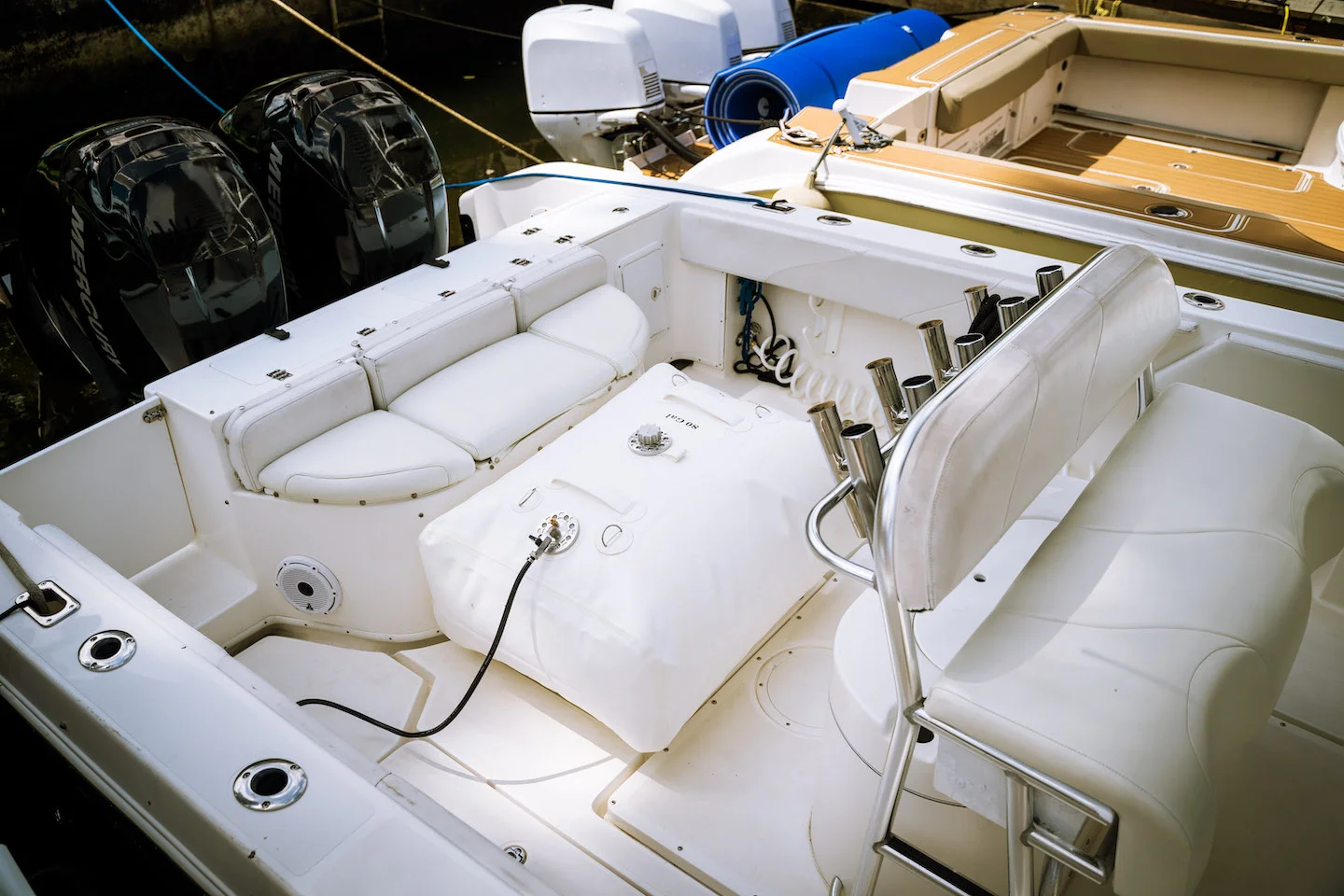
Flexible TPU bladders offer a space-saving, highly efficient solution for modern operators. These systems can be custom-sized to fit the exact dimensions of a vessel’s cockpit, bow deck, or fish wells, with capacities ranging from 30 to 3,000 gallons.
The primary operational advantage of a collapsible bladder is its space-saving design. Once the fuel is transferred to the vessel’s main tank, the empty bladder can be rolled up and stowed away in a lazarette or utility locker. This frees up 100% of the deck space for the remainder of the trip. To see how custom configurations can maximize deck efficiency, operators can read about how to Get a Grip on Your Range with Custom Boat Fuel Bladders.
Regulatory Standards and Safety Compliance
Operating auxiliary fuel systems demands strict adherence to safety standards and maritime regulations. Because fuel transport carries inherent environmental and fire risks, several regulatory bodies govern how auxiliary marine tanks are manufactured, secured, and operated.
- United States Coast Guard (USCG): USCG regulations dictate how fuel systems must be plumbed, vented, and grounded to prevent electrical sparking and fuel leaks. Specifically, systems must comply with safety guidelines that prevent fuel siphoning and ensure fire resistance.
- Department of Transportation (DOT): For tanks that are transported over land before being loaded onto a vessel, compliance with DOT transport regulations is required to ensure the tank can withstand highway transport stresses.
- Environmental Protection Agency (EPA): Modern EPA standards require auxiliary systems to feature vapor control and low-permeation materials to prevent fuel emissions from escaping into the atmosphere.
- American Boat and Yacht Council (ABYC): ABYC standards (such as H-24 and H-33) govern the installation of both gasoline and diesel fuel systems on boats, specifying requirements for hoses, clamps, venting, and fuel-tight integrity.
Navigating these regulations requires understanding specific legal frameworks. For instance, commercial vessels must look to 46 CFR Part 58 — Main and Auxiliary Machinery and Related Systems for detailed federal requirements on marine machinery and auxiliary systems. On land and transport interfaces, the Auxiliary Fuel Tanks | US Department of Transportation guidelines provide clear rules on how fuel can be legally transported to the dock.
Failing to meet these safety baselines can result in heavy fines, voided insurance policies, and critical safety hazards at sea. For a comprehensive breakdown of emergency backup fuel compliance, consult The Ultimate Guide to Marine Emergency Fuel Supply Systems.
Fuel Transfer and Deployment Best Practices
Deploying an auxiliary fuel system safely requires structured operational protocols. Simply placing a bladder on deck and running a hose is not enough; the fuel must be managed systematically to maintain vessel stability and prevent spills.
When setting up a fuel transfer system, operators should follow these best practices:
- Secure Placement: Always position the auxiliary tank or bladder in an open, well-ventilated area, such as the aft cockpit or swim platform. Never stow gasoline or fuel bladders in enclosed spaces like cabins or bilges where fumes can accumulate.
- Tie-Down Protocols: Use heavy-duty, marine-grade ratchet straps rated for the full weight of the filled bladder. Secure the straps to structural deck cleats to prevent the fuel mass from sliding during heavy seas.
- Static Grounding: Static electricity is a major hazard during fuel transfer, particularly with gasoline. Always connect a ground wire from the auxiliary tank’s transfer pump to a grounded onboard component before starting the transfer.
- Transfer Methods: Utilizing a dedicated, ignition-protected electric transfer pump is the safest way to move fuel. Alternatively, gravity-fed siphoning can be used for diesel bladders by leveraging foot pressure on the bladder to initiate flow, even when the deck fill is slightly elevated.
- Trim and Ballast Management: Monitor the boat’s trim as fuel is transferred. Transfer fuel in increments to allow the vessel’s handling characteristics to adjust, ensuring that the shift in weight does not negatively impact the center of gravity.
For detailed tactical guides on choosing and deploying offshore fuel bladders safely, read Don’t Get Stranded: Best Marine Fuel Bladder Tank Options for Offshore Trips.
Frequently Asked Questions about Auxiliary Marine Fuel Systems
What are the weight implications of adding auxiliary fuel?
Adding auxiliary fuel significantly changes a vessel’s displacement and running attitude. Gasoline weighs 6.1 lbs/gal, while diesel weighs 7.1 lbs/gal. A 200-gallon auxiliary diesel bladder adds over 1,400 pounds of weight to the deck. This weight must be positioned centrally or slightly aft to prevent the bow from steering into waves, and operators must adjust their vessel’s ballast and trim tabs accordingly to maintain optimal performance.
How do flexible bladders compare to rigid tanks for range extension?
Flexible bladders offer unmatched space-saving advantages. Unlike rigid aluminum or plastic tanks, which occupy permanent deck space regardless of whether they are full or empty, a flexible bladder can be rolled up and stowed away once emptied. This provides temporary range extension when needed, without permanently sacrificing the vessel’s deck footprint. For a detailed cost-benefit analysis of range-extending solutions, read Boat Range Extender Tanks That Won’t Sink Your Budget.
What safety certifications are required for marine fuel transfer?
Any portable or auxiliary fuel system used on a boat should meet ABYC standards for fuel-system integrity and USCG requirements for ventilation and fire resistance. Additionally, electrical transfer pumps must be ignition-protected to prevent fuel vapors from igniting in the engine compartment or on deck.
Conclusion
Extending your vessel’s operational range does not have to mean sacrificing permanent deck space or undergoing expensive hull modifications. Modern auxiliary marine tanks—specifically flexible TPU fuel bladders—offer a lightweight, collapsible, and highly secure alternative to traditional rigid metal tanks. By allowing operators to scale their fuel capacity dynamically, these systems provide the freedom to undertake long-distance offshore transits, search-and-rescue missions, and commercial operations with complete confidence.
Every Techno Tanks fuel bladder is engineered to meet the highest standards of durability, chemical resistance, and space-saving efficiency. Because every vessel and mission profile is unique, Techno Tanks pricing depends on size, fuel type, configuration, application, custom requirements, and project scope.
To find the perfect fit for your vessel and receive an accurate pricing proposal based on your specific fuel storage, transfer, and sizing needs, request a quote today at custom fuel bladders.

