
Why an Inflatable Fuel Tank Could Be the Smartest Upgrade for Your Boat
Quick Answer: What is an inflatable fuel tank?
| Feature | Details |
|---|---|
| What it is | A collapsible, flexible fuel bladder made from coated fabric (TPU, PVC, or EVA) |
| How it works | Fills rigid when loaded with fuel, collapses flat when empty |
| Common sizes | 30 to 300+ gallons for marine use; up to 210,000 USG for industrial use |
| Best fuels | Diesel, gasoline, jet fuel, and hydrocarbon blends (material must match fuel type) |
| Key benefit | Carries extra fuel on deck without permanent tank installation |
| Who uses it | Boaters, anglers, military, remote operations, disaster relief teams |
An inflatable fuel tank is one of the simplest ways to extend your range on the water without cutting into your hull or hiring a marine electrician. If you’ve ever watched your fuel gauge drop on a long offshore run — miles from the nearest marina — you already know the anxiety that comes with it. Running out of fuel at sea isn’t just inconvenient. It’s dangerous.
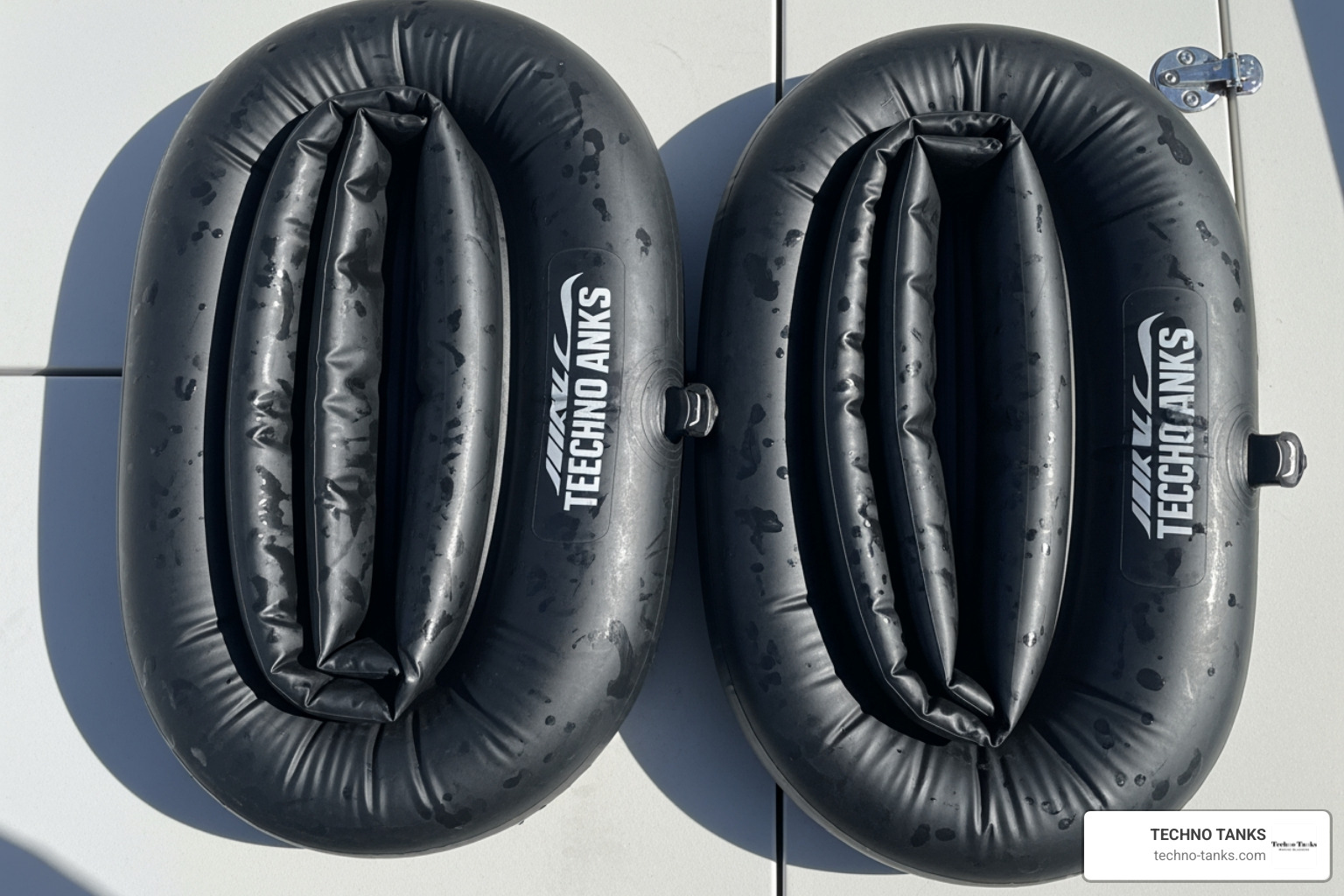
The good news: flexible fuel bladders are purpose-built to solve exactly that problem. They sit on deck, collapse nearly flat when empty, and can carry hundreds of extra gallons of diesel or gasoline when you need them most. Techno Tanks marine fuel bladders, for example, are available in sizes from 30 to 300 gallons — and a full 300-gallon bladder folds down into a box just 25.5″ x 20.5″ x 10″ when not in use.
This guide covers everything a boat owner needs to know: materials, sizing, safety rules, and how to pick the right bladder for your trips.
I’m Ivan Jimenez, founder of Digital Ivan and Doral SEO, and I’ve spent years building authority content for marine and industrial brands — including Techno Tanks — helping buyers find the right inflatable fuel tank for their specific needs. I’ll walk you through everything clearly so you can shop with confidence.
1) What an inflatable fuel tank is and when it beats a rigid tank
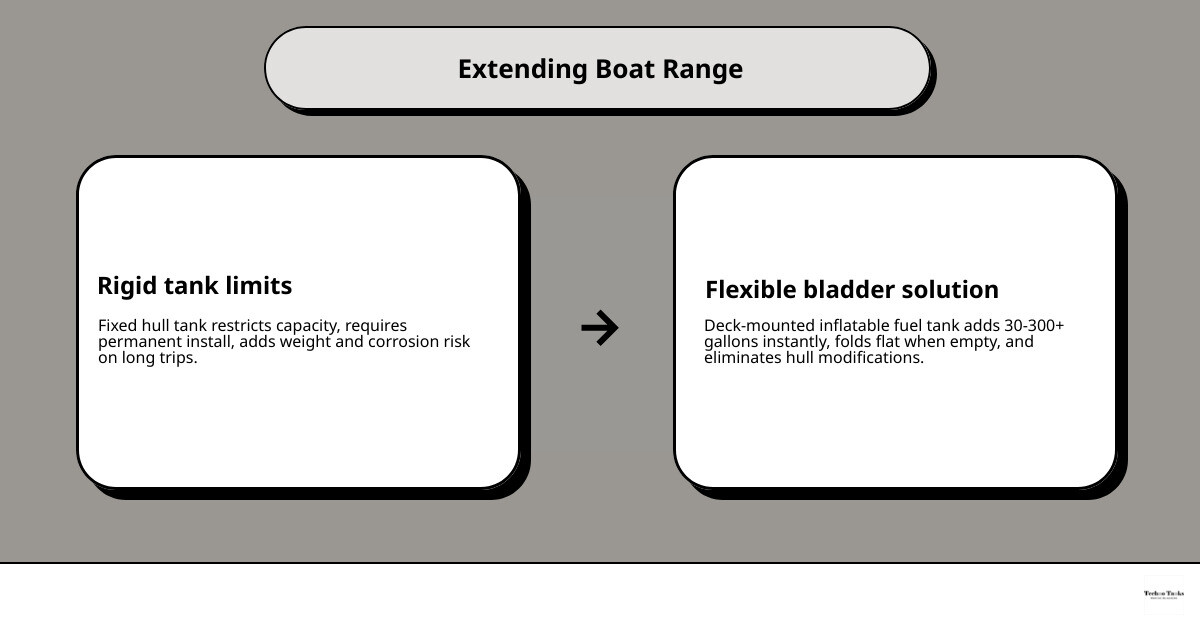
An inflatable fuel tank is usually a flexible fuel bladder or pillow tank made from fuel-compatible coated fabric rather than rigid aluminum, steel, or molded plastic. It is not “inflated” with air like a pool toy. Instead, it takes shape as fuel fills it.
For many marine users, that difference is the whole point.
A rigid tank is great when you want a permanent installation. A flexible tank is great when you want extra fuel only when you actually need it.
If you want a deeper side-by-side breakdown, see Fuel Bladder vs Fuel Tank.
| Factor | Inflatable fuel tank | Rigid fuel tank |
|---|---|---|
| Installation | Fast, temporary, above-deck | Permanent, fixed |
| Empty storage | Folds flat | Keeps same size |
| Corrosion risk | No rusting metal body | Metal tanks can corrode |
| Portability | High | Low |
| Best use | Range extension, temporary fuel, remote ops | Built-in fuel systems |
| Custom shapes | Often easier to customize | More limited once fabricated |
How an inflatable fuel tank works on boats and in the field
The basic idea is simple:
- Place the empty bladder on a clean, prepared surface.
- Secure it using tie-down points or restraints.
- Connect the fill, vent, and discharge fittings.
- Fill only to rated capacity.
- Transfer fuel by gravity, siphon, or approved pump setup.
When full, the tank becomes stable and pillow-shaped. When empty, it can be drained, rolled, folded, and stored in a locker or gear space.
Well-made bladders rely on leak-tight seams, reinforced fittings, and fuel-matched fabrics. In marine use, they are especially useful as temporary auxiliary tanks on deck for long fishing runs, cruising, or support operations.
Where rigid tanks still make sense
We like flexible systems, but rigid tanks still have a place.
Rigid tanks make more sense when you need:
- Permanent below-deck installation
- Fixed plumbing and fill systems
- Built-in impact protection
- Long-term daily use with no setup each trip
That said, if your problem is “I need more fuel for this trip, but not forever,” a flexible tank usually wins on convenience.
2) Best materials for diesel, gasoline, jet fuel, and crude oil
Material selection is where smart buying happens. The words inflatable fuel tank sound simple, but not all fuel bladders are built for the same chemistry.
Common material families include:
- TPU-coated fabrics
- PVC-coated fabrics
- EVA/PVC alloy fabrics
- Urethane-coated technical textiles
- Specialized multilayer fabrics with fuel-resistant liners
For detailed specs, see Fuel Bladder Specs, Gasoline Fuel Bladders, and Diesel Fuel Bladders.
Choosing the right inflatable fuel tank material for your fuel
The key rule is boring but important: match the tank material to the fuel.
General guidance from industry practice and the research:
- TPU is often preferred for aromatic fuels such as gasoline and many diesel applications because it offers good chemical resistance, flexibility, and toughness.
- Different TPU formulations may be used for different fuels. Some systems use polyester TPU for diesel and polyether TPU for gasoline, because fuel chemistry can affect liner life.
- Urethane-coated fabrics are commonly used for diesel, jet fuel, JP-8, oils, and many hydrocarbon products.
- EVA/PVC blends are sometimes chosen for crude oil storage.
- PVC-based solutions can work for selected petroleum products, but compatibility must be verified before use.
This is why one bladder should not automatically be used interchangeably for diesel and gasoline. Fuel-specific construction matters.
If you need marine-specific options, our Aviation Fuel Bladders and specialized fuel pages help narrow the field by application.
Seam strength, coatings, and temperature performance
A flexible tank is only as trustworthy as its seams and coatings.
Look for manufacturing details such as:
- RF welding or high-frequency welding
- Double-seam or reinforced seam construction
- Abrasion-resistant outer surfaces
- UV-resistant additives
- Hydrolysis stabilizers
- Corrosion-resistant fittings for salt environments
High-frequency welding is especially valuable because it can create very consistent, leak-tight seams. Some manufacturers also use double-seam protection to reduce the chance of failure under movement and surge.
Temperature performance also matters more than many boaters expect. Research shows some flexible fuel tanks are rated anywhere from around -50 C to +90 C depending on fabric system, while some tactical or marine products operate in narrower but still substantial ranges such as -30 C to +70 C.
In plain English: a good bladder should not turn brittle in cold weather or soften into trouble in hot sun.
3) Top advantages for lightweight marine adventures and remote operations
The biggest advantage of an inflatable fuel tank is not just that it carries fuel. It carries fuel only when needed, then gives your deck space back.
For boaters and field operators, that is a big deal.
If you want broader context, visit Temporary Fuel Storage and Collapsible Fuel Tanks.
Why boaters choose an inflatable fuel tank
Boaters usually choose flexible tanks for five practical reasons:
Extended range
You can carry reserve fuel for offshore fishing, island hopping, cruising, or long repositioning runs.Compact storage
When empty, the bladder folds down dramatically compared with a rigid tank. Some small models fold to less than 0.05 m3. A 100-gallon bladder may weigh only about 5 to 8 kg empty.No permanent installation
You avoid cutting into decks, changing plumbing layouts, or committing boat space full-time.Corrosion resistance
Unlike metal tanks, flexible fabric tanks do not rust. In saltwater environments, that matters.Fast deployment
Many systems can be deployed quickly on a prepared surface, sometimes in under two hours for larger installations.
For marine adventures, this means you can run farther with less drama and fewer fuel-stop calculations. Math is still required, unfortunately, but panic is reduced.
Beyond boating: industries that rely on flexible fuel tanks
Flexible fuel tanks are not just for yachts and center consoles. They are widely used in:
- Remote mining and exploration
- Agriculture
- Generator backup fuel supply
- Disaster relief
- Military logistics
- Offshore support
- Emergency refueling stations
- Modular fuel farms
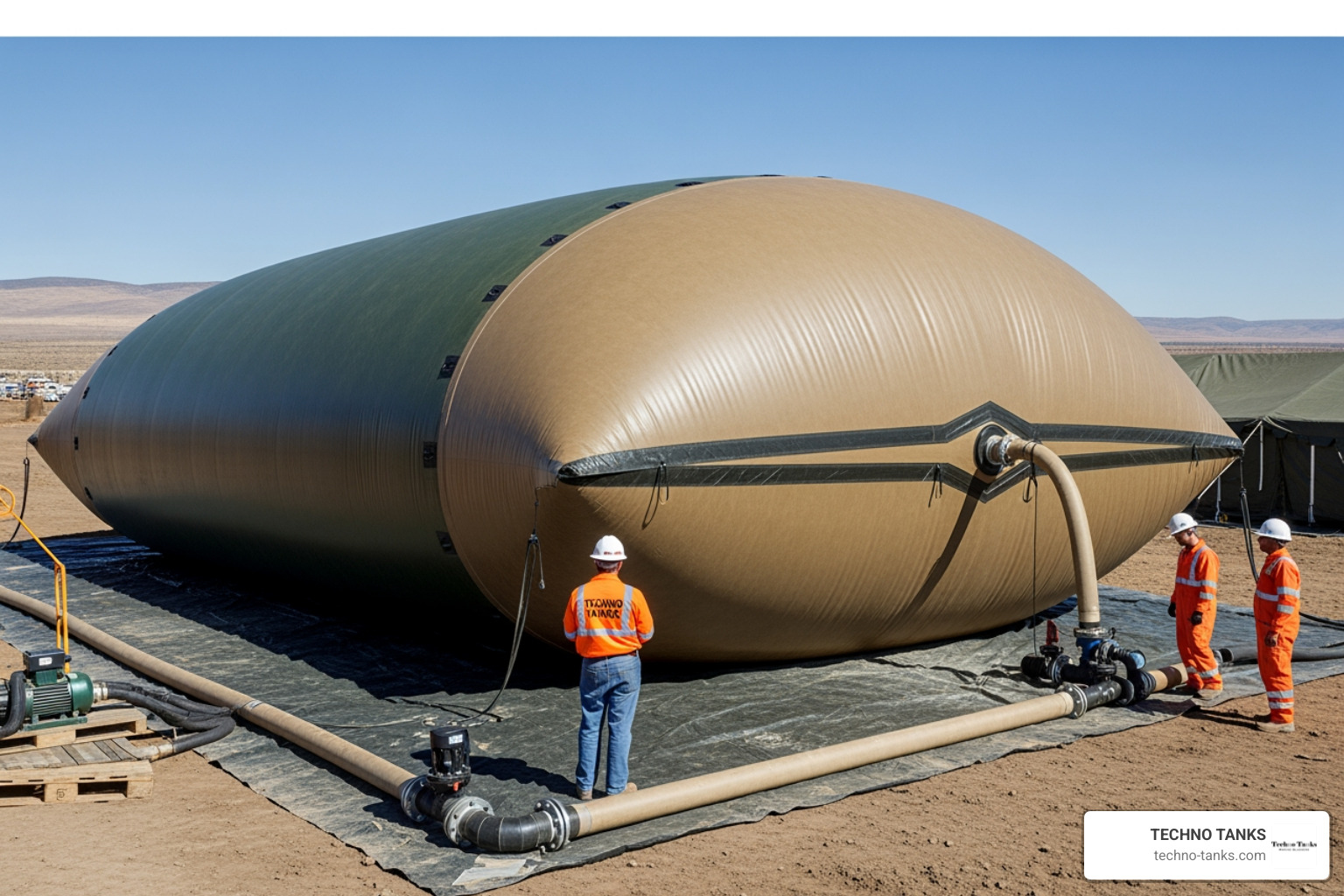
Capacity scales fast. Research shows flexible tanks can range from 5 to 300 m3, roughly 1,321 to 79,252 US gallons, and some product ranges stretch from 100 USG up to 210,000 USG.
There are also specialty formats:
- Towable units in 200 L, 1000 L, and 1900 L capacities
- Containerized systems totaling 15,000 gallons using four 3,750-gallon bladders
- Rapid-deploy tactical systems around 296 gallons with fast pump-out capability
That broad usage is a good sign. It means the technology is not niche or experimental for ordinary fuel storage. It is proven wherever portability matters.
4) Sizes, capacities, and accessories: from portable tanks to massive bladders
One reason shoppers get overwhelmed is that “fuel bladder” can mean anything from a small dinghy reserve tank to an industrial fuel farm.
For help choosing size, see Fuel Bladder Sizing Guide, Dimensions, and Custom Fuel Bladders.
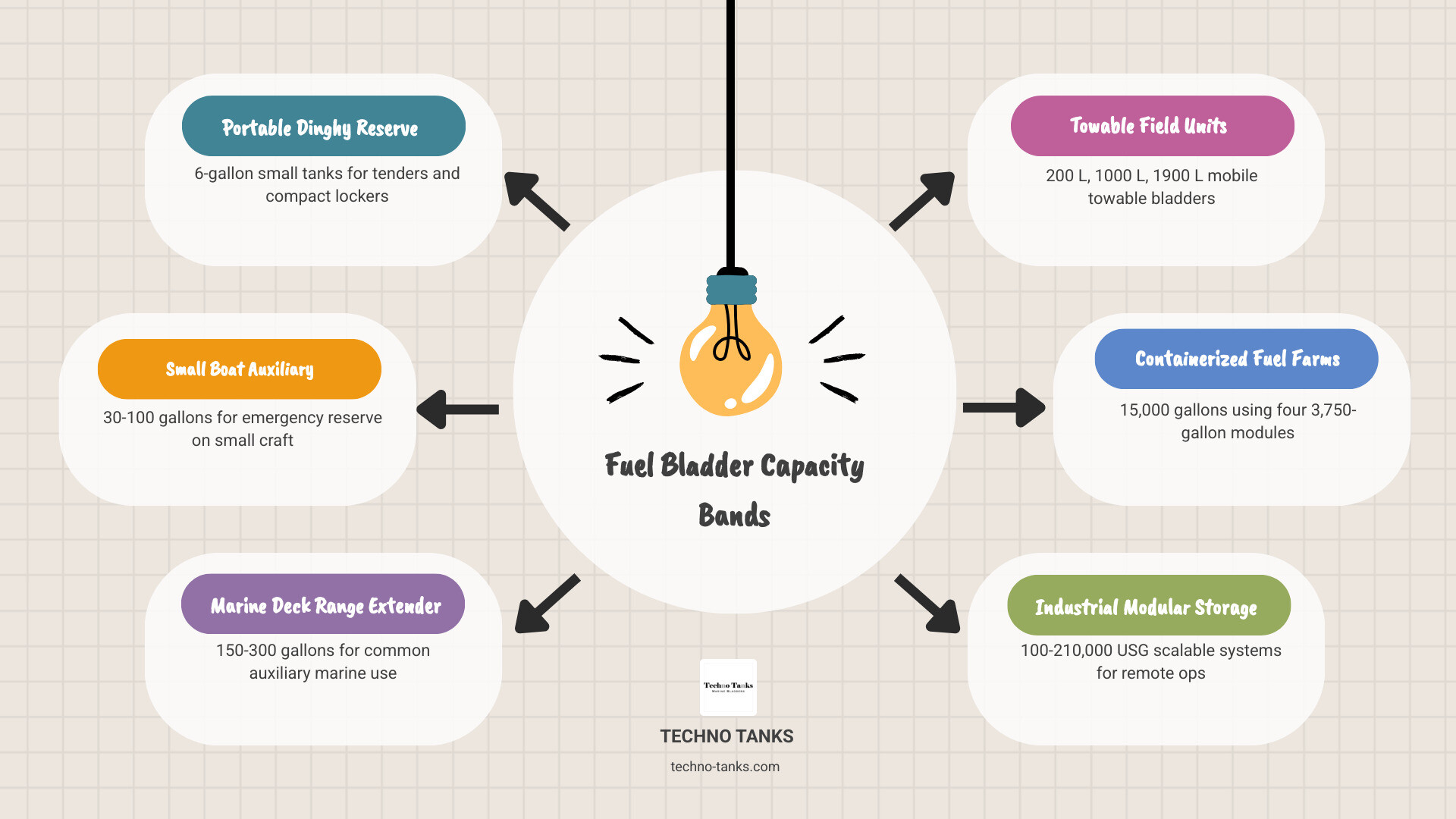
Common capacity bands include:
- 6 gallons: small portable rigid-tank reference for inflatables and dinghies
- 30 to 100 gallons: tenders, small boats, emergency reserve
- 150 to 300 gallons: common marine auxiliary range
- Around 296 gallons: compact tactical/mobile systems
- 1,500 gallons: commercial temporary storage
- 7,500 gallons: large industrial or remote-site storage
- 15,000 gallons: modular containerized systems
- 100 to 210,000 USG: broad industrial bladder range
- 3,000 to 300,000 litres: common metric product range
- 5 to 300 m3: large flexible storage category
Small inflatable fuel tank options for dinghies, tenders, and support craft
For marine buyers, the most useful sizes are usually on the small to mid range.
A few practical reference points:
- A 30-gallon bladder is useful for short offshore trips or support craft.
- An 80-gallon or 100-gallon bladder often fits owners who need serious range extension without overwhelming deck space.
- Techno Tanks offers recreational and offshore-friendly capacities from 30 to 3000 gallons, with many marine users shopping in the 30 to 300 gallon range.
- Compact rigid references still matter too. A 6-gallon bow-style portable tank remains useful for tiny inflatables and dinghies.
The right size depends on:
- Your engine burn rate
- Planned range
- Available deck area
- Weight distribution
- Safe tie-down locations
- Refueling method
If your boat already feels crowded with two coolers, six rods, and one friend who packs like he is crossing an ocean, sizing matters even more.
Valves, vents, fittings, and tie-down hardware that matter
Accessories are not exciting, but they decide whether your fuel setup feels professional or sketchy.
Important components include:
- Fill ports
- Vents
- Camlock fittings
- Caps
- Flanges
- Sight gauges on some portable systems
- D-rings or tie-down points
- Restraint straps
- Siphon kits
- Transfer pumps where appropriate
Large storage bladders often use fittings like 2-inch aluminum male camlocks plus dedicated vents. Marine auxiliary bladders may use more compact fittings, but secure venting and reliable hose connections are always essential.
For more on fittings, read Everything You Need to Know About Boat Fuel Tank Fittings and browse Accessories for Marine Fuel and Liquid Bladders.
5) Safe deployment, maintenance, and compliance before you buy
Buying the right inflatable fuel tank is only half the job. Using it safely is the other half.
For operating guidance, see Marine Bladder Operating Instruction Tips and Fuel Transfer Bladders.
Setup checklist for filling, securing, and emptying
Use this simple checklist before every trip or temporary deployment:
Prepare the surface
Use a clean, flat area free of sharp edges, hot exhaust parts, and abrasive hardware.Place the tank above deck when used on boats
Above-deck positioning helps venting, access, and cleanup. Flexible fuel bladders are generally not for in-hull mounting.Secure the bladder
Use all designated restraint points and lash the tank so it cannot shift in turns, chop, or wake impacts.Confirm compatibility
Make sure the bladder is designed for the exact fuel you plan to store.Inspect fittings and seams
Check for wear, abrasion, loose caps, damaged valves, or contamination.Fill slowly and never overfill
Stay within rated capacity. Leave room for safe venting and thermal expansion where required.Transfer fuel carefully
Gravity feed or siphon methods are often preferred in marine settings. Use appropriate pumps only where allowed and properly rated.Empty thoroughly
Many users roll the bladder gently toward the outlet to help purge the last usable fuel.Drain and dry for storage
Store empty bladders in a dry, vented location away from unnecessary sun exposure.Keep a repair kit and spill supplies
Minor damage is easier to manage if you plan ahead.
Research also shows fuel quality can remain serviceable for long storage periods if contamination control and additive practices are followed, with some expeditionary systems targeting roughly 12 to 18 months.
Rules and restrictions boaters and operators should know
Rules vary by use case, fuel type, and stored volume, so this is the part where we recommend doing the slightly less fun thing and checking the regulations before buying.
Important points:
- Secondary containment may be required or strongly recommended, especially for temporary or larger-volume storage.
- Spill prevention planning may apply depending on capacity and site conditions.
- Fire code, marina rules, and local authority requirements can affect where and how temporary fuel storage is allowed.
- Portable and temporary setups may still need to follow fueling safety standards, venting practices, and ignition-source controls.
- On boats, in-hull use of flexible fuel bladders is commonly restricted; above-deck secured use is the normal approach.
For regulatory reading, see Frequently Asked Questions – Office of the Illinois State Fire Marshal and California Code of Regulations, Title 8, Section 1594. Fueling.. Even if those pages are not your exact jurisdiction, they show the kind of safety issues regulators care about: venting, ignition control, transfer safety, and spill prevention.
Frequently Asked Questions about inflatable fuel tanks
Can you use an inflatable fuel tank for gasoline and diesel interchangeably?
Usually, no.
A bladder should be dedicated to the fuel type it was designed for. Different fuels interact differently with liners and coatings. Some constructions are intended for diesel, others for gasoline, jet fuel, or crude oil. Using the wrong fuel can shorten service life or create safety risks.
When in doubt, choose a fuel-specific product such as Gasoline Fuel Bladders or Diesel Fuel Bladders.
How long does an inflatable fuel tank last in sun, salt, and temperature extremes?
It depends on material quality, exposure, maintenance, and how carefully the tank is used.
Good TPU and urethane-coated fabrics are built for UV exposure, abrasion resistance, and temperature swings. Some flexible systems are rated for very wide ranges, from about -50 C to +90 C, while others fall within ranges such as -30 C to +70 C.
To extend service life:
- Avoid dragging the tank
- Keep it off sharp or hot surfaces
- Rinse off salt residue when appropriate
- Inspect seams and fittings regularly
- Store it dry and out of direct sun when not in use
Treat it like serious marine gear, not like a beach tote, and it will generally reward you.
Do I need secondary containment or permits for a marine or temporary fuel setup?
Sometimes, yes.
Secondary containment is often recommended and may be required depending on fuel volume, location, and whether the tank is used on land, dockside, or in commercial settings. Larger temporary storage setups may trigger spill prevention and permitting rules.
The practical answer is:
- Check marina or facility rules
- Check local fire and environmental requirements
- Confirm whether your storage volume changes compliance obligations
- Use containment whenever required or prudent
If you are planning anything beyond a simple recreational auxiliary setup, ask first and buy second. It is cheaper than the other order.
Conclusion: Choose the right flexible tank for safer, longer trips
The best inflatable fuel tank is the one that matches your fuel, your boat, and your real-world range needs.
For marine adventures, flexible fuel bladders offer a compelling mix of portability, leak-tight construction, corrosion resistance, and space savings. They can help us carry reserve fuel without committing to a permanent tank installation, and they scale from small support-boat capacities to large commercial systems.
At Techno Tanks, we focus on recyclable TPU fuel bladders in sizes from 30 to 3000 gallons, with custom options for owners who need a better fit for their deck, trip profile, or vessel layout.
If you are ready to extend range and simplify temporary fuel storage, explore our Marine Fuel Bladders, compare options in our Shop, or keep learning on our Blog.

