The Right 30 Gallon Plastic Tank Can Solve More Problems Than You Think
Quick Answer: Best 30 Gallon Plastic Tanks by Use Case
| Use Case | Best Tank Type | Key Feature |
|---|---|---|
| Emergency water storage | Rigid vertical or stackable | BPA-free, stackable 2 high |
| Marine/boat fuel carry | Flexible TPU bladder | Collapsible, fits odd spaces |
| Industrial/lab use | Rectangular LLDPE | External flange, 140°F rated |
| Truck bed or RV transport | Stackable rigid barrel | Tie-down points, spigot included |
| Portable off-grid use | Collapsible bladder | Lightweight when empty |
A 30 gallon plastic tank is one of those solutions that looks simple on the surface — but quietly handles a surprising range of storage problems across home, marine, and industrial settings.
As of May 2026, demand for versatile, portable storage has grown across emergency preparedness, off-grid living, and recreational boating. Whether you need a month’s worth of drinking water on standby or a reliable way to carry extra fuel on long fishing trips, the 30-gallon size hits a practical sweet spot: large enough to matter, small enough to move.
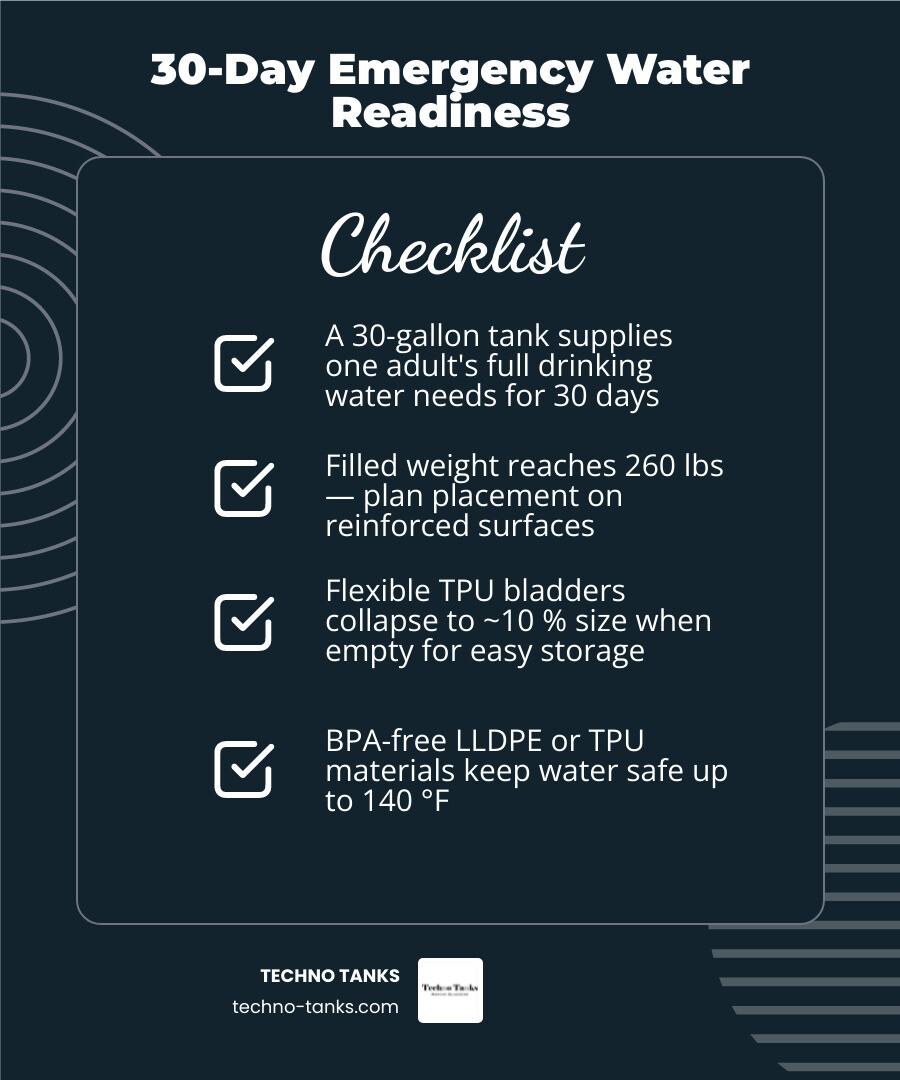
Filled, these tanks weigh around 260 lbs — so placement and design choices matter a lot before you commit to one.
I’m Ivan Jimenez, founder of Techno Tanks and Digital Ivan, where I’ve spent years working with industrial and marine storage solutions — including helping boat owners and off-grid users find the right 30 gallon plastic tank for their specific needs. In the sections below, I’ll break down every major design, material, and use case so you can choose with confidence.
Terms related to 30 gallon plastic tank:
Common Designs and Types of 30 Gallon Storage Solutions
When you start shopping for a 30 gallon plastic tank, you’ll quickly realize that “plastic” is a broad term. The design you choose—whether it’s a rigid barrel or a flexible bladder—depends entirely on where it’s going and what it’s holding.
In our experience at Techno Tanks, we see two primary schools of thought: the traditional rigid tank and the modern flexible bladder. Rigid tanks are usually made from Linear Low-Density Polyethylene (LLDPE) or High-Density Polyethylene (HDPE). These are fantastic for stationary storage. On the other hand, flexible bladders made from Thermoplastic Polyurethane (TPU) offer a level of portability that rigid tanks simply can’t match.
| Feature | Rigid Vertical/Rectangular Tank | Flexible TPU Bladder |
|---|---|---|
| Material | LLDPE or HDPE (Food Grade) | Recyclable TPU |
| Empty Weight | 14 lbs to 30 lbs | 5 lbs to 10 lbs |
| Space Efficiency | Fixed footprint | Collapsible when empty |
| Durability | Impact resistant, rigid | Puncture resistant, flexible |
| Best Use | Garage/Basement storage | Marine, RV, Truck beds |
Rigid designs often come in cylindrical, rectangular, or even “corner” shapes to maximize floor space. However, if you are working with the tight hatches of a boat or the limited bed space of a truck, a flexible design is often the “MVP” because it conforms to the available space. For a deeper dive into these materials, check out The Ultimate Guide to 30 Gallon TPU Tanks and Bladders.
The Space-Saving 30 Gallon Vertical Design
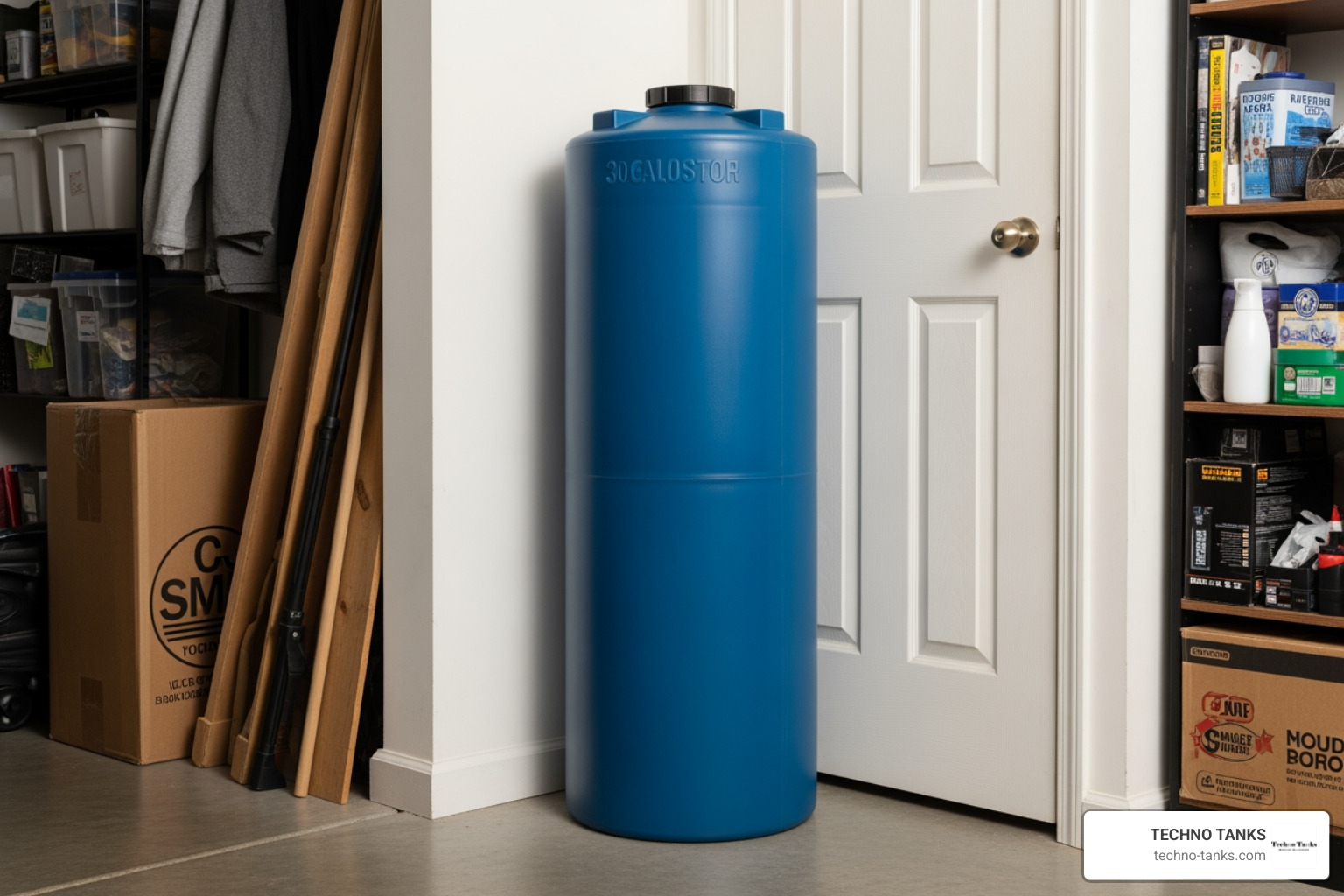
The vertical 30 gallon plastic tank is a staple for emergency preparedness. These tanks are designed to have a minimal footprint while maximizing height. A typical vertical water tank measures approximately 15″ x 15″ x 65″. This tall, slender profile allows it to fit into the back of a closet, a corner of the garage, or behind a door.
Because these tanks are often used for potable water, they are frequently molded in a dark blue color. This isn’t just for aesthetics; the dark color restricts light penetration, which is the number one way to prevent algae and bacterial growth during long-term storage.
Flexible and Portable 30 Gallon Bladders
If you’ve ever tried to fit a rigid 30-gallon drum into a small boat locker, you know the frustration. This is where the Product: 30 Gallons Marine Bladder shines. Unlike a rigid tank, a bladder is collapsible. When it’s empty, you can roll it up and store it in a drawer. When full, it expands to hold its capacity but remains low-profile.
Flexible tanks are also highly resistant to the “sloshing” effect. In a rigid tank that is half-full, the liquid moves violently back and forth, which can affect the stability of a vehicle or boat. A bladder collapses as the liquid is used, keeping the remaining fluid stable and reducing the center of gravity.
Material Specifications and Safety Standards
Not all plastics are created equal. If you are storing water for your family to drink or fuel for your engine, the material specification is the most important detail on the spec sheet.
- BPA-Free and Food-Grade: For water storage, look for FDA-compliant resins. Polyethylene tanks (LLDPE/HDPE) used for water should be BPA-free and meet FDA 21 CFR 177.1520 standards. This ensures that no harmful chemicals leach into your water supply over time.
- Thermoplastic Polyurethane (TPU): At Techno Tanks, we specialize in TPU. It is a high-tech material that is not only food-grade but also incredibly durable. It handles a wider range of temperatures and is more resistant to punctures than standard vinyl or thin plastics. Plus, it’s recyclable, making it a greener choice for May 2026 and beyond.
- UV Stabilization: If your 30 gallon plastic tank will be sitting in the sun—perhaps in a truck bed or on a boat deck—it must be UV stabilized. Without this, the plastic will become brittle and crack within a few seasons.
- Temperature Limits: Most polyethylene tanks have a maximum operating temperature of 140°F (60°C). If you are using these for industrial processes or in extremely hot climates, you must monitor these limits to prevent the material from softening.

Key Features for Maximum Utility
When comparing different models, the “bells and whistles” actually make a huge difference in how easy the tank is to use.
- Fittings and Spigots: Many 30-gallon tanks come with built-in spigots or bulkhead fittings. For emergency water, a bottom-mounted spigot is essential for easy dispensing. For industrial use, you might prefer “spin-weld” fittings that allow you to place the inlet and outlet exactly where you need them.
- Manway Lids and Access Ports: A larger opening (often 2 inches or larger) makes the tank easier to fill and clean. Some heavy-duty industrial models feature internal or external flanges for added strength around the lid.
- Gallon Markers: Translucent tanks (often called “natural” color) usually include molded-in graduated markings. This allows you to see exactly how much liquid is left at a glance—a lifesaver when managing fuel or critical water supplies.
- Tie-Down Points: If you plan on transporting your tank, look for integrated tie-down points or a design that accommodates mounting straps. 260 lbs of water moving at 60 mph is a significant safety hazard if not secured.
- Water Treatment Kits: Some premium emergency tanks include a water treatment kit. This is vital for long-term storage, as it keeps the water potable for up to five years without needing to be rotated.
For those using these for nautical purposes, knowing the hardware is half the battle. You can find more details in our guide on Everything You Need to Know About Portable Marine Tanks.
Best Applications: From Emergency Prep to Marine Use
The beauty of the 30 gallon plastic tank is its versatility. Here are the most common ways we see people putting these “MVPs” to work:
Emergency Preparedness
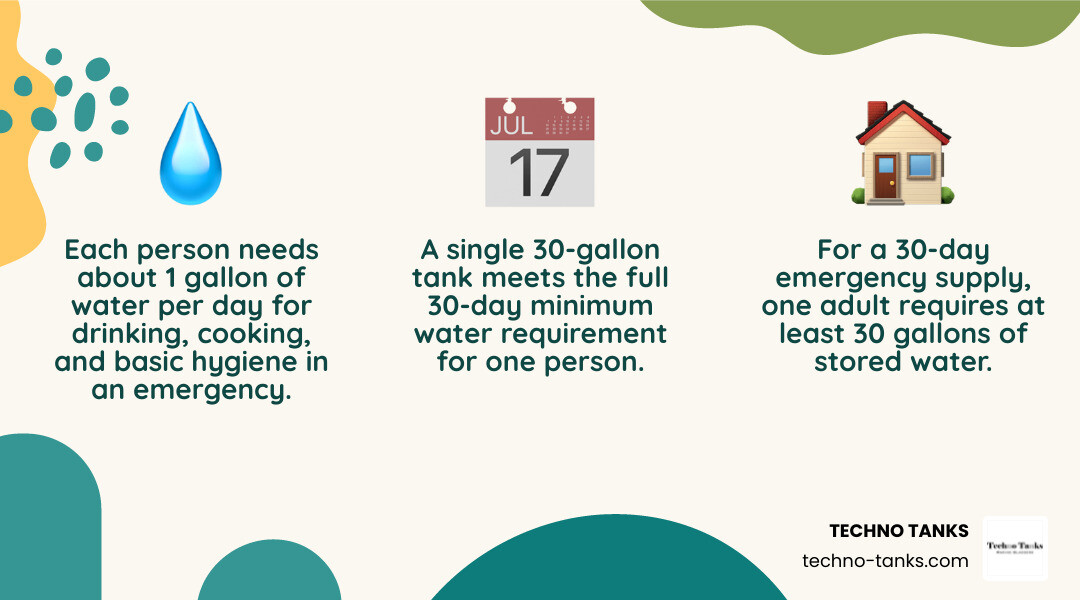
The general rule of thumb for emergency water is 1 gallon per person per day. A 30-gallon tank provides a one-month supply for one person. It’s the perfect “insurance policy” for power outages, well pump failures, or natural disasters. Because they are smaller than the massive 55-gallon drums, they are much easier to fit into apartments or small basements.
Marine and Boating
For boaters, range is everything. A 30 gallon boat bladder can extend your fishing or cruising trip significantly. Whether you are carrying extra fresh water for a week at sea or supplemental fuel for a long crossing, the ability to fold the tank away once it’s empty is a game-changer for deck space.
Off-Grid and RV Living
RV owners often use 30-gallon tanks as supplemental fresh water or as “grey water” (waste water) tanks. Since they are light when empty (around 25 lbs for rigid, even less for bladders), they can be moved easily to a dump station or a water fill-up point without moving the entire rig.
Industrial and Agricultural
In the industrial world, these tanks are used for everything from chemical storage to pharmaceutical transport. Heavy-duty LLDPE tanks with 1/4″ wall thickness provide the impact resistance needed for rugged environments. Farmers also use them for transporting water to livestock in remote pastures or for rainwater harvesting from small shed roofs.
Frequently Asked Questions about 30 Gallon Tanks
How much does a 30 gallon plastic tank weigh when full?
This is the most critical question for safety. Water weighs approximately 8.34 lbs per gallon. Therefore, 30 gallons of water weighs about 250 lbs. When you add the weight of the tank itself (14–30 lbs for rigid models), the total filled weight is approximately 260 lbs.
Safety Tip: Always place your tank in its final location before you fill it. Once full, it is nearly impossible to move without specialized equipment, and attempting to do so can lead to injury or tank damage. If you are storing multiple tanks on an upper floor of a house, ensure the floor joists can handle the concentrated load.
Can these tanks be used for fuel storage?
This depends entirely on the material. Do not use a standard water tank for gasoline. Standard polyethylene (LLDPE) used for water tanks is often not rated for fuels and can degrade or create a fire hazard.
However, specialized TPU bladders and specific high-density cross-linked polyethylene tanks are designed specifically for fuel. If you are looking for a fuel solution, ensure the product is specifically rated for “hydrocarbons” or “marine fuel.” To understand the pros and cons of these systems, read our comparison on Fuel Bladder vs Fuel Tank.
What are the storage safety recommendations?
- Stacking: If you use stackable rigid tanks, never stack them more than two high. Even then, ensure they are on a level, solid surface.
- Bracing: For rectangular tanks taller than 18 inches, manufacturers often recommend external bracing (like angle iron or a wooden frame) if the tank will be used at elevated temperatures or holds heavy liquids.
- Tipping: Because vertical tanks are tall and narrow, they can be tip-prone. We recommend using tie-down straps or wall brackets if you live in an earthquake-prone area or if the tank is in a high-traffic zone.
Conclusion
Whether you are preparing for the unexpected in May 2026 or planning your next big offshore adventure, the 30 gallon plastic tank is a tool that offers incredible peace of mind. Its size is the perfect compromise between high-capacity storage and manageable portability.
At Techno Tanks, we believe that storage should be as flexible as your lifestyle. Our patented, recyclable thermoplastic polyurethane (TPU) tanks are designed to go where rigid tanks can’t. They offer superior puncture resistance, long-term durability, and the environmental benefit of being fully recyclable.
When choosing your tank, consider the “filled weight” of 260 lbs, check for FDA-compliant materials if you’re storing water, and don’t forget to look for those high-utility features like UV stabilization and quality spigots. With the right 30-gallon solution in your kit, you’ll never have to worry about running dry.