
Why Recyclable Fuel Tanks Matter More Than You Think
Recyclable fuel tanks are not all created equal – and if you’re trying to dispose of, recycle, or repurpose an old tank, the material it’s made from changes everything.
Here’s a quick answer to what most people need to know:
| Tank Type | Recyclable? | Key Challenge |
|---|---|---|
| Steel | Yes – high scrap value | Residual fuel contamination must be cleared first |
| Single-layer HDPE | Mostly yes | Fuel residues absorbed into tank walls |
| Multilayer HDPE (with EVOH) | Very difficult | Mixed plastic chemistries resist standard recycling |
| Aluminum | Yes – good scrap value | Fittings and coatings must be separated |
| Thermoplastic Polyurethane (TPU) | Yes – 100% recyclable | Less common but highly end-of-life friendly |
The short version:
- Empty the tank completely and remove all fuel residues
- Identify the tank material before choosing a recycling path
- Check whether contents classify as hazardous waste under RCRA
- Work with a certified waste handler for transport and processing
- Request a certificate of disposal for compliance documentation
Now, the fuller picture.
Recycling a fuel tank sounds simple. It isn’t. Even an “empty” tank can still contain flammable vapors, absorbed hydrocarbons in the tank walls, and residues that legally classify as hazardous waste. Mishandle it, and you’re not just dealing with an environmental problem – you’re dealing with a safety one.
The challenge runs deeper with plastic tanks. By the early 2000s, plastic fuel tanks had captured 72% of the North American market for new cars and light trucks. But unlike steel – where 70-80% of a typical passenger car’s ferrous content is already recoverable through well-established infrastructure – plastic tanks can contain over two dozen different plastic chemistries. That makes standard recycling nearly impossible for many of them.
The result? Many tanks end up in landfills simply because the infrastructure and economics don’t support recycling them. That’s a problem worth solving.
This guide explains how to evaluate recyclable fuel tanks safely, legally, and responsibly, with a practical focus on material type, contamination risks, and end-of-life handling.
Recyclable fuel tanks vocabulary:
The Material Science of Recyclable Fuel Tanks
Material choice decides whether a tank is a recycling success story or an expensive headache.
Steel and aluminum are usually the easiest to recover because metal recycling infrastructure is mature and the scrap has value. Plastic is more complicated. A simple, single-resin tank is far easier to reprocess than one built from layers, coatings, adhesives, valves, foams, and mixed fittings.
Here is the practical comparison:
| Tank Construction | Typical End-of-Life Outcome | Main Recycling Barrier | Notes |
|---|---|---|---|
| Steel rigid tank | Scrap recycling | Fuel sludge, rust, coatings | Strong ferrous recovery market |
| Aluminum rigid tank | Scrap recycling | Mixed fittings, sealants, paint | Good value when separated cleanly |
| Single-layer HDPE tank | Limited mechanical recycling | Hydrocarbon absorption | Must be thoroughly cleaned |
| Multilayer HDPE with EVOH | Difficult recycling | Incompatible mixed layers | Often downcycled, not closed-loop |
| Flexible TPU tank | Strong recyclability potential | Fittings separation and contamination control | Monomaterial designs help a lot |
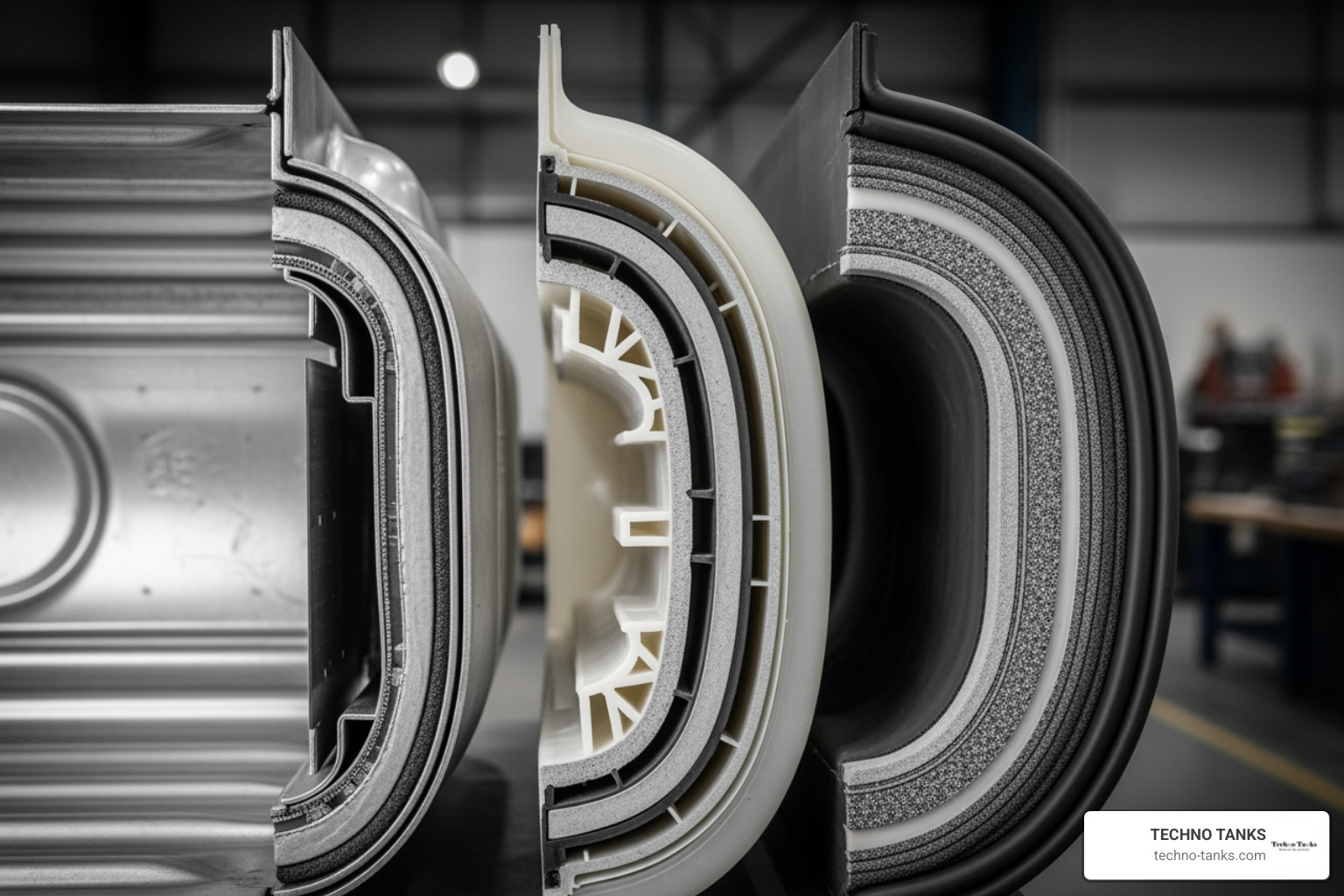
A key issue with plastic automotive tanks is multilayer construction. To reduce vapor emissions, manufacturers often use coextruded layers that may include HDPE, tie layers, and EVOH barrier resin. Great for emissions control, not great for easy recycling. Those layers do not melt and behave the same way during standard reprocessing, so the recycled output can lose strength, consistency, or odor performance.
That is why the technical work discussed in this SAE paper on post-consumer plastic fuel tank recycling matters. It showed that recovered HDPE from old tanks can be regenerated and even reused in new coextruded tanks at meaningful percentages when the process is carefully controlled. In other words: difficult does not mean impossible, but it does mean specialized.
Advantages of Monomaterial Flexible Tanks
This is where design for recycling starts paying off.
When a tank is built around one primary polymer instead of a stack of incompatible layers, end-of-life handling becomes much simpler. That is one reason we see long-term promise in flexible tanks made from recyclable thermoplastic polyurethane.
Advantages of monomaterial flexible tanks include:
- Less need for complex coextrusion
- Fewer adhesive contamination issues
- Simpler shredding and reprocessing
- Easier separation of fittings from the base material
- Better alignment with circular-economy goals
For buyers evaluating future disposal costs, this matters just as much as performance in service. A tank that is light, durable, and recyclable is easier to justify over its full lifecycle.
If you are comparing formats, our guide on Fuel Bladder vs Fuel Tank is a useful starting point.
Specialized Fuel Tank Constructions and Recycling Considerations
Not all tanks fit neatly into “metal” or “plastic.”
Some systems include:
- Aluminum necks or access plates
- Steel brackets
- Sender modules and pumps
- Internal suppression media
- Foam baffling
- Composite housings
- Modular safety units
- Specialized racing or industrial fuel cells
These constructions influence disposal. A modular tank with removable hardware may be easier to disassemble and sort. A mixed-material fuel cell with rubber, foam, and metal parts may require specialty decommissioning. A flexible bladder with isolated fittings is often easier to separate into recyclable and non-recyclable streams.
The main lesson is simple: the more materials blended into one tank, the harder the recycling path becomes.
Regulatory Compliance and Hazardous Waste Standards
Fuel tank recycling is not just a materials problem. It is also a legal one.
Under hazardous waste rules, a tank can still be regulated even when you intend to recycle it. The EPA explains this in its overview of regulatory exclusions and alternative standards for recycled materials. The short version is that “being recycled” does not automatically make a waste non-hazardous.
Three frameworks matter most in practice:
RCRA empty standards
A tank usually must meet “empty” criteria before it can move into safer handling pathways. That generally means removing all pourable fuel by pumping, pouring, or aspirating and minimizing residue.API 1604 practices
These are widely referenced for tank decommissioning, especially around purging vapors, cleaning, and making tanks safe for handling or cutting. In plain English: no sparks near a tank that still thinks it is full.Additional jurisdiction-specific rules
Transport, storage, and disposal can trigger extra requirements, especially for underground or regulated storage systems. Because rules vary, professional review is often worth the money.
If the tank is below grade or connected to regulated storage equipment, the compliance burden may increase. Design also matters. For example, tank wall configuration can trigger specific rules, as seen in guidance such as state information on single-walled tank requirements.
Contamination Risks and Testing Thresholds
A tank may be hazardous because of what it contains, what soaked into it, or what sludge remains at the bottom.
Common red flags include:
- Low flashpoint residues indicating ignitability
- Benzene contamination
- Lead contamination
- Free liquids and sludge
- Strong vapor concentrations
- Water-fuel mixtures carrying dissolved contaminants
Testing often focuses on whether the waste is ignitable or toxic. While exact thresholds depend on the test method and waste profile, practical screening typically includes:
- Flashpoint testing for ignitable liquids
- Benzene analysis as part of toxicity evaluation
- Lead analysis where leaded fuels or older contamination are possible
- Vapor testing before entry, cutting, transport, or repurposing
If a tank is going to be reused, repurposed, or repaired, gas-free certification can be essential. That means a qualified professional has tested and documented that dangerous vapors have been removed to a safe level for the intended work.
One point that gets overlooked: an “empty” tank can still be unsafe. Fuel vapors are often more dangerous than the liquid itself because they can ignite quickly in a confined space.
How to Safely Decommission and Process Old Tanks
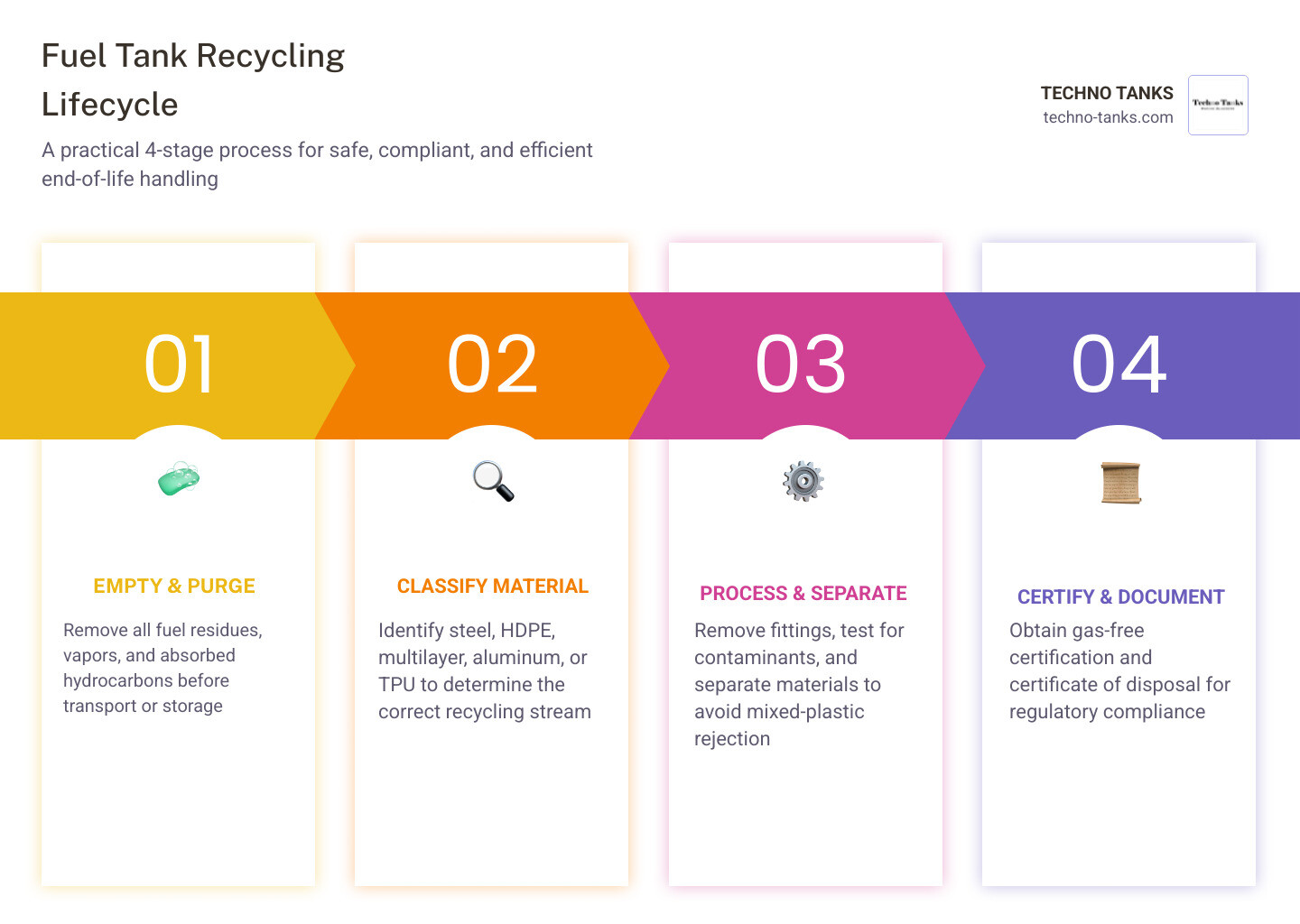
Here is the safe, practical sequence we recommend for most old tank projects.
Identify the tank type and contents
Determine whether it is steel, aluminum, HDPE, TPU, or a mixed construction. Note the fuel type, age, damage, and whether the tank has pumps, wiring, or suppression material.Remove all recoverable fuel
Use pumping, aspirating, or controlled draining. If the fuel is still usable, fuel polishing may restore it to specification instead of sending it straight to waste.Clean and purge the tank
Residual liquids, sludge, and vapors must be removed. Purging and inerting reduce ignition risk during transport and processing.Test and classify residues
This is where hazardous waste determinations happen. If residues are ignitable or toxic, the waste stream must be managed accordingly.Separate components
Remove valves, fittings, sensors, pumps, brackets, and any mixed-material hardware. Good separation improves recycling value and reduces disposal cost.Document chain of custody
Keep records of removal, transport, waste classification, processing, and final recycling or disposal. If sustainability reporting matters, request a certificate of disposal.Choose the right end path
That may be metal recycling, polymer reprocessing, repurposing, or regulated disposal if recycling is not feasible.

A note on repurposing: sometimes refurbishing or decommissioning in place is more practical than full removal. Research shows in-place decommissioning can cut costs by roughly 30% to 50% compared with complete removal in some projects. That said, it only works when regulations, tank condition, and future site plans allow it.
Best Practices for Inspecting Recycled Fuel Tanks
If a tank is being reused rather than simply recycled, inspection standards become stricter.
According to I-CAR guidance for collision repair, a recycled fuel tank should be cleaned and flushed before installation. The fuel pump and sender module should be inspected, and if the original module is undamaged, it may be reused. The broader point is that recycled tanks are not “grab it and bolt it in” parts.
Inspection checklist:
- Flush the interior thoroughly
- Check for odor, varnish, sludge, or water
- Inspect welds, seams, and corners
- Verify fittings and threads are intact
- Inspect seal surfaces and gaskets
- Check for corrosion in metal tanks
- Check for swelling, cracking, or permeation damage in plastic tanks
- Review sender and pump compatibility
- Keep documentation of cleaning and inspection
This logic also applies beyond collision repair. Any recycled tank, whether rigid or flexible, needs proof that it is structurally sound and free from dangerous contamination before reuse.
For operators evaluating flexible storage options, related resources include Fuel Bladder Specs, Fuel Bladder Sizing Guide, and Fuel Bladder Pricing.
Emerging Technologies and AI in Resource Recovery
This is where the industry gets interesting.
Traditional disposal has often won because it is simpler, not because it is better. But several technologies are making fuel tank recycling more realistic.
Thermal desorption
This process heats contaminated material to drive off fuel residues and volatile compounds. It can be highly effective for tanks, soils, and absorbent waste contaminated with hydrocarbons. In some systems, throughput can exceed 20 tons per hour, making it useful for larger industrial streams.
Advanced extrusion and devolatilization
For plastic tanks, one challenge is residual odor and volatile organic compounds in the polymer. Advanced extrusion systems can strip VOCs during reprocessing, improving the quality of recycled HDPE.
Fuel polishing
Not every “waste” fuel stream is actually waste. Fuel polishing filters out water, particulates, and degradation byproducts so fuel can sometimes be restored to usable condition. That reduces both disposal volume and replacement fuel cost.
AI-driven sorting and monitoring
About 70% of industrial waste is improperly sorted, which is a giant efficiency leak. New systems using IoT sensors and AI-powered image recognition are now reported to achieve over 95% sorting accuracy. For mixed tank waste, that can improve recovery of metals, polymers, and reusable components while reducing contamination between streams.
Professional service providers also matter here. Assessments by experienced teams can reduce total costs by up to 20% by identifying recyclable fractions, avoiding regulatory mistakes, and choosing the right process the first time. Fancy algorithms are great, but people who know what a vapor hazard smells like are still useful.
Economic and Environmental Benefits of Sustainable Disposal
Recycling beats disposal when the process is safe, compliant, and technically feasible.
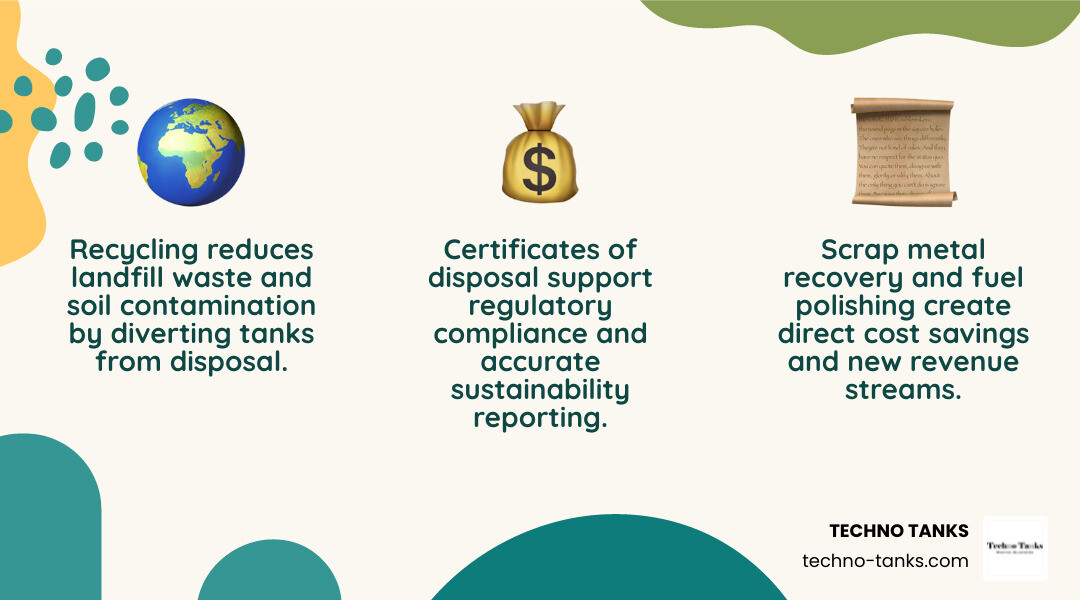
Environmental benefits include:
- Less landfill waste
- Lower risk of soil and water contamination
- Better recovery of metals and polymers
- Reduced demand for virgin raw materials
- Stronger sustainability reporting
Economic benefits include:
- Scrap value for steel and aluminum
- Lower disposal volumes
- Potential recovery of usable fuel through polishing
- Reduced compliance risk and cleanup liability
- Better lifecycle planning when tanks are designed for recyclability
Still, barriers remain. Plastic tanks often have no scrap value. Dismantlers may still have to remove them, clean them, and pay to dispose of them. That is one reason many end up landfilled. Infrastructure is also uneven. Steel recovery is mature; plastic fuel tank recycling is not.
European end-of-life vehicle rules have long pushed manufacturers toward high recyclability targets, including the commonly cited 85% recyclability threshold for vehicle components. That kind of design pressure matters. It encourages manufacturers to think ahead about material selection, disassembly, and end-of-life handling.
For tank users, transport efficiency also matters. Flexible systems can reduce empty transport volume compared with rigid tanks, especially when collapsible designs are used. If that is relevant to your operation, see our pages on Collapsible Fuel Tanks, Marine Fuel Bladders, and Everything You Need to Know About Portable Marine Tanks.
Certificates of disposal or recycling are more than paperwork. They help support sustainability claims, internal audits, insurance files, and regulatory records. If your company reports environmental metrics, those certificates are gold. Or at least paper pretending to be gold.
Frequently Asked Questions about Fuel Tank Disposal
Why are some fuel tank materials easier to recycle than others?
Because recycling works best when the material stream is clean, valuable, and consistent.
Steel is easy because it has scrap value and strong recovery infrastructure. Aluminum is also attractive when separated properly. Single-layer plastics are harder, but still potentially recyclable if cleaned well. Multilayer plastic tanks are the toughest because barrier layers like EVOH, tie resins, labels, adhesives, and absorbed fuel residues all interfere with standard recycling.
Monomaterial designs are generally the most end-of-life friendly.
How can I tell if my fuel tank is considered hazardous waste?
You need to look at both the tank and the residue.
A tank may be hazardous if it contains or held ignitable fuel residues, toxic contaminants such as benzene or lead, or enough vapor and sludge to fail hazardous waste criteria. Practical indicators include low flashpoint residue, visible sludge, strong vapor readings, stained interiors, and unknown prior contents.
Do not guess. Have residues tested and classified before transport or cutting. If you are unsure, treat the tank as potentially hazardous until a qualified professional says otherwise.
What should I do before transporting a decommissioned fuel tank?
At minimum:
- Empty it fully using a safe method
- Remove sludge and free liquids
- Purge or inert the tank so vapors do not create an ignition hazard
- Confirm the waste classification
- Secure openings and fittings
- Label and document the tank properly
- Use a qualified transporter if hazardous materials rules apply
If the tank is being moved for reuse, add cleaning, inspection, and documentation. If it is being moved for recycling, separate components first whenever practical. And if you are tempted to rinse it with random fuel and call it “clean,” please resist the urge to create tomorrow’s incident report.
Conclusion
Recycling fuel tanks safely comes down to three things: material, contamination, and process.
Steel and aluminum remain the easiest tanks to recover because they have value and established recycling routes. Traditional plastic tanks can be recyclable in limited cases, but multilayer designs with EVOH barriers are still difficult and expensive to process. That is why design choices matter so much at the front end. The closer we get to simpler, separable, recyclable materials, the better the end-of-life outcome.
For marine operators, that is where flexible fuel storage can offer a meaningful advantage. Techno Tanks manufactures marine fuel bladders in patented, recyclable thermoplastic polyurethane from 30 to 3000 gallons, giving buyers a storage option that supports both performance and more responsible end-of-life planning. If you are exploring sustainable marine solutions, start with Marine Fuel Bladders or learn more about custom marine fuel tanks.
The future of recyclable fuel tanks is not just about finding better ways to dispose of old tanks. It is about choosing better tanks from the beginning.

