
What You Need to Know About Short Term Fuel Storage
Short term fuel storage done right is the difference between fuel that performs when you need it and fuel that’s already degrading in the tank.
Quick answer for most users:
| Fuel Type | Safe Short-Term Storage Duration | Key Risk |
|---|---|---|
| Unleaded Gasoline | Up to 6 months | Oxidation, phase separation (ethanol blends) |
| Ultra-Low Sulfur Diesel (ULSD) | 6 months to 1 year | Microbial growth, water contamination |
| Treated Fuel (stabilizer added) | Up to 1–2 years | Depends on storage conditions |
The basics:
- Store fuel in clean, sealed containers away from heat, sunlight, and ignition sources
- Add a fuel stabilizer if storing for more than a few weeks
- Monitor for water, sediment, and odor changes
- Use collapsible bladders or approved containers sized to your actual operational needs
Whether you’re managing backup diesel for a generator, extending range on a vessel, or staging emergency fuel for remote operations, the rules are the same: oxygen, heat, water, and time are your enemies.
Modern fuels — especially ULSD and ethanol-blended gasoline — are more sensitive to degradation than older formulations. ULSD’s reduced aromatic content makes it easier for microbes to grow. Ethanol blends absorb moisture and can phase-separate, stripping octane and leaving behind lower-quality fuel. These aren’t edge cases. They’re common failure points that operators deal with in the field.
This guide covers shelf life, degradation mechanisms, best storage practices, transfer safety, regulatory requirements, and how to restore fuel that’s been sitting.
Understanding the Shelf Life of Gasoline and Diesel
When planning short term fuel storage, the clock starts ticking the moment the fuel leaves the refinery. Understanding the specific shelf lives of different fuel types is critical for maintaining operational readiness.
Safe Storage Durations for Common Fuels
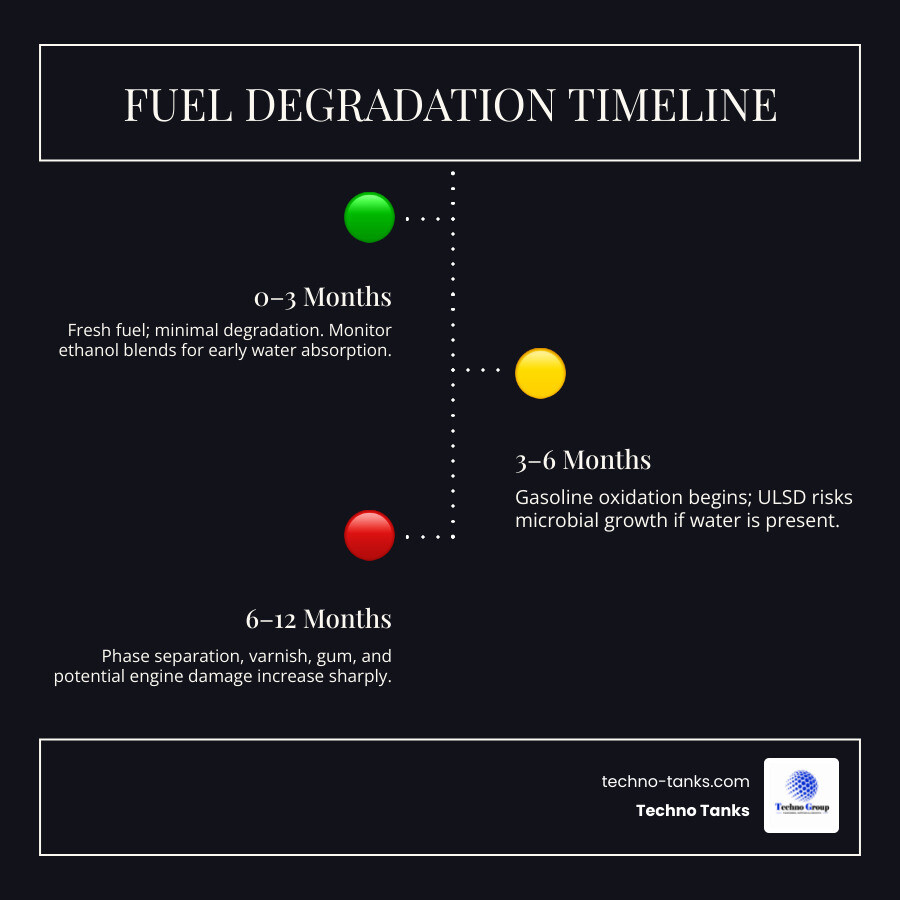
Under optimal conditions—meaning the fuel is kept in a clean, hermetically sealed, dry container or tank away from direct sunlight, heat, and ignition sources—both gasoline and diesel can generally be stored for 6 months to 1 year without significant degradation.
However, “optimal” is rarely the default in real-world operations.
- Unleaded Gasoline: Standard pump gasoline typically has a reliable shelf life of 3 to 6 months. If it contains ethanol (such as E10 or E15), that window shrinks to as little as 2 to 3 months due to its affinity for moisture.
- Ultra-Low Sulfur Diesel (ULSD): Modern diesel fuels can safely sit for 6 to 12 months. Beyond this point, chemical changes accelerate, especially if water is present in the storage system.
For a deeper dive into residential and basic commercial fuel shelf lives, How to store gas at home (and does gas go bad?) – The Prepared offers excellent foundational context on how environmental variables affect these timelines.
Risks of Prolonged Fuel Storage
Allowing fuel to sit past its usable lifespan introduces severe operational risks. Prolonged storage of gasoline and diesel is highly discouraged without active maintenance.
As fuel degrades, it undergoes chemical changes that form harmful varnish, gum, and solid particulates. These contaminants quickly clog fuel lines, primary and secondary filters, and high-pressure fuel injectors.
For high-performance marine engines, backup generators, or heavy industrial machinery, running degraded fuel can result in:
- Sudden engine stalls or loss of power.
- Expensive injector damage.
- Permanent damage to fuel pumps due to lack of lubricity.
- Acidic corrosion within the fuel system.
Primary Degradation Mechanisms in Short Term Fuel Storage
To successfully manage fuel over a short period, operators must understand the chemical and biological processes that ruin it. Three primary mechanisms drive fuel degradation: oxidation, hydrolysis, and microbial growth.
| Degradation Factor | Primary Target | Mechanism | Operational Consequence |
|---|---|---|---|
| Oxidation | Gasoline & Diesel | Exposure to oxygen in container headspace | Gum and varnish formation, filter clogging |
| Hydrolysis | Diesel & Biodiesel | Chemical reaction with free or dissolved water | Acid formation, fuel system corrosion |
| Microbial Growth | ULSD & Biodiesel Blends | Microbes feeding on hydrocarbons at the water-fuel interface | Sludge, biomass, severe filter plugging |
| Phase Separation | Ethanol-Blended Gasoline | Water absorption exceeding the ethanol saturation point | Octane loss, engine-damaging water layer at tank bottom |
Chemical Breakdown and Phase Separation
Oxidation occurs when fuel is exposed to oxygen, a process accelerated by temperature swings and large headspaces in rigid tanks. The oxygen reacts with the hydrocarbons, breaking them down into soluble gums and insoluble varnishes.
In gasoline containing ethanol, moisture absorption leads to a phenomenon known as phase separation. Ethanol is hygroscopic—it actively pulls water out of the surrounding air. Once the water content in the fuel reaches a critical threshold (roughly 0.5% by volume at room temperature), the ethanol and water bind together and separate from the gasoline.
This mixture sinks to the bottom of the tank, leaving a low-octane, highly corrosive layer at the bottom and a stripped, underperforming gasoline layer on top.
Microbial Contamination in Modern ULSD
Contemporary Ultra-Low Sulfur Diesel (ULSD) faces a unique vulnerability. Environmental regulations have reduced diesel’s sulfur content to a maximum of 15 ppm. However, the refining processes used to achieve this also reduce the fuel’s aromatic hydrocarbon content.
Because aromatic hydrocarbons naturally inhibit microbial activity, today’s ULSD is far more susceptible to microbial infestation.
When water enters a diesel storage system—either through condensation or improper sealing—it settles at the bottom of the tank. Microbes (bacteria, wild yeasts, and molds) thrive in this water-fuel interface, feeding on the aliphatic hydrocarbons in the diesel. This results in the formation of a thick, gelatinous biomass often referred to as “diesel algae.”
Left unchecked, this biomass clogs filtration systems rapidly and produces acidic byproducts that corrode steel tanks and fuel system components. Addressing this requires a combination of strict water management, regular testing (such as ATP testing), and targeted biocide treatments when contamination is detected.
Best Practices for Temporary and Portable Fuel Storage
The choice of storage vessel directly dictates how well fuel resists degradation. While rigid steel or plastic tanks have their place, modern flexible systems offer substantial chemical and physical advantages for temporary applications.
Why Collapsible Bladders Outperform Rigid Tanks
For temporary fuel storage, flexible fuel bladders made of high-grade Thermoplastic Polyurethane (TPU) or elastomer-coated fabrics outperform traditional rigid tanks in several key areas:
- Elimination of Headspace: In a rigid tank, as fuel is drawn down, air enters to fill the void. This air contains oxygen and moisture, fueling oxidation and condensation. Collapsible bladders collapse as they empty, keeping headspace—and therefore oxygen and moisture contact—at absolute zero.
- Prevention of Condensation: Because there is no air gap inside a collapsing bladder, temperature swings cannot cause water vapor to condense on internal walls.
- Space-Saving Footprint: When empty, flexible bladders roll up or fold flat, taking up a fraction of the space required by empty rigid tanks. This makes them ideal for auxiliary fuel capacity, range extension, and rapid-deployment logistics.
For operators looking to integrate these systems into marine or industrial setups, understanding the hardware options is essential. Resources like Everything You Need to Know About Portable Marine Tanks and The Complete Guide to Marine Bladder Tanks and Storage provide detailed technical guides on selecting, sizing, and deploying flexible storage units.
Environmental Controls for Short Term Fuel Storage
Regardless of the container type, keeping environmental variables in check is critical:
- Temperature Control: Store fuel in a cool, shaded area. High temperatures accelerate chemical degradation and vapor pressure buildup. If storing fuel outdoors, use reflective covers or canopy structures to minimize solar heating.
- UV Protection: Direct sunlight degrades fuel and can weaken plastic containers over time. Ensure your storage bladders or portable tanks are constructed from UV-resistant materials.
- Ventilation: Ensure the storage area has adequate airflow to prevent the accumulation of heavy, flammable fuel vapors (especially gasoline vapors, which are heavier than air and pool in low-lying spaces).
Safe Handling, Transfer, and Static Mitigation
Moving fuel from a storage container to an engine or secondary tank is the phase where safety and contamination risks are highest. Proper procedures must be followed to prevent static ignition and keep the fuel clean.
Grounding and Static Electricity Prevention
Flowing fuel generates static electricity. When transferring volatile liquids like gasoline, a single spark can be catastrophic.
- Bonding and Grounding: Always establish a physical, electrical connection between the supply container and the receiving tank using bonding cables before opening any fuel caps. This equalizes the electrical potential between the two vessels, eliminating the risk of a spark.
- Outdoor Handling: Perform all fuel transfers and de-fueling operations outdoors or in highly ventilated areas to prevent vapor buildup. This is especially critical during weight-management siphoning or temporary de-fueling operations.
- Flow Rate Control: Avoid excessively high flow rates when starting a transfer, as high velocities increase static generation.
For step-by-step instructions on handling flexible systems safely, review How to Transfer Fuel from a Fuel Bladder, which covers pump configurations, valve operations, and safety protocols.
Minimizing Contamination During Transfer
To prevent dirt, dust, and water from entering your fuel system during a transfer:
- Use Closed-Loop Systems: Whenever possible, use dry-disconnect couplings and sealed transfer hoses to isolate the fuel from the surrounding environment.
- Deploy Multi-Stage Filtration: Pass the fuel through a quality filter during the transfer process. A 10-micron particulate filter paired with a water-separating element is highly recommended.
- Dust Caps: Keep all dust caps and plugs securely fastened to bladder valves and hose ends when they are not actively in use.
For larger setups or emergency configurations, The Ultimate Guide to Marine Emergency Fuel Supply Systems provides a comprehensive look at setting up reliable, contamination-free fuel delivery lines.
Safety Standards and Regulatory Compliance
Storing fuel—even temporarily—comes with strict legal and safety responsibilities. Compliance with federal, state, and local regulations protects your personnel, your equipment, and the environment.
Federal and Local Storage Regulations
Different regulatory bodies govern how fuel must be managed:
- OSHA Standards: OSHA standard 1917.156 – Fuel handling and storage. | Occupational Safety … – OSHA outlines clear protocols for handling flammable liquids, including requirements for venting, fire safety, and approved dispensing equipment.
- NFPA 30: The National Fire Protection Association’s Flammable and Combustible Liquids Code dictates volume limits, ignition source separations (such as keeping gasoline at least 50 feet away from electrical equipment), and fire suppression requirements.
- Local Ordinances: Municipal codes and hangar lease agreements often place strict limits on the volume of fuel that can be stored in specific areas, often prohibiting fuel storage entirely in aircraft hangars or unventilated storage lockers.
When decommissioning or replacing older storage systems to stay compliant, refer to Recycling Fuel Tanks: A Guide to Not Blowing Things Up to ensure safe, legal disposal of retired assets.
Secondary Containment Requirements
The EPA’s Spill Prevention, Control, and Countermeasure (SPCC) rule requires facilities storing 1,320 gallons or more of oil or fuel aboveground to have a comprehensive spill prevention plan.
A cornerstone of this compliance is secondary containment.
+-------------------------------------------------------+
| SECONDARY CONTAINMENT |
| |
|   +-----------------------------------------------+   |
|   | PRIMARY FUEL BLADDER |   |
|   |  [Holds up to 110% of total fuel capacity] |   |
|   +-----------------------------------------------+   |
| |
|  ===================================================  |
|  [ Spill Containment Berm / Flexible Dike System ] |
+-------------------------------------------------------+
When deploying flexible fuel bladders for temporary storage on land, they should always be placed inside a compatible spill containment berm. These portable, flexible dikes are designed to hold at least 110% of the primary bladder’s capacity, ensuring that any accidental puncture or valve leak is safely contained before it can impact the surrounding environment.
Maintaining and Restoring Fuel Quality
If fuel must be stored near or slightly beyond its recommended limits, active intervention can preserve or restore its quality.
Chemical Stabilizers and Biocides
Adding chemical treatments to fresh fuel is the most effective way to slow down degradation.
- Fuel Stabilizers: High-quality commercial stabilizers work by binding with reactive compounds in the fuel to prevent oxidation and gum formation. Adding a stabilizer to fresh fuel can extend its useful storage life by an extra year. This annual treatment can be repeated 5 to 10 times under ideal conditions, potentially giving the fuel a total storage life of 5 to 10 years.
- Biocides: If testing reveals microbial growth in diesel fuel, a biocide treatment must be administered. Biocides actively kill bacteria and fungi living in the fuel-water interface. Biocides should be used as a targeted treatment rather than a constant preventative measure to avoid creating resistant microbial strains.
- Water Control Additives: These additives help disperse minor amounts of moisture, preventing the water accumulation required for microbial growth and hydrolysis.
For an engaging, practical look at the consequences of improper storage and how to avoid common mistakes, this video guide is highly recommended: STOP Storing Gas Like This: The EMERGENCY Fuel … – YouTube.
Fuel Polishing and Filtration for Short Term Fuel Storage
Once fuel has degraded or accumulated water and sediment, chemical additives alone are not enough. The fuel must undergo physical restoration, a process known as fuel polishing.
Fuel polishing is a technical maintenance procedure that extracts fuel from the storage vessel, passes it through a multi-stage filtration system, and returns the clean fuel to the tank. The process typically involves:
- Water Coalescence and Separation: Removing both free water and emulsified water droplets from the fuel.
- Fine Particulate Filtration: Passing the fuel through progressively smaller micron filters (often down to 2 microns) to capture gums, varnishes, and rust particles.
- De-aeration: Removing trapped air bubbles that could cause fuel pump cavitation.
Regular fuel polishing keeps stored fuel within engine manufacturer specifications, ensuring that critical emergency backup systems or marine engines perform flawlessly when called upon.
Frequently Asked Questions
How long can diesel be stored without degrading?
Under clean, dry, and cool conditions, untreated ultra-low sulfur diesel (ULSD) can be stored for 6 months to 1 year without significant degradation. If treated with a high-quality commercial fuel stabilizer immediately upon purchase, its storage life can be extended by an additional year, with potential for longer-term preservation through annual re-treatment and active water management.
Can you mix old fuel with fresh fuel?
It depends on the level of degradation. If the old fuel is only slightly past its prime (e.g., gasoline that is 6 months old) and shows no signs of severe cloudiness, dark discoloration, or sour odor, dilution with fresh fuel at a high ratio (such as 4 parts fresh to 1 part old) is generally acceptable for standard engines. However, heavily degraded fuel containing visible gums, varnishes, or water should never be mixed with fresh fuel, as it will contaminate the new batch and damage engine components.
What is the best container for temporary gasoline storage?
The best container is one that is airtight, constructed from high-density polyethylene (HDPE) or corrosion-resistant metals (like stainless steel), and specifically certified for gasoline storage (such as UL or FM-approved containers). For larger, temporary, or auxiliary applications where rigid tanks are impractical, flexible fuel bladders made from highly durable, gasoline-compatible elastomers offer the superior advantage of collapsing as they empty, eliminating the air headspace that drives fuel oxidation and condensation.
Conclusion
Managing short term fuel storage effectively requires a proactive approach. Understanding that modern fuel formulations are highly susceptible to oxidation, phase separation, and microbial growth allows operators to implement the right preventive measures before engine-damaging varnishes and sludges can form.
For serious operators, commercial captains, and industrial managers, relying on standard rigid tanks with large air headspaces introduces unnecessary risks of condensation and rapid fuel breakdown. Flexible fuel bladders and collapsible fuel storage systems offer a practical, space-saving, and highly reliable alternative for auxiliary capacity, range extension, and temporary storage.
Techno Tanks manufactures premium, flexible fuel bladders and custom collapsible fuel storage systems designed to meet demanding commercial, marine, and industrial requirements. Constructed from high-tensile, fuel-resistant materials, these systems are available in capacities ranging from 30 to 3,000 gallons. Because requirements vary based on sizing, configuration, fuel compatibility, and project scope, pricing is customized to each application.
To find the perfect fit for your operational needs and to receive an accurate, project-specific estimate, Explore Techno Tanks Temporary Fuel Storage Solutions and request a custom quote today.

