
What Is a 30 Gallon Recyclable Tank — and How Do You Dispose of One Properly?
If you’re dealing with a 30 gallon recyclable tank — whether it’s a rigid polyethylene drum, a waste water holding tank, or a flexible fuel bladder — the disposal and recycling process isn’t always straightforward.
Here’s a quick answer based on tank type:
| Tank Type | Material | Recyclable? | Disposal Path |
|---|---|---|---|
| Closed-head plastic drum | HDPE | Yes | Municipal or industrial recycler |
| Rectangular storage tank | LLDPE | Yes | Industrial polymer recycler |
| Waste water holding tank | Recycled MDPE | Conditional | Check local solid waste facility |
| Salvage/overpack drum | Polypropylene | Yes | Industrial recycler or HAZMAT |
| Fuel storage bladder | TPU | Conditional | Specialist industrial processor |
| Propane cylinder | Steel | Yes | HAZMAT drop-off or scrap metal |
The process gets more complex when the tank has held hazardous materials — fuel, chemicals, or regulated waste. In those cases, standard curbside recycling isn’t an option, and skipping the right steps can create real legal and safety risks.
This guide walks you through everything: materials, regulations, safe decommissioning, and where to take your tank when it’s time to retire it.
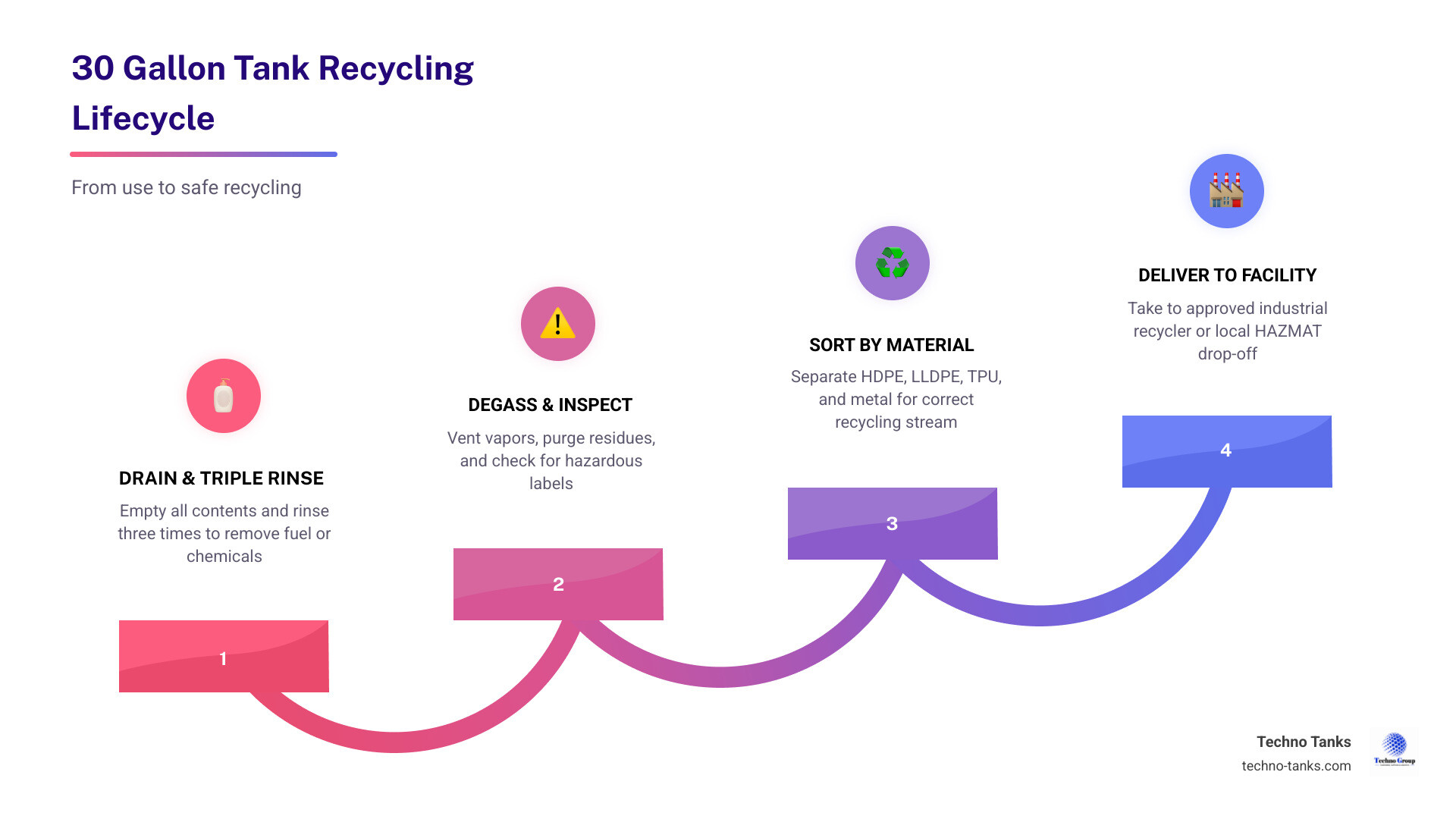
30 gallon recyclable tank terms simplified:
Understanding the 30 Gallon Recyclable Tank: Materials and Specifications
When evaluating how to handle, reuse, or ultimately recycle a 30 gallon recyclable tank, understanding the base polymer is critical. Different resins exhibit distinct physical properties, chemical resistances, and recycling pathways.
High-Density Polyethylene (HDPE)
Standard industrial drums, such as the 30 Gallon Plastic Drum – FDA & UN Rated Closed Head Drum , are routinely manufactured from High Molecular Weight HDPE (HMW-HDPE). This material is highly durable, impact-resistant, and commonly molded to a 90-mil thickness. It is widely accepted by municipal and commercial recycling centers as Code 2 plastic.
Linear Low-Density Polyethylene (LLDPE)
Industrial rectangular tanks are often constructed from LLDPE due to its superior environmental stress-crack resistance and flexibility under load. For instance, the 30 Gallon Natural LLDPE Rectangular Tamco® Heavy-Duty Tank with External Flange – 30″ L x 24″ W x 12″ Hgt. (Cover Sold Separately) | U.S. Plastic Corp. and its UV-stabilized counterpart, the 30 Gallon Black LLDPE Rectangular Tamco® Heavy-Duty Tank with Internal Flange – 24″ L x 18″ W x 18″ Hgt. (Cover Sold Separately) | U.S. Plastic Corp. , feature excellent structural integrity up to a maximum operating temperature of 140°F. LLDPE falls under Code 4 recycling.
Medium-Density Polyethylene (MDPE)
Often used in graywater or blackwater holding tanks (such as RV waste tanks), MDPE is frequently formulated from recycled resins. Because of its recycled origin, it is generally not rated for potable water storage due to potential trace contaminants. MDPE is recyclable but must be processed through industrial polymer recovery channels rather than standard curbside bins.
Thermoplastic Polyurethane (TPU)
For demanding marine and commercial operations, flexible bladder tanks constructed from TPU have become the industry standard. TPU offers exceptional tensile strength, chemical compatibility with hydrocarbons, and a drastically lower physical footprint when empty. Unlike rigid composites, pure TPU can be melted down and re-extruded, making it highly recyclable under specialized industrial polymer programs.
Understanding these materials is the first step in determining whether your tank is a candidate for standard municipal scrap programs or requires specialized industrial handling. For a deeper look at rigid poly configurations, see Why a 30 Gallon Plastic Tank is Your Storage MVP.
Industrial and Marine Applications for 30-Gallon Tanks
A 30 gallon recyclable tank serves as a vital utility across marine, commercial, and logistics sectors. The 30-gallon capacity strikes a perfect balance between portable weight (a filled water tank weighs approximately 260 lbs) and meaningful storage volume.
Selecting a 30 Gallon Recyclable Tank for Marine and Fuel Applications
In marine environments, space is a premium commodity. While rigid vessels are traditional, modern operators increasingly turn to flexible TPU bladders for auxiliary fuel capacity, fuel transfer, and range extension.
Flexible bladders collapse as they empty, eliminating the free-surface effect (liquid sloshing) that can destabilize smaller vessels. They also prevent fuel degradation by eliminating the air pocket where condensation forms. When empty, these bladders can be rolled up and stowed, reclaiming valuable deck or cabin space.
For specialized marine configurations, check out:
- The Best 30 Gallon Marine Tanks for Fresh Water and Fuel
- The Ultimate Guide to 30 Gallon TPU Tanks and Bladders
- Never Run Dry with These 30 Gallon Boat Bladders
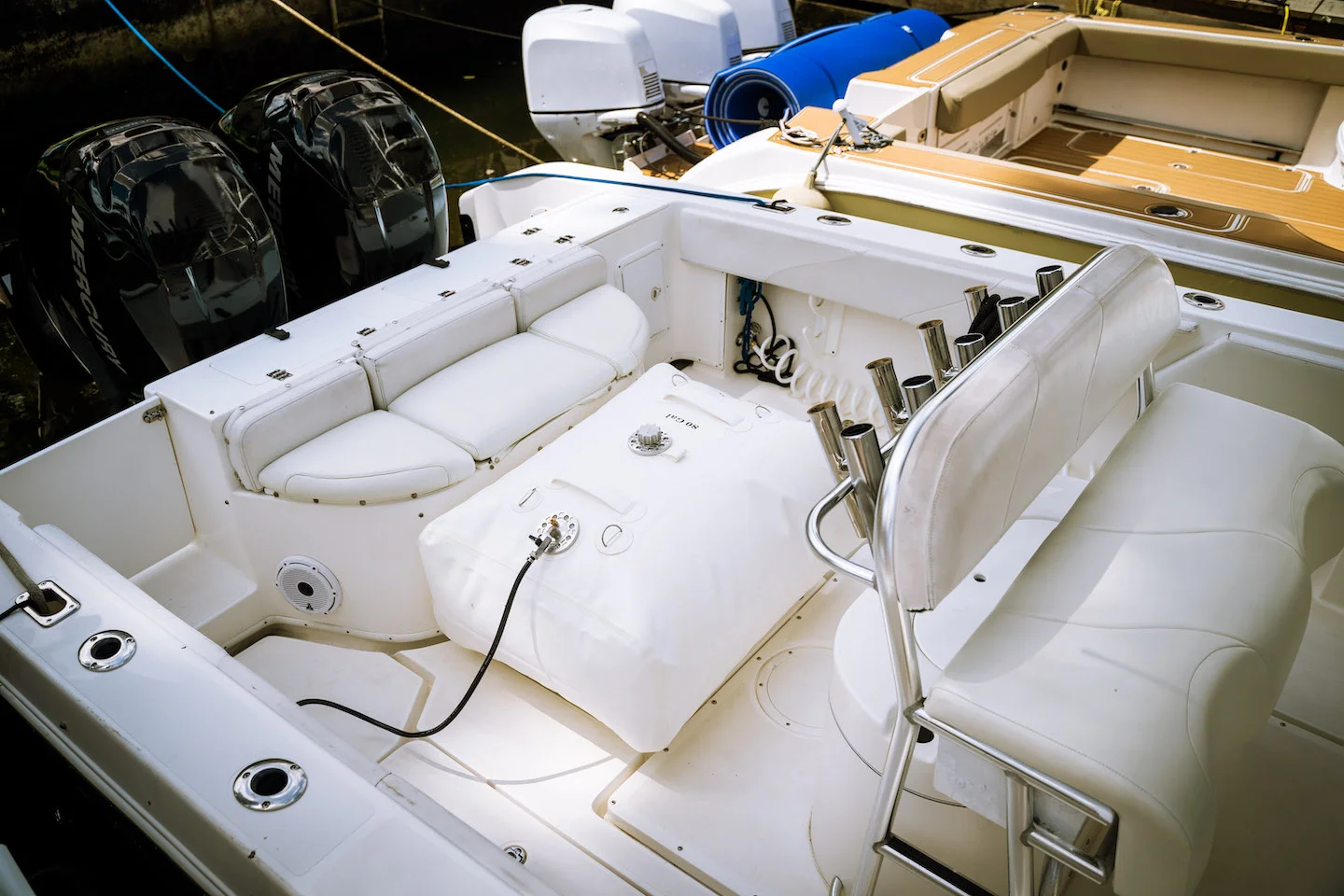
Standard Rigid Polyethylene vs. Flexible 30 Gallon Recyclable Tank Solutions
When determining whether a rigid poly tank or a collapsible bladder fits your operation, consider the following technical comparison:
| Metric / Feature | Rigid Polyethylene Tank (LLDPE/HDPE) | Flexible TPU Bladder Tank |
|---|---|---|
| Dry Weight | ~14 to 23 lbs | ~5 to 10 lbs |
| Footprint (Empty) | Fixed (e.g., 30″ x 24″ x 12″) | Collapsible / Rollable (90% space saving) |
| Baffling / Slosh Control | Requires internal physical baffles | Self-baffling (collapses around fluid) |
| Hydrocarbon Compatibility | Poor (Not suitable for fuels/oils) | Excellent (Diesel, gasoline, and oils) |
| Ventilation Requirements | Must be vented to prevent vacuum collapse | Ventless operation possible |
| FDA Food-Grade Options | Yes (Natural LLDPE/HDPE) | Yes (Specific TPU formulations) |
For a comprehensive analysis of how these technologies compare in high-demand environments, read the technical breakdown on Fuel Bladder vs Fuel Tank.
Regulatory Compliance and Safe Disposal Procedures
Disposing of or recycling a 30 gallon recyclable tank that has been used in industrial or marine service requires strict adherence to environmental and transport regulations.
DOT and UN Ratings
If a tank is used to transport hazardous liquids or waste on public corridors, it must comply with DOT 49 CFR. Rigid plastic drums typically carry a UN rating such as 1H1/Y1.9/150 (indicating a closed-head plastic drum certified for medium-hazard liquids with a specific gravity up to 1.9).
When a rigid tank fails, suffers a puncture, or leaks, operators must use a salvage overpack. The 30-Gallon Poly-Overpack® Salvage Drum | ENPAC is UN rated (UN 1H2/X100/S) and compliant with DOT 49 CFR 173.3(c) to safely contain and transport damaged drums up to 16 gallons.
EPA Hazardous Waste Regulations
According to the US EPA, a container that held hazardous waste is subject to strict Resource Conservation and Recovery Act (RCRA) rules. To be classified as “RCRA empty” (which exempts the container from hazardous waste regulation during disposal), all wastes must be removed using common practices (pouring, pumping, aspirating), and:
- No more than 1 inch of residue remains at the bottom of the container, or
- No more than 3% by weight of the total capacity remains (for containers $\le 119$ gallons).
For detailed regulatory guidance on waste accumulation and container management, consult the Frequent Questions About Hazardous Waste Generation | US EPA .
If your tank has held fuel or petroleum products, dumping or improper recycling can lead to severe environmental penalties. Safe decommissioning is paramount; see Recycling Fuel Tanks: A Guide to Not Blowing Things Up for safety protocols.
Step-by-Step Guide to Recycling and Disposing of 30-Gallon Tanks
If you are ready to decommission a 30 gallon recyclable tank, follow this step-by-step protocol to ensure safety and compliance with local municipal or industrial guidelines.
[Empty Tank completely]
   |
   v
[Triple-Rinse / Degas Vapors]
   |
   v
[Remove Valves, Flanges & Fittings]
   |
   v
[Determine Disposal Route]
   |---> Non-Hazardous Poly (HDPE/LLDPE) ---> Municipal/Commercial Recycler
   `---> Hydrocarbon/Chemical Service ------> Industrial HAZMAT Facility
Step 1: Complete Evacuation
Pump or gravity-drain the tank completely. Ensure no liquid remains trapped in the corners, flanges, or bladder folds.
Step 2: Triple-Rinsing and Degassing
For non-hazardous materials, perform a triple-rinse using an appropriate solvent or water-detergent solution. If the tank held gasoline, diesel, or light oils, it must be purged of volatile organic compounds (VOCs). Use a mechanical blower to vent the tank until a combustible gas indicator reads 0% Lower Explosive Limit (LEL).
Step 3: Strip Hardware and Fittings
Remove all non-polypropylene or non-polyethylene components. This includes brass valves, steel reinforcement bands, and monitoring probes. If you are recycling a standard container, note that smaller commercial items like the 10.30 Gal. Blue Large Recycling Container can go straight to curbside bins, but 30-gallon industrial tanks require hardware stripping first.
Step 4: Consult Local Municipal Guidelines
Municipalities have highly specific rules regarding large rigid plastics. For example:
- In Florida’s central gulf coast, the Recycling FAQ – Pinellas County provides clear guidelines on which large-format plastics are accepted at local drop-off centers versus waste-to-energy plants.
- On the east coast, the Frequently asked questions – Volusia County Government details local hazardous waste drop-off events and commercial recycling policies for large containers.
Frequently Asked Questions About 30-Gallon Tank Recycling
Can a 30-gallon TPU fuel bladder be recycled after holding diesel or gasoline?
Yes, but not through standard residential recycling streams. Thermoplastic Polyurethane (TPU) is highly recyclable because it can be melted down and reprocessed without losing its elastomeric properties. However, because it has been in hydrocarbon service, the bladder must undergo specialized industrial cleaning, shredding, and chemical decontamination before the polymer can be pelletized for reuse in non-food-grade industrial products.
How do you safely decommission and recycle a rigid 30-gallon marine fuel tank?
Decommissioning a rigid marine fuel tank requires complete draining, followed by hot-water wash downs and steam purging to remove heavy hydrocarbon residues. Once the tank is certified vapor-free by a marine chemist or qualified technician, it can be cut into manageable sections using non-sparking tools. These clean polyethylene pieces can then be accepted by commercial plastic recyclers. Many operators choose to replace decommissioned rigid tanks with flexible bladders to simplify future storage management.
What are the UN ratings required for transporting hazardous liquids in a 30-gallon drum or bladder?
To legally transport hazardous liquids under DOT regulations, a 30-gallon container must carry a UN specification mark. For liquids, this is typically a code like 1H1 (for a tight-head plastic drum) followed by a performance level letter (X for Packing Group I, II, III; Y for Packing Group II and III). It also includes the maximum specific gravity the container was tested to hold (e.g., 1.9) and the maximum test pressure in kilopascals (e.g., 150).
Conclusion
Recycling or disposing of a 30 gallon recyclable tank doesn’t have to be a stressful ordeal. By identifying the base polymer (whether it is HDPE, LLDPE, or TPU), adhering to EPA and DOT guidelines, and following a systematic cleaning and purging process, operators can safely decommission their storage vessels while minimizing their environmental footprint.
For commercial operators, yacht captains, and marine professionals looking to transition away from rigid, hard-to-dispose-of tanks, flexible bladder systems offer a sustainable, space-saving alternative.
Techno Tanks manufactures premium, flexible TPU bladders and collapsible fuel storage systems designed for range extension, auxiliary fuel capacity, and temporary fuel transfer. Engineered for compatibility with diesel and gasoline where applicable, these systems provide a practical, space-saving solution when rigid tanks are no longer viable.
To explore custom sizing, technical specifications, and flexible fuel solutions tailored to your vessel or commercial operation, visit the Marine Fuel Bladders page or contact the Techno Tanks engineering team directly to request a project-specific quote.

