
What an Auxiliary Flexible Marine Tank Actually Does (And Why Operators Choose Them)
An auxiliary flexible marine tank is a collapsible, fabric-reinforced fuel storage bladder designed to carry additional gasoline or diesel aboard a vessel — without permanent installation.
Quick answer for buyers:
| Question | Answer |
|---|---|
| What is it? | A collapsible bladder that stores extra fuel on deck or in available hull space |
| Who uses it? | Boat owners, commercial operators, offshore crews, expedition and delivery teams |
| Typical capacity range | 30 to 3,000 gallons (custom sizes available) |
| Fuel types | Gasoline, diesel, and other compatible fuels depending on material grade |
| Key advantage | Extends vessel range without modifying the hull or installing rigid tanks |
| Where it sits | Above deck — Coast Guard regulations prohibit in-hull flexible tank placement |
| When not in use | Drains flat and folds into a compact, storable package |
For operators who need more range, more flexibility, or a practical backup fuel solution, rigid tanks often aren’t the answer. They’re heavy when empty, fixed in place, and expensive to retrofit. A flexible bladder gives you the capacity when you need it — and gets out of the way when you don’t.
Fuel is roughly two-thirds the density of water, which means a filled bladder that goes overboard will float. An empty one can even be inflated lightly to provide emergency buoyancy. That’s the kind of practical versatility that makes flexible bladders worth understanding before your next offshore passage, delivery run, or extended commercial operation.
This guide covers everything serious buyers need to know: materials, sizes, designs, installation, regulations, maintenance, and how to choose the right configuration for your vessel.
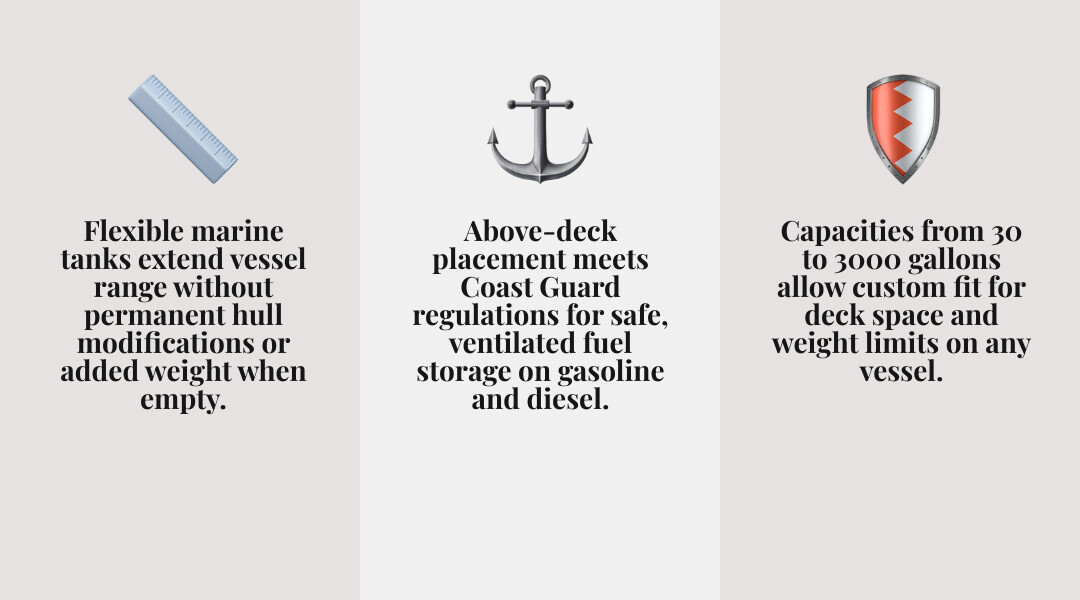
Auxiliary flexible marine tank terms at a glance:
What is an Auxiliary Flexible Marine Tank?
An auxiliary flexible marine tank (often referred to simply as a marine fuel bladder) is a highly engineered, collapsible container designed for the safe storage and transfer of liquids—primarily diesel and gasoline—on board a vessel. Unlike rigid tanks made of aluminum, stainless steel, or rotomolded plastic, these tanks are constructed from high-strength, elastomeric-coated fabrics. They adapt to the volume of liquid they contain, collapsing completely flat as the fuel is drawn down.
For a comprehensive look at how these systems integrate into a boat’s ecosystem, consult The Complete Guide to Marine Bladder Tanks and Storage.
Key Differences Between Built-In Rigid Tanks and Auxiliary Flexible Marine Tanks
When evaluating temporary fuel storage solutions, understanding the engineering trade-offs between rigid and flexible configurations is essential. Rigid tanks require dedicated structural space, add permanent deadweight, and are notoriously difficult to repair or replace if they corrode or crack.
Conversely, an auxiliary flexible marine tank serves as a highly adaptable payload. When empty, its weight is negligible, and it can be folded and stowed away in a standard locker, freeing up valuable deck space.
| Feature | Permanent Built-In Rigid Tanks | Auxiliary Flexible Marine Bladders |
|---|---|---|
| Material | Aluminum, Stainless Steel, Fiberglass | TPU (Thermoplastic Polyurethane) / Coated Fabrics |
| Weight (Empty) | Heavy (often 100+ lbs for mid-size tanks) | Ultra-lightweight (e.g., a 250-gallon bladder weighs ~40 lbs) |
| Footprint | Fixed; permanently occupies vessel volume | Temporary; collapses flat and folds when empty |
| Installation | Complex, requiring structural integration | Temporary deck placement with heavy-duty tie-downs |
| Maintenance | Susceptible to condensation, rust, and weld cracks | Easy to rinse, dry, inspect, and fold flat |
| Cost to Retrofit | High (demands structural and cosmetic modifications) | Economical (fraction of the cost of a custom metal tank) |
Primary Use Cases for an Auxiliary Flexible Marine Tank
Serious offshore operators do not view fuel bladders as a novelty; they view them as critical mission-enabling gear. The primary applications include:
- Long-Range Transit & Cruising: Crossing oceans or navigating remote regions where fuel docks are scarce. Having extra capacity allows crews to bypass low-quality or overpriced fuel ports.
- Commercial Marine Operations: Tugboats, workboats, and research vessels often require extended time on station. Adding temporary fuel capacity ensures they do not have to break off operations prematurely.
- Yacht Delivery & Ferrying: Captains delivering yachts across long ocean passages rely on bladders to bridge the gap between the vessel’s standard cruising range and the actual distance of the passage.
- Emergency Backup Capacity: In critical situations, having a reserve of uncontaminated fuel can save a vessel from being stranded. For insights on backup systems, read The Ultimate Guide to Marine Emergency Fuel Supply Systems.
To understand how other industries utilize similar range-extension philosophies, you can read about Why Marine Helicopters Rely on Auxiliary Fuel Tanks to Extend Their Range. Additionally, those contemplating retrofits often discuss the practical hurdles of fuel expansion on community platforms, such as the discussions found in the Adding Auxiliary Tank | Grady White Boat Owner’s Forum .
Technical Specifications: Materials, Sizes, and Designs
The reliability of a flexible tank depends entirely on its material science and manufacturing methods. High-quality marine bladders are constructed from military-grade Thermoplastic Polyurethane (TPU) or advanced fuel-resistant polymer-coated fabrics. These materials feature high tensile strength, exceptional puncture resistance, and are formulated to handle continuous exposure to gasoline, diesel, and jet fuel without degrading.
Advanced manufacturing utilizes high-frequency RF (Radio Frequency) welding. This process fuses the fabric layers at the molecular level, creating seams that are as strong as—or stronger than—the material itself, without relying on chemical adhesives that can break down over time. For an in-depth exploration of technical specifications, refer to The Complete Guide to Marine Auxiliary Storage Bladders.
Pillow-Style vs. Space-Saver Designs
Flexible tanks generally fall into two design categories:
- Pillow-Style Bladders: These are low-profile, rectangular tanks that spread the fuel weight over a broad deck area. Because of their low center of gravity, they are incredibly stable in rough seas. They are the preferred choice for open bow areas or wide cockpit decks.
- Space-Saver (Compact) Designs: These tanks have a smaller footprint but stand slightly taller when full. They are engineered to fit into narrower deck configurations, walkways, or tight compartments. To mitigate fuel movement and sloshing within these taller profiles, high-quality space-saver models often feature internal baffling systems.
Selecting the Right Size for Your Auxiliary Flexible Marine Tank
Selecting the correct bladder capacity requires balancing your vessel’s payload limits with its physical deck layout. Remember: one gallon of diesel fuel weighs approximately 7.1 pounds, while one gallon of gasoline weighs about 6.1 pounds. A filled 200-gallon diesel bladder adds over 1,400 pounds of localized weight to your deck.
Techno Tanks manufactures flexible fuel bladders in capacities ranging from 30 to 3,000 gallons. For smaller operations, a 30-gallon tank (weighing just 17.5 lbs empty) is highly portable and easy to manage. Mid-sized operations often utilize 100- to 250-gallon configurations, while commercial vessels and large yachts scale up to 1,000- to 3,000-gallon custom shapes designed to fit specific deck geometry.
To plan your capacity and understand exact sizing, consult the fuel bladder sizing guide and review the available dimensions.
Operational Best Practices: Installation, Securing, and Fuel Transfer
Deploying an auxiliary flexible marine tank requires strict adherence to safe handling protocols. A shifting fuel load can compromise vessel stability or damage deck hardware.
- Placement: Always place the bladder in its intended operational location before filling. Attempting to move a partially or fully filled bladder is dangerous and can damage the tank. Ensure the deck area is completely free of sharp objects, debris, or abrasive surfaces.
- Securing: Use the integrated, heavy-duty tie-down rings located along the perimeter of the bladder. Secure the tank using high-tensile ratcheting straps or marine-grade webbing tied directly to structural cleats or deck eyes. The bladder must be lashed tightly enough to prevent lateral sliding or shifting in heavy swells.
- Plumbing and Fuel Transfer: While some operators connect auxiliary bladders directly to their engine’s fuel intake lines, the most common and reliable method is to transfer fuel from the bladder to the vessel’s main internal tanks as space becomes available. This is typically achieved via gravity feed (if the bladder is elevated) or using a dedicated, explosion-proof transfer pump.
For detailed discussions on configuring these fuel lines safely, refer to the plumbing on auxiliary fuel tank – Cruisers & Sailing Forums .
Safety and Regulatory Compliance Above Deck
Safety is paramount when transporting volatile liquids on deck. The United States Coast Guard (USCG) and other international regulatory bodies maintain strict guidelines regarding portable fuel storage:
- No In-Hull Placement: Flexible fuel bladders must never be mounted below deck or inside enclosed hull compartments. Enclosed spaces prevent proper venting, creating an extreme risk of explosive vapor accumulation.
- Venting: Ensure the bladder’s vent valve is operational and clear. Changes in ambient temperature cause fuel to expand and contract; proper venting prevents over-pressurization.
- Spill Containment: Always place a containment berm or absorbent fuel collar around the fill nozzle during refueling to prevent fuel from washing overboard.
For the latest regulatory updates on auxiliary fuel systems, operators should review Parts and Accessories Necessary for Safe Operation; Auxiliary Fuel … .
Maintenance, Storage, and Lifespan Extension
One of the primary benefits of a flexible bladder is its long service life when properly maintained. Despite containing UV-inhibitors and hydrolysis stabilizers, flexible polymers can eventually degrade under continuous, direct exposure to harsh tropical sun, salt spray, and extreme temperatures.
- Post-Use Cleaning: After draining the fuel, rinse the exterior of the bladder with fresh water and mild soap to remove salt deposits and grime.
- Drying: Ensure the bladder is completely dry, inside and out, before rolling or folding. Trapped moisture can lead to mold, mildew, or material degradation during storage.
- Storage: Fold or roll the empty bladder flat and store it in a cool, dry, and well-ventilated locker. Avoid placing heavy, sharp, or metallic objects on top of the folded bladder.
For more storage strategies and to read about how operators maintain their gear for long-range travel, check out Fuel Your Wanderlust with These Top Rated Auxiliary Tanks.
Frequently Asked Questions about Flexible Marine Tanks
Can I mount a flexible fuel bladder below deck?
No. Coast Guard regulations and marine safety standards strictly prohibit mounting flexible fuel bladders below deck or in any enclosed, unventilated compartment. Because flexible tanks do not feature rigid, hard-piped venting systems routed to the vessel’s exterior hull, any vapor escaping from the bladder’s vent or fittings would accumulate in the bilge. This creates an extreme explosion hazard. All flexible fuel bladders must be installed above deck in open-air environments.
How do I prevent fuel sloshing and shifting in rough seas?
To prevent fuel sloshing, bladders must be properly secured using heavy-duty webbing or ratcheting straps anchored to structural deck points. Additionally, transporting the bladder either completely full or completely empty minimizes the “free surface effect” (the movement of liquid that destabilizes a vessel).
For large-scale, industrial operations, transport stability is managed using advanced internal baffling systems or specialized heavy-duty tie-down configurations designed to minimize liquid movement and maintain vessel equilibrium.
Are flexible marine tanks compatible with both gasoline and diesel?
Yes, but compatibility depends on the specific material formulation of the bladder. Thermoplastic Polyurethane (TPU) and specialized fuel-grade elastomers are highly compatible with diesel, gasoline, and jet fuels. However, you must always verify with the manufacturer that your specific bladder model is rated for the exact fuel type you intend to carry, as gasoline requires different vapor-permeation barriers than diesel.
Conclusion
An auxiliary flexible marine tank is an invaluable tool for serious offshore captains, commercial operators, and yacht delivery crews. By providing temporary, collapsible, and reliable fuel capacity, these bladders allow you to safely extend your vessel’s range without the massive expense, weight, and permanent footprint of rigid metal tanks.
Techno Tanks designs and manufactures premium, military-spec flexible fuel bladders tailored to the demanding conditions of the marine environment. Whether you need a standard 30-gallon backup tank or a massive 3,000-gallon custom-configured deck bladder, our team delivers durable, high-performance solutions.
Ready to extend your vessel’s operational range? Explore Techno Tanks Marine Fuel Bladders or contact us today to request a custom quote tailored to your vessel’s dimensions and fuel storage requirements.
- Get started with our custom fuel bladders
- Contact our technical sales team directly: Contact Techno Tanks

