
When a Temporary Fuel Tank Is the Right Solution
A temporary fuel tank is any portable, non-permanent fuel storage solution used to extend range, provide backup capacity, or transfer fuel where a fixed tank is impractical or impossible to install.
Quick answer — common temporary fuel tank options:
| Option | Best For | Key Consideration |
|---|---|---|
| Flexible fuel bladder | Marine, offshore, remote ops | Custom sizing, space-efficient, collapsible |
| Rigid portable tank | Truck beds, job sites | Heavier, fixed capacity |
| Collapsible bladder farm | Large-volume temporary storage | Multiple tanks linked together |
| Marine outboard tank | Small vessels, short passages | Limited capacity (3–14 gal typical) |
For operators who need more range, backup capacity, or a deployable fuel supply without modifying a vessel or vehicle permanently, the choice of temporary storage method matters — a lot.
Get it wrong and you risk fuel starvation, spills, regulatory fines, or a failed passage. Get it right and you have a reliable, safe fuel supply that deploys fast and stows away when the job is done.
This guide covers how to evaluate, size, plumb, and safely operate a temporary fuel system — with a focus on flexible fuel bladders for marine and industrial operators who need real performance, not a workaround.
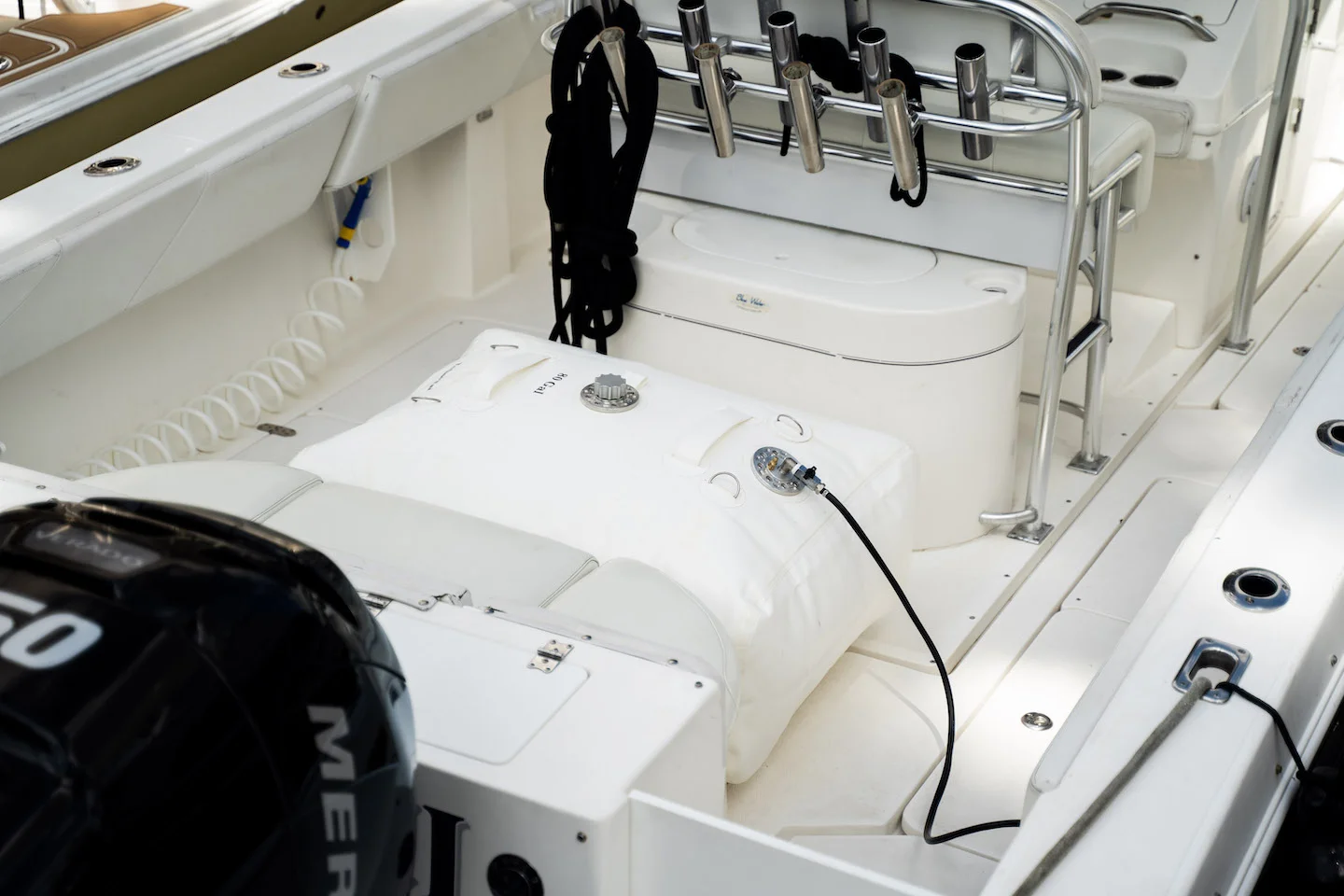
Discover more about temporary fuel tank:
Evaluating the Need for a Temporary Fuel Tank
For commercial operators, marine captains, and fleet managers, fuel logistics dictate operational limits. When an offshore vessel needs to make a long-distance transit that exceeds its internal tank capacity, or a remote construction site requires an immediate diesel supply before permanent infrastructure is built, a temporary fuel tank is the most practical solution.
Rather than facing the extreme expense and structural modifications required to install permanent rigid tanks, operators use temporary storage to achieve:
- Range Extension: Enabling vessels or heavy machinery to operate far beyond their standard fuel limits.
- Backup Fuel and Redundancy: Providing an isolated fuel source that can bypass a contaminated primary fuel system.
- On-Site Fuel Transfer: Supplying remote generators, agricultural equipment, or fleet vehicles directly in the field.
In many cases, the need is short-term or seasonal. This is why investing in permanent steel or aluminum tanks is often hard to justify. For a deep dive into how temporary storage systems function in various industries, read more in our guide on temporary fuel storage.
Comparing Rigid and Flexible Temporary Fuel Storage Options
When selecting a temporary fuel tank, the primary choice lies between rigid containers (such as steel tanks, aluminum pickup tanks, or plastic IBCs) and flexible fuel bladders. Each has distinct engineering characteristics that impact transport, storage, and operational efficiency.
Rigid tanks are highly durable, but they suffer from a major logistical drawback: they occupy the same amount of space whether they are completely full or entirely empty. For a commercial vessel or a support truck, this means hauling a massive, heavy, empty metal box back to the refueling station, wasting valuable deck or bed space. Additionally, UN/ADR-certified plastic IBC tanks often have a strict five-year certification limit, after which they must be retired or undergo expensive recertification. Aluminum and steel tanks do not expire in the same manner, but they are heavy, prone to condensation, and can suffer from weld fatigue over time.
Flexible fuel bladders, manufactured from advanced thermoplastic polyurethane (TPU) or heavy-duty urethane-coated fabrics, offer a dynamic alternative. When empty, they collapse down to a fraction of their filled size (often less than 5% of their total volume). This allows operators to roll them up, pack them away, and reclaim valuable deck or cargo space for the return leg of a journey.
To compare these options more broadly, consult our list of expert fuel storage systems.
| Feature | Rigid Metal/Plastic Tanks | Flexible Fuel Bladders (TPU) |
|---|---|---|
| Space Efficiency | Poor (always occupies full volume) | Excellent (collapses when empty) |
| Weight (Empty) | High (heavy steel/aluminum frames) | Very Low (lightweight fabric construction) |
| Condensation Risk | High (air pocket allows moisture buildup) | Negligible (bladder collapses as fuel is drawn) |
| Custom Sizing | Difficult and expensive to fabricate | Highly customizable to fit specific deck spaces |
| Lifespan/Certification | Plastic IBCs expire in 5 years; metal is durable | Highly durable TPU resists UV, punctures, and rot |
Engineering a Safe Temporary Fuel System
Operating a temporary fuel system is not as simple as dropping a hose into a container. It requires a properly engineered system that ensures consistent fuel delivery, prevents contamination, and manages the high pressures and flow rates of modern engines.
Sizing and Capacity of a Temporary Fuel Tank
Determining the required capacity of your tank is the first engineering challenge. For short-distance vehicle transport or yard movements (such as moving an old truck 3 to 4 miles at city speeds of 35 mph), a simple 1 to 5-gallon container paired with an inline electric pump is often sufficient, saving a $70 to $80+ towing fee.
However, for commercial marine transits, offshore operations, or remote generator supply, capacities must be scaled properly. Industrial temporary setups typically range from 30 to 3,000 gallons, while massive emergency fuel farms can utilize collapsible bladders holding up to 210,000 gallons.
A major hazard with any liquid storage is sloshing. When a vehicle turns or a vessel encounters rough seas, the movement of fuel inside a partially empty rigid tank creates dynamic forces (known as the free surface effect). This can destabilize the vessel or vehicle and cause fuel starvation as the fuel sloshes away from the pickup tube.
Flexible fuel bladders naturally mitigate this issue because they collapse as the fuel is drawn out. Since there is no air pocket inside a properly primed bladder, the fuel has no room to slosh or surge. To learn more about how bladders manage these dynamic forces, see our guide to short-term fuel storage bladders.
Plumbing and Powering a Temporary Fuel Tank System
A complete temporary fuel system requires four critical components: fuel lines, an electric pump, a filtration system, and return lines.
- Fuel Lines: Must be rated for the specific fuel type (gasoline, diesel, or jet fuel). Standard automotive fuel hose is acceptable for short runs, but offshore or commercial applications require USCG Type A1 or equivalent fire-resistant, multi-layer hoses.
- Electric Fuel Pump: The pump must match the engine’s fuel delivery requirements. For carburetor systems, a low-pressure (4–7 PSI) inline pump is sufficient. For electronic fuel injection (EFI) systems, high-pressure pumps (45–60+ PSI) are required. The pump must be rated as ignition-protected (especially when handling gasoline) to prevent sparks from igniting fuel vapors.
- Filtration: A high-quality water-separating fuel filter must be installed between the temporary tank and the pump. This prevents debris, scale, or water from entering the pump and engine injectors.
- Return Lines: Modern EFI systems and diesel engines constantly circulate excess fuel back to the tank to cool the injectors. Your temporary system must include a dedicated return line port. Running a high-pressure EFI system without a return line will quickly overheat the fuel pump and cause engine failure.
For detailed plumbing layouts and pump selection, read more about fuel transfer bladders.
Safety, Regulatory, and Legal Compliance
Vessel operators and fleet managers must navigate a complex web of environmental and safety regulations when transporting fuel. Under June 2026 standards, spill prevention is heavily enforced by both federal and state agencies.
The EPA requires strict compliance regarding portable fuel containers and spill prevention control. For example, the EPA Portable Fuel Container Regulations outline the emissions and spill-proof standards that portable containers must meet. Furthermore, state-level regulations, such as those found in the Illinois Administrative Code on Portable Fuel Deliveries, restrict how fuel can be transferred from portable tanks to prevent ground contamination.
To remain compliant, any temporary fuel setup should incorporate:
- Secondary Containment: A double-walled design or a secondary containment berm capable of holding 110% of the tank’s capacity. This prevents environmental contamination in the event of a primary tank puncture.
- DOT Compliance: Tanks transported on public highways must be certified for transport. DOT-certified portable tanks (typically ranging from 251 to 1,204 gallons) are required for hauling fuel on public roads when full.
- Static Grounding: Safe fuel transfer requires grounding cables to dissipate static electricity, which can easily build up as fuel flows through hoses.
For a comprehensive breakdown of safety protocols and handling instructions, read our guide on large fuel bladder safety and handling.
Best Practices for Securing and Transporting Temporary Fuel
An unsecured fuel tank is an extreme safety hazard. Whether positioned in a truck bed or on a vessel deck, the tank must be physically restrained to prevent sliding, tipping, or launching during sudden stops or heavy seas.
When securing a temporary fuel tank, follow these best practices:
- Use Rated Ratchet Straps: Never rely on simple bungee cords or light ropes. Secure the tank using heavy-duty, UV-resistant ratchet straps rated for at least double the weight of the fully loaded tank.
- Utilize Dedicated Tie-Down Points: Secure straps to structurally sound tie-down D-rings on the vessel deck or truck bed.
- Prevent Chafing: Place heavy-duty rubber mats or specialized marine-grade padding beneath the tank and under the straps. This prevents metal-on-metal friction or strap chafing from wearing through the tank material.
- Incorporate Secondary Spill Berms: For deck-mounted bladders, place the bladder inside a compatible, flexible drive-through or foam-wall spill berm to capture any minor drips during hose connection and disconnection.
For discussions on how operators secure auxiliary transfer tanks in real-world environments, see the Auxiliary Fuel Tank Discussion on the Good Sam Forum. To ensure your stored fuel remains fresh and stable during transport, read our guide on short-term fuel storage.
Frequently Asked Questions about Temporary Fuel Storage
What is the safest way to prevent fuel starvation in a temporary setup?
Fuel starvation occurs when the fuel pump draws in air instead of liquid. In a rigid tank, this is prevented by using internal baffles to slow fuel movement, installing a fuel pickup tube with a weighted screen, and positioning the tank on a level surface. In a flexible fuel bladder, fuel starvation is naturally prevented because the bladder collapses around the fuel as it is emptied, eliminating air pockets and keeping the fuel concentrated around the pickup point.
How do environmental regulations affect temporary fuel transport?
Environmental regulations require that any transport of fuel on public waters or highways avoids spills. This means utilizing secondary containment berms, using EPA-compliant spill-proof nozzles, and ensuring that any transport tank over 119 gallons (for road transport) meets DOT specifications. Failure to use secondary containment in water-protection areas can result in massive environmental fines.
Can flexible fuel bladders be used for both gasoline and diesel?
It depends entirely on the material construction of the bladder. Polyurethane (TPU) bladders can be engineered for high compatibility with both gasoline and diesel. However, some materials are only rated for diesel or jet fuel due to the highly corrosive nature of gasoline and its additives (like ethanol). Always verify the manufacturer’s material specifications to ensure compatibility with your specific fuel type.
Conclusion
When permanent rigid fuel tanks are impractical, a high-quality temporary fuel tank provides the range, flexibility, and safety required to get the job done. While rigid tanks have their place, flexible fuel bladders offer unmatched advantages in space savings, weight reduction, and slosh prevention.
Techno Tanks manufactures premium, flexible fuel bladders and collapsible storage systems designed specifically for marine, offshore, and commercial applications. Built with high-strength TPU and customizable configurations, our bladders are designed to meet your exact space and capacity requirements, ranging from 30 to 3,000 gallons.
Because every operation has unique demands, our pricing depends on sizing, fuel compatibility, and custom project requirements. Ready to extend your vessel’s range or secure a reliable temporary fuel supply? Explore Custom Fuel Bladder Solutions and request a personalized quote today.

