
When Your Marine Fuel Tank Leaks: What to Know First
A marine fuel tank repair bladder is one of the most practical tools available when a rigid tank develops a leak or a flexible bladder sustains localized damage — and knowing when to repair versus replace can save operators significant time and cost.
Quick answer for serious operators:
| Situation | Recommended Action |
|---|---|
| Small puncture or pinhole in TPU bladder | Patch with marine-grade polyurethane repair kit |
| Seam separation or delamination | Professional assessment required; likely replacement |
| Abrasion damage on outer layer | Inspect depth; surface damage may be patchable |
| Chemical degradation or embrittlement | Replace — material integrity is compromised |
| Crack or hole in rigid tank | Consider replacing with a custom flexible bladder |
| Major structural failure | Full replacement; do not attempt field repair |
Fuel leaks on a vessel are not just an operational problem — they are a safety and environmental risk. Whether you’re managing a rigid tank that has corroded through or a flexible bladder that has picked up a puncture from deck hardware, the repair decision needs to be made fast and made right.
Flexible fuel bladders, particularly those built from thermoplastic polyurethane (TPU), are generally more repairable than aging rigid fiberglass or metal tanks. But not all damage is created equal, and not all repairs hold under real offshore conditions.
This guide walks through how to assess bladder damage, when a repair kit is the right call, and when a custom replacement bladder is the smarter long-term investment.
Before deciding whether to patch, replace, or redesign a fuel bladder, compare the damaged unit against the current marine fuel bladder specifications. If the original tank no longer fits the application or a standard replacement will not work, review custom marine fuel bladders as the replacement path.
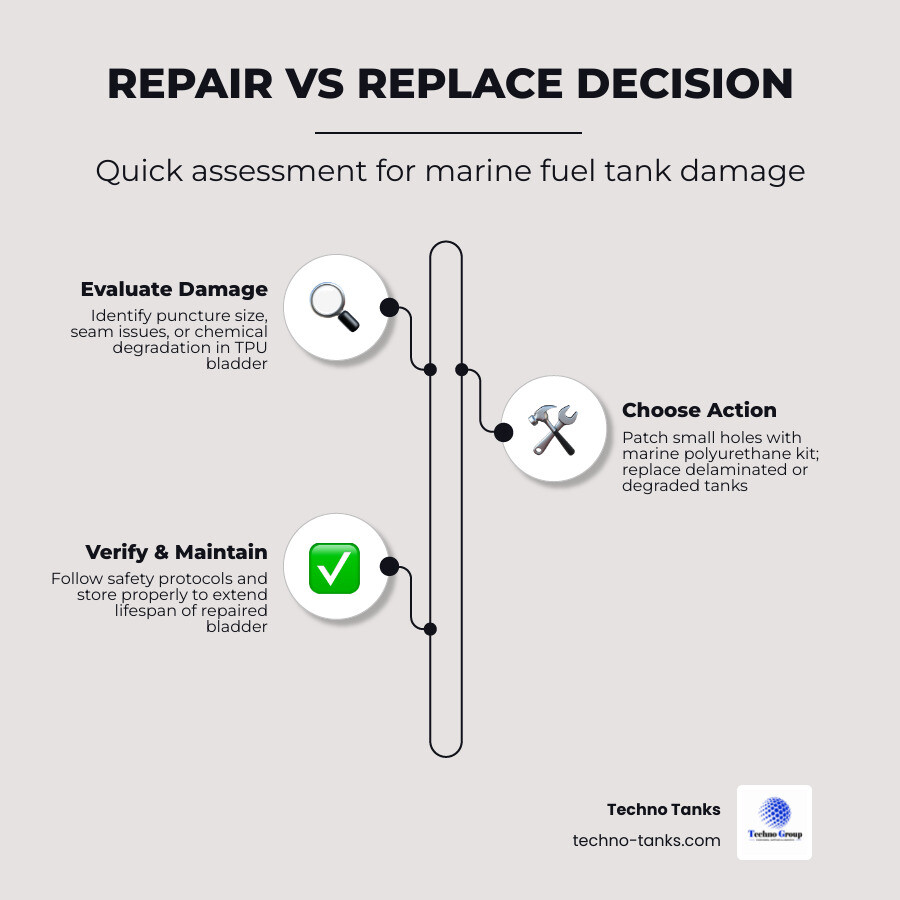
Explore more about marine fuel tank repair bladder:
Understanding Marine Fuel Bladders vs. Rigid Tanks
To understand how to repair a fuel bladder, operators must first understand the material science behind it. Traditional vessels rely on rigid fuel tanks made of aluminum, stainless steel, or rotomolded plastic. While durable, these rigid structures are highly susceptible to crevice corrosion, weld cracking, and fiberglass delamination. When a rigid tank fails, repair options are incredibly invasive, often requiring cutting open the deck or cabin sole to extract the tank.
In contrast, flexible marine fuel bladders are engineered from advanced thermoplastic polyurethane (TPU). Unlike rigid tanks, a flexible bladder conforms to the space it occupies, expanding as it fills and collapsing flat as fuel is consumed. This collapsible nature makes them highly desirable for offshore vessels requiring auxiliary range.
The fundamental differences in design, material, and repairability are outlined in the comparison below:
| Feature | Rigid Fuel Tanks (Aluminum/Steel) | Flexible TPU Fuel Bladders |
|---|---|---|
| Primary Material | Marine-grade aluminum or stainless steel | High-tensile, fuel-resistant TPU |
| Failure Mechanisms | Crevice corrosion, weld cracking, pitting | Localized abrasion, puncture, seam strain |
| Vessel Integration | Permanent, rigid, high structural impact | Collapsible, deck-mounted, or space-saving |
| Repair Difficulty | Extremely high; requires welding and tank removal | Moderate; localized patching can be done on-site |
| Fuel Compatibility | Highly compatible; prone to condensation water | Chemically compatible with diesel and gasoline |
| Average Lifespan | 10 to 20 years (highly dependent on corrosion) | 5 to 10+ years (highly dependent on storage) |
For a deeper dive into how these two systems compare during standard operations, see the detailed analysis on Fuel Bladder vs Fuel Tank.
High-quality bladders utilize TPU featuring directional molecule technology. This molecular structure gives the material its elastomeric memory, allowing it to withstand extreme hydraulic shock (fuel sloshing) without stretching permanently out of shape. For a comprehensive overview of how these materials perform under offshore conditions, read The Complete Guide to Marine Bladder Tanks and Storage.
Diagnosing Damage: Repair vs. Replacement Decisions
When a leak is detected, the operator must quickly diagnose the root cause. Not all bladder damage can or should be patched. Attempting to repair a structurally compromised bladder can lead to catastrophic fuel loss at sea.
Common damage types include:
- Punctures and Pinholes: Typically caused by dropped tools, sharp deck hardware, or failure to clear the mounting area of debris. These are the prime candidates for a localized patch.
- Surface Abrasion: Caused by the bladder rubbing against a bulkhead or rough deck surface. If the abrasion only affects the outer protective coating and has not compromised the internal fabric reinforcement, it can often be reinforced with a wear patch.
- Seam Failure or Delamination: Occurs when the high-frequency RF welds or thermal bonds begin to separate. This is typically a sign of structural fatigue or manufacturing defects.
- Chemical Degradation (Embrittlement): Over time, UV exposure and the continuous leaching of plasticizers by fuel additives can cause the bladder material to dry out. A dry, brittle bladder will crack when folded and cannot be repaired.
For a detailed breakdown of common bladder misconceptions and failure modes, refer to Bladder Tanks for Boats: 6 Common Myths About Their Drawbacks.
Assessing Damage: When to Use a Marine Fuel Tank Repair Bladder
Before ordering a patch kit or planning a repair, run through this diagnostic checklist to determine if the bladder can be saved:
- Puncture Size: Is the hole or tear under 1 inch (25 mm) in length? Punctures within this range are highly repairable. Tears exceeding 2 inches generally require professional vulcanization or bladder replacement.
- Bladder Age: Is the bladder less than 5 years old? Industry data from specialized repair services indicates that flexible bladders older than 5 to 7 years may have undergone enough chemical leaching to make adhesive bonding unreliable.
- Location of Damage: Is the damage located on a flat, uniform surface? Punctures near fittings, corners, or directly on a welded seam are incredibly difficult to seal reliably with a field kit.
- Material Condition: Perform the “crumble test.” Gently squeeze and twist a dry, non-structural corner of the bladder. If you hear a dry, crackling sound or see microscopic surface crazing, the polymer has degraded.
In some cases, instead of repairing a failing rigid tank or a severely damaged old bladder, operators choose to retrofit the vessel’s fuel storage entirely. Retrofitting compromised rigid tanks with custom-engineered flexible bladders is a highly cost-effective alternative to cutting open a yacht’s deck. For those researching options, the Fuel Bladder Leaks: Why Repairs Make Sense – Aviation Consumer article provides excellent cross-industry perspective on why bladder repairs and retrofits make financial sense compared to traditional metal tank overhauls.
Step-by-Step Guide: How to Use a Marine Fuel Tank Repair Bladder
If the damage is localized, minor, and the bladder material is structurally sound, a field repair can restore the system to full serviceability. However, the success of any flexible fuel bladder repair depends entirely on chemical bonding.
Safety Protocols for Gasoline and Diesel Systems
Before performing any work, safety is the absolute priority. Fuel vapors are highly volatile, and static electricity can trigger an explosion.
- Purge the System: Drain the bladder completely. Use a hand pump or gravity siphon to evacuate all residual fuel.
- Vapor Elimination: Rinse the interior of the bladder with a water-and-detergent solution to lift remaining fuel oils. Flush with clean water and dry thoroughly. Vapors are heavier than air and will linger in a closed bladder; use a low-pressure air blower to continuously ventilate the bladder’s interior.
- Static Grounding: Ensure the bladder and all work surfaces are grounded to dissipate static charges, especially when working with gasoline systems.
- Fittings Inspection: Check all port connections and seals during this process. Learn more about proper port management in Everything You Need to Know About Boat Fuel Tank Fittings.
Step-by-Step Patching with a Marine Fuel Tank Repair Bladder Kit
To execute a permanent, fuel-resistant patch on a TPU bladder, follow this technical procedure:
Required Tools & Materials:
- Two-part polyurethane adhesive (specifically formulated for TPU and fuel contact)
- TPU patch material (matching the weight and specifications of the original bladder)
- Methyl Ethyl Ketone (MEK) or high-purity Isopropyl Alcohol (99%)
- Medium-grit sandpaper (180 to 220 grit)
- Weighted roller or heavy clamp
- Clean, lint-free microfiber cloths
Step 1: Surface Preparation
Clean the area surrounding the puncture. Wipe down the surface with MEK or isopropyl alcohol to remove all dirt, salt residue, and fuel oils.
Step 2: Mechanical Abrasion
Gently sand the repair area using 180-grit sandpaper. The goal is to scuff the glossy outer surface of the TPU to create a mechanical “anchor pattern” for the adhesive. Do not sand so deeply that you expose the internal fabric reinforcement. Sand the back of the TPU patch material in the same manner.
Step 3: Solvent Cleaning
Wipe away all sanding dust using a clean cloth dampened with MEK. The solvent will slightly soften the TPU, making it highly receptive to chemical cross-linking.
Step 4: Adhesive Application
Mix the two-part polyurethane adhesive according to the manufacturer’s exact ratios. Apply a thin, uniform layer of adhesive to both the abraded bladder surface and the back of the patch.
Step 5: Assembly and Consolidation
Allow the adhesive to become slightly tacky (usually 2 to 5 minutes, depending on ambient temperature). Carefully apply the patch over the puncture, starting from the center and rolling outward to expel any trapped air bubbles. Use a weighted roller or a flat block with a C-clamp to apply continuous, firm pressure to the repair area.
Step 6: Curing
Allow the adhesive to cure fully. While some industrial kits like the Flat Patch Tank Repair Kit for Localized Repairs | InduMar or the Permatex® Fuel Tank Repair Kit – Permatex are engineered for quick emergency setups on rigid structures, a flexible bladder repair requires a full 24-to-48-hour cure cycle at temperatures above 65°F (18°C) to ensure the adhesive achieves maximum chemical resistance.
For more information on selecting compatible flexible materials, see our guide on Fuel Bladder for Boats.
Maintenance and Storage: Preventing Future Bladder Leaks
The most effective way to handle a marine fuel tank repair bladder is to prevent the need for repairs in the first place. Proper maintenance, handling, and storage will easily double the lifespan of high-quality TPU bladders.
- Chafe Protection: Always place a protective barrier beneath the bladder. Line the deck or compartment with neoprene sheeting, heavy-duty rubber matting, or close-cell foam to prevent fiberglass non-skid surfaces from wearing through the TPU.
- Secure Tie-Downs: A shifting fuel bladder is a hazard. Ensure the bladder is secured using its integrated D-rings. Do not over-tighten, as the bladder needs room to expand and contract, but prevent any sliding or sloshing movement.
- UV Shielding: While modern TPU formulations contain UV inhibitors, continuous exposure to harsh tropical sunlight will accelerate polymer breakdown. Use a canvas cover or place the bladder in a shaded deck locker when deployed.
- Proper Storage Protocol: When the bladder is not in use, drain it completely. Rinse the interior to remove fuel residues, wash the exterior with fresh water to remove salt, and allow it to dry completely. Fold the bladder loosely—avoid sharp, hard creases—and store it in a cool, dry, ventilated locker.
For detailed, actionable steps on extending the life of your equipment, refer to How to Extend Fuel Bladder Lifespan with 5 Easy Changes. High-quality marine fuel bladders should always be manufactured under strict quality guidelines, such as ISO 9001:2015, which ensures consistent material thickness and weld strength across all production runs.
Frequently Asked Questions about Marine Fuel Bladders
For those new to integrating flexible fuel systems on commercial or recreational vessels, our Beginners Guide to Fuel Bladders for Boats covers the foundational concepts. Below are answers to the most common questions regarding repairs and operational safety.
Can a marine fuel bladder be repaired while filled with fuel?
No. A permanent, chemically bonded repair cannot be performed on a wet, fuel-contaminated surface. The fuel will prevent the polyurethane adhesive from cross-linking with the TPU material, causing the patch to fail immediately.
While some rigid tank emergency systems (such as the Pressure vessel repair solution, online leak sealing services or Industrial tank repair, water leakage solution for water tank) use mechanical compression straps or specialized magnetic composite patches to seal active leaks under pressure, these are designed for rigid pipes and steel tanks. For a flexible bladder, the tank must be completely drained, cleaned, and depressurized before a repair can be safely executed.
What is the lifespan of a repaired marine fuel bladder?
A properly executed patch using a high-quality two-part polyurethane adhesive on a clean, abraded TPU surface can last for the remaining useful life of the bladder (often several years). However, the overall lifespan depends on:
- Adhesive Quality: Using cheap, single-part adhesives will result in premature failure when exposed to fuel aromatics.
- Environmental Exposure: High heat and humidity can accelerate the degradation of the patch edges if not stored properly.
- Operational Stress: Frequent expansion, contraction, and folding of the patch area will put mechanical stress on the bond line.
Are repaired fuel bladders compliant with Coast Guard regulations?
The United States Coast Guard (USCG) and other marine regulatory bodies have strict guidelines regarding fuel systems. Under USCG regulations, flexible fuel bladders are generally permitted for above-deck auxiliary use on recreational and commercial vessels, provided they are properly secured, vented, and do not block emergency egress.
However, permanent in-hull installation of flexible fuel bladders for gasoline is highly restricted due to venting and vapor accumulation hazards. A repaired bladder must still meet all original safety standards, including proper pressure venting and secure tie-down configurations, to remain compliant.
Conclusion
A marine fuel tank repair bladder is an essential maintenance asset that can keep your vessel operational and extend your offshore range without the massive expense of rigid tank replacement. By understanding the material properties of TPU, diagnosing damage accurately, and executing repairs with precise technical steps, operators can maintain peak system integrity.
When a bladder is past its prime, or when your vessel requires a specialized auxiliary fuel configuration, a custom-engineered solution is the safest path forward. Techno Tanks designs and manufactures heavy-duty, flexible fuel bladders and collapsible fuel storage systems ranging from 30 to 3,000 gallons. Built with high-tensile, fuel-compatible TPU, these systems offer a practical, space-saving alternative to rigid tanks.
To discuss your vessel’s specific fuel storage, transfer, or sizing needs, and to receive a detailed, project-specific quote, contact the engineering team at Techno Tanks Marine Fuel Bladders.

