
Why Fuel Bladder Gasoline Compatibility Determines Safety, Lifespan, and Performance
Fuel bladder gasoline compatibility is one of the most critical factors to get right before deploying any flexible fuel storage system — and one of the most commonly overlooked.
Not every fuel bladder is built for gasoline. Put gasoline in the wrong bladder material and you risk accelerated degradation, softened seals, distorted fittings, and — in the worst cases — dangerous fuel leaks on a vessel deck or in a cargo hold.
Here is a quick reference for operators evaluating compatibility:
| Bladder Material | Gasoline Compatible? | Typical Lifespan |
|---|---|---|
| TPU (Thermoplastic Polyurethane) | Yes | 8-12 years |
| PVC-coated polyester | Limited / Not recommended | 3-5 years (degrades faster with gasoline) |
| Military-grade urethane | Yes (fuel-grade formulations) | 8+ years |
| Nitrile rubber | Yes (including E10 ethanol blends) | Varies by application |
Key compatibility factors to verify before purchasing:
- Bladder material — TPU or military-grade urethane for gasoline; avoid standard PVC
- Ethanol content — Confirm rated ethanol tolerance (E10, E15, or E85)
- Seals and fittings — All O-rings, valves, and gaskets must also be gasoline-rated
- Vapor pressure handling — Gasoline produces higher vapor pressure than diesel; the bladder must manage it safely
- Manufacturer documentation — Written compatibility statements specifying exact fuel types and blend ranges
Gasoline behaves differently from diesel or jet fuel in storage. It has higher vapor pressure, lower flash point, and — when blended with ethanol — can be more aggressive toward certain elastomers and coatings. A bladder rated for diesel is not automatically rated for gasoline.
This guide covers everything operators, procurement teams, and vessel crews need to evaluate and confirm gasoline compatibility — from material science and ethanol blends to fittings, certifications, and real-world handling protocols.
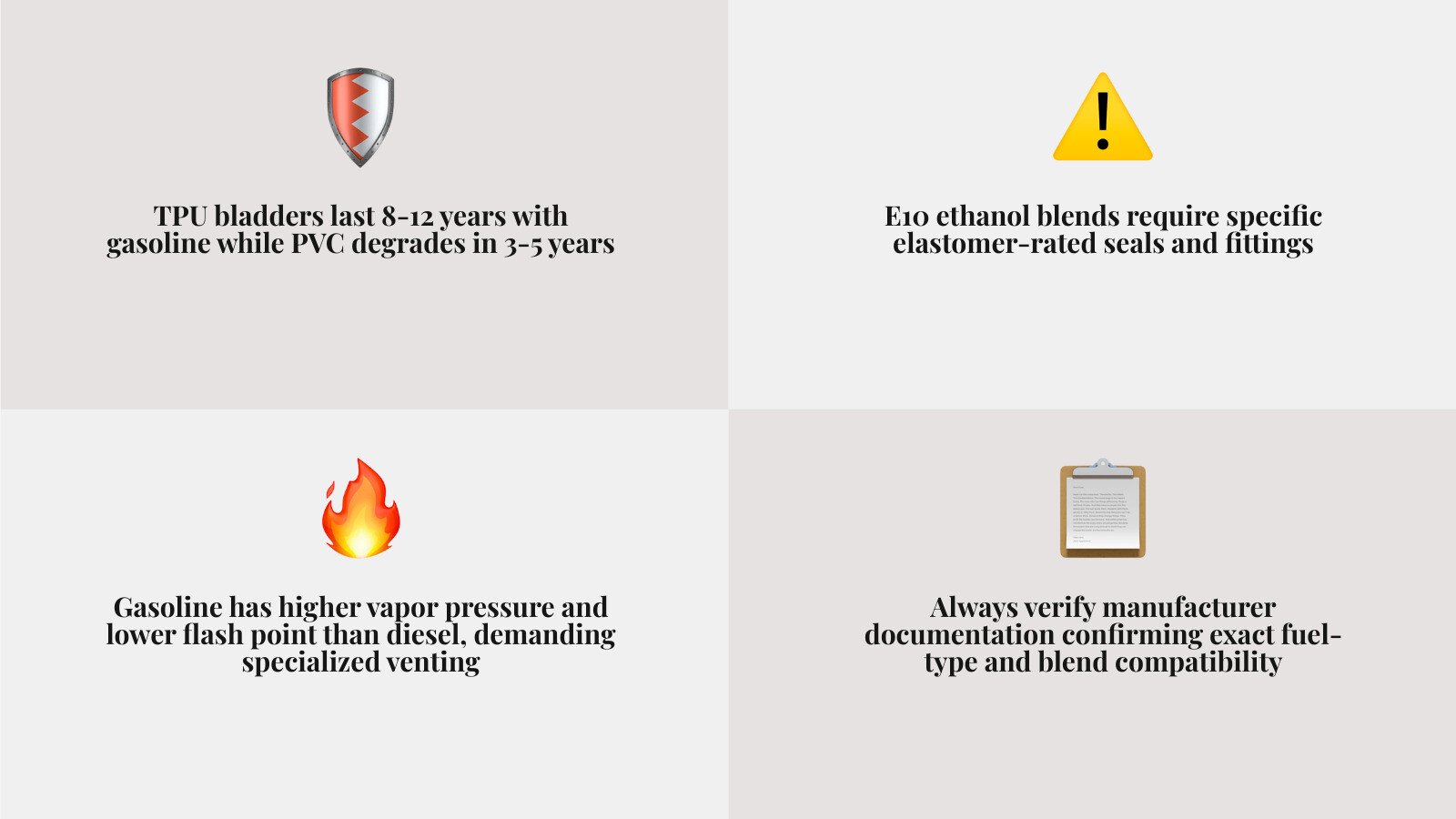
Fuel bladder gasoline compatibility word guide:
Understanding Fuel Bladder Gasoline Compatibility and Material Science
To understand how a flexible fuel bladder interacts with gasoline, we have to look closely at the chemical makeup of the storage material. Unlike rigid steel or aluminum tanks, which rely on sheer material thickness to resist fuel degradation, flexible bladders rely on polymer engineering.
If the molecular structure of the bladder material is vulnerable to the aromatic hydrocarbons found in gasoline (such as benzene, toluene, and xylene), the fuel will slowly dissolve the polymer chains. This process leads to swelling, loss of tensile strength, and eventual structural failure.
When selecting a bladder system, operators must weigh the benefits of flexible materials against traditional containment. For a deeper look at this comparison, see our article on Flexible Tanks vs Rigid Tanks.
Why PVC is Unsuitable for Gasoline Containment
Polyvinyl Chloride (PVC) is a common, cost-effective material used widely for water storage and short-term utility bladders. While PVC-coated polyester bladders can achieve a typical lifespan of 3 to 5 years when storing water or certain mild agricultural chemicals, they are highly unsuitable for gasoline containment.
PVC is naturally rigid. To make it flexible enough to fold and collapse, manufacturers add chemical plasticizers. Gasoline acts as an aggressive solvent that rapidly extracts these plasticizers from the PVC matrix. As the plasticizers leach into the fuel, two things happen:
- The fuel becomes contaminated with dissolved plastic compounds.
- The bladder material becomes extremely brittle, stiff, and prone to micro-cracking.
Under normal physical movement—such as the rolling of a boat deck or the shifting of a transport vehicle—a plasticizer-depleted PVC bladder will crack and fail catastrophically. Furthermore, PVC has a low resistance to the aromatic compounds in gasoline, meaning the material will soften and delaminate under continuous exposure. For highly detailed material requirements, you can review our technical Fuel Bladder Specs.
Advanced TPU Formulations for Hydrocarbon Containment
Thermoplastic Polyurethane (TPU) represents the gold standard for modern gasoline and hydrocarbon containment. High-grade TPU is engineered using specific molecular structures that resist solvent extraction and hydrocarbon degradation.
When formulated for fuel use, TPU provides excellent resistance to microbial attack, low-temperature cracking, and long-term contact with volatile organic compounds (VOCs). A heavy-duty TPU fuel bladder is engineered to last 8 to 12 years when properly maintained, even under continuous exposure to diesel, biodiesel, jet fuel, or gasoline.
The material’s high tensile strength and puncture resistance mean it can handle the physical stresses of transportation while remaining highly flexible. This allows a 10,000-liter empty bladder to fold down into a compact space of just 0.3 cubic meters—reducing required storage volume by up to 90%.
Chemical Resistance: Ethanol Blends and Vapor Pressure Challenges
Modern fuel formulations introduce complex chemical challenges to flexible storage systems. Foremost among these is the widespread integration of ethanol into standard pump gasoline, alongside the high vapor pressure inherent to light distillate fuels.
For those managing commercial or industrial fuel systems, reviewing the EPA Guidance on Ethanol Compatibility is highly recommended to ensure compliance with federal storage regulations.
How Ethanol Blends Impact Fuel Bladder Gasoline Compatibility
Ethanol is an alcohol, and its chemical interaction with flexible elastomers is vastly different from that of pure petroleum hydrocarbons. Ethanol is highly hygroscopic, meaning it actively absorbs moisture from the surrounding atmosphere. This water-ethanol mixture can settle at the bottom of a bladder, creating a highly corrosive environment for incompatible fittings and accelerating the hydrolytic degradation of lower-grade polyurethane coatings.
Furthermore, ethanol behaves as a powerful polar solvent. While standard TPU formulations offer exceptional resistance to pure gasoline, high-concentration ethanol blends like E15 (15% ethanol) or E85 (85% ethanol) can cause significant swelling and softening of standard polymers.
For reliable operations, users must ensure their bladder is explicitly rated for the specific blend they intend to store. Standard E10 pump gas is widely compatible with high-end, fuel-grade TPU systems, but storing E85 requires specialized, high-performance elastomer blends designed to withstand polar solvents. To explore options engineered specifically for these demands, visit our dedicated page on Gasoline Fuel Bladders.
Vapor Permeation and Odor Barrier Technology
Gasoline has a high Reid Vapor Pressure (RVP), meaning it evaporates rapidly at ambient temperatures. In a sealed flexible bladder, this evaporation creates internal vapor pressure, causing the bladder to expand.
Because flexible bladders do not have rigid walls to contain high pressures, managing vapor permeation is critical. Standard industrial fabrics can suffer from “fuel sweating,” where gasoline vapors slowly diffuse through the microscopic pores of the polymer matrix. This leads to a persistent, hazardous fuel odor and a gradual loss of fuel volume.
To prevent vapor permeation, advanced gasoline-compatible bladders incorporate a neutral co-extruded barrier film or specialized multi-layer construction. This micro-thin inner layer acts as an absolute barrier to volatile organic compounds, preventing gasoline vapors from escaping through the fabric. This technology is vital for marine and enclosed transport applications, where fuel vapor accumulation presents an immediate fire and explosion hazard.
Key Components and Engineering Standards for Gasoline Bladders
A fuel bladder is only as reliable as its weakest component. While the main body fabric handles the bulk of fuel containment, the valves, seals, gaskets, and vents must meet the exact same chemical resistance standards.
The engineering requirements for a temporary, portable bladder differ significantly from those of a long-term, bulk storage system. The table below outlines these differences:
| Specification Factor | Temporary / Portable Bladders | Long-Term Storage Bladders |
|---|---|---|
| Primary Material | 40 oz/yd² to 50 oz/yd² TPU | Heavy-duty 50+ mil vulcanized elastomer |
| Typical Capacity | 30 to 250 gallons | 500 to 25,000+ gallons |
| Fittings Material | Anodized aluminum or stainless steel | Machined brass or heavy-gauge steel flanges |
| Venting System | Manual pressure-relief caps | Automatic pressure-vacuum relief valves |
| Secondary Containment | Optional (highly recommended) | Mandatory (berms or self-bunded systems) |
Valves, Seals, and Gaskets
When gasoline contacts an incompatible seal, the elastomer can swell, lose its elasticity, or turn into a soft, gummy substance. This quickly leads to slow leaks around the fitting threads and connection ports.
To ensure complete fuel bladder gasoline compatibility, all integrated O-rings and gaskets must be constructed from high-performance fluorocarbon elastomers (such as Viton) or high-nitrile rubber. Standard neoprene, buna-N, or silicone seals—which perform perfectly well in water or light oil systems—will fail rapidly when exposed to gasoline or ethanol blends.
Furthermore, fittings must be mechanically secured using robust backing plates and reinforced fabric patches to distribute physical stress across the bladder surface, minimizing leak paths at connection points.
Anti-Static Protection and Venting Systems
The movement of gasoline through hoses and fittings generates static electricity. In a flexible bladder system, where the container itself is non-conductive, this static charge can build up on metal valves or coupling points. If a spark discharges near venting fuel vapors, the results can be catastrophic.
To mitigate this risk, gasoline-rated bladders must incorporate anti-static protection features, including:
- Static-dissipative TPU coatings that help bleed off electrical charges across the surface of the fabric.
- Grounding connection points on all metal flanges, allowing operators to attach a grounding wire to a common earth ground before initiating fuel transfer.
- Explosion-proof venting systems designed to safely release excess vapor pressure without allowing external sparks or flames to enter the bladder.
These systems must comply with National Fire Protection Association (NFPA) 30 standards for the safe storage and handling of flammable liquids.
Certifications and Regulatory Compliance
Before deploying a gasoline bladder, operators must verify that the system complies with relevant regional and industry safety standards. For racing and high-performance applications, bladders often require FIA-FT3 certification, which subjects the fuel cell to rigorous crash, puncture, and tensile testing.
For marine applications, the United States Coast Guard (USCG) enforces strict regulations regarding auxiliary fuel storage. Notably, USCG regulations prohibit the installation of flexible fuel bladders below deck or inside the hull for gasoline storage. They must be securely lashed above deck, where any vented vapors can dissipate safely into the open air.
Additionally, bulk storage operations exceeding certain capacities must utilize secondary containment berms to meet Environmental Protection Agency (EPA) and Department of Transportation (DOT) spill prevention guidelines.
Operational Best Practices and Risk Mitigation
Safely operating a gasoline-compatible fuel bladder requires careful planning, regular inspections, and strict adherence to handling protocols. Because gasoline is highly volatile, minor operational errors can escalate quickly.
For a comprehensive operational overview of marine fuel bladders, including layout and lashing advice, read The Ultimate Guide to Marine Bladder Tanks and Storage.
Verifying Fuel Bladder Gasoline Compatibility Before Deployment
Never assume a bladder is compatible with gasoline simply because it looks identical to a fuel-rated system. Before filling a flexible tank for the first time, perform the following verification steps:
- Review the Manufacturer’s Certificate of Compatibility: Ensure you have written documentation explicitly stating that the bladder is rated for gasoline and the specific ethanol blend (e.g., E10) you intend to use.
- Inspect the Seals: Verify that all connection gaskets are made of Viton or high-nitrile rubber.
- Perform a Pressure Test: Before adding fuel, conduct a low-pressure air test (typically 0.25 to 0.5 PSI, depending on manufacturer specs) to ensure all seams and fittings are completely airtight.
- Monitor Initial Fills: When deploying a new bladder, install a clear inline fuel filter during the first few transfer cycles. This allows you to monitor the fuel for any microscopic debris or elastomer breakdown that could indicate material incompatibility.
For off-road and utility operations where fuel quality is critical, check out our guide on Why You Need Gas Compatible Petrol Bladders for Off-Roading.
Safe Handling, Transport, and Storage Protocols
Because gasoline is highly flammable, transfer operations should rely on gravity feed or manual siphon systems whenever possible. If an electric pump is necessary, it must feature a fully sealed, explosion-proof motor rated explicitly for gasoline transfer. Standard utility pumps can generate internal motor sparks, presenting an immediate ignition risk.
When transporting a filled fuel bladder on a vessel deck or truck bed, secure it using the integrated heavy-duty D-rings and high-strength tie-down straps. While a full bladder is relatively stable due to its weight, high seas or rough terrain can cause the fuel to slosh, creating dynamic loads that can shift unsecured gear.
To minimize this effect, choose a baffled bladder configuration if the system will be moved frequently while partially filled. Baffles significantly reduce fuel movement and improve overall stability.
Furthermore, always protect the bladder from prolonged, direct UV exposure when not in use. While modern TPU fabrics contain high-performance UV inhibitors, extreme solar exposure combined with high ambient heat can accelerate the aging of the outer polymer layer. Storing the drained, cleaned bladder in a dry, well-ventilated locker will maximize its operational lifespan.
For a complete breakdown of how material selection impacts cost and long-term value, read The Ultimate Flexible and TPU Tank Pricing Breakdown.
Frequently Asked Questions About Gasoline Fuel Bladders
Can I store gasoline in a standard PVC fuel bladder?
No. Standard PVC (Polyvinyl Chloride) bladders are highly incompatible with gasoline. The aromatic hydrocarbons and additives in gasoline act as solvents, rapidly stripping the plasticizers out of the PVC material. This causes the bladder to become extremely stiff, brittle, and prone to cracking or sudden structural failure within a very short timeframe. Storing gasoline in a standard PVC bladder presents an immediate environmental and fire hazard.
How does temperature affect gasoline stored in a flexible bladder?
Gasoline has a high coefficient of thermal expansion, meaning its volume increases as temperature rises. In a flexible bladder, this expansion will cause the tank to swell. To manage this safely:
- Avoid filling the bladder to 100% of its physical capacity in hot weather; leave room for expansion.
- Ensure the bladder is equipped with a functioning pressure-relief valve to safely vent expanding fuel vapors.
- Opt for a bladder with a white matte finish, which reflects solar radiation and minimizes heat absorption, keeping the fuel cooler.
What is the typical lifespan of a gasoline-compatible TPU bladder?
A high-quality, gasoline-compatible TPU (Thermoplastic Polyurethane) bladder has an expected operational lifespan of 8 to 12 years under normal operating conditions. This lifespan depends heavily on regular maintenance, protection from unnecessary UV exposure when empty, and avoiding contact with incompatible fuel additives or high-concentration ethanol blends that exceed the manufacturer’s rated specification.
Conclusion
Ensuring fuel bladder gasoline compatibility is the single most important step in choosing a flexible containment system for volatile fuels. By selecting high-performance TPU materials, verifying seal chemistry, and adhering to strict operational safety guidelines, operators can safely extend their range and secure dependable auxiliary fuel capacity.
Techno Tanks manufactures premium, custom-configured flexible fuel bladders and collapsible storage systems designed to meet the demanding requirements of marine, commercial, and industrial operators. With capacities ranging from 30 to 3000 gallons, our systems provide a rugged, space-saving alternative to permanent rigid tanks.
Ready to specify a system for your vessel or job site? Contact our engineering team today to Request a Quote for Gasoline Fuel Bladders tailored to your specific dimensions, fuel types, and operating conditions.

