
Why Proper Disposal of a recyclable fuel bladder Matters
A recyclable fuel bladder is a collapsible, flexible fuel storage tank made from materials — typically TPU-coated polyester — that can be processed and reused at end of life, unlike traditional rigid plastic or metal tanks that often end up in landfill.
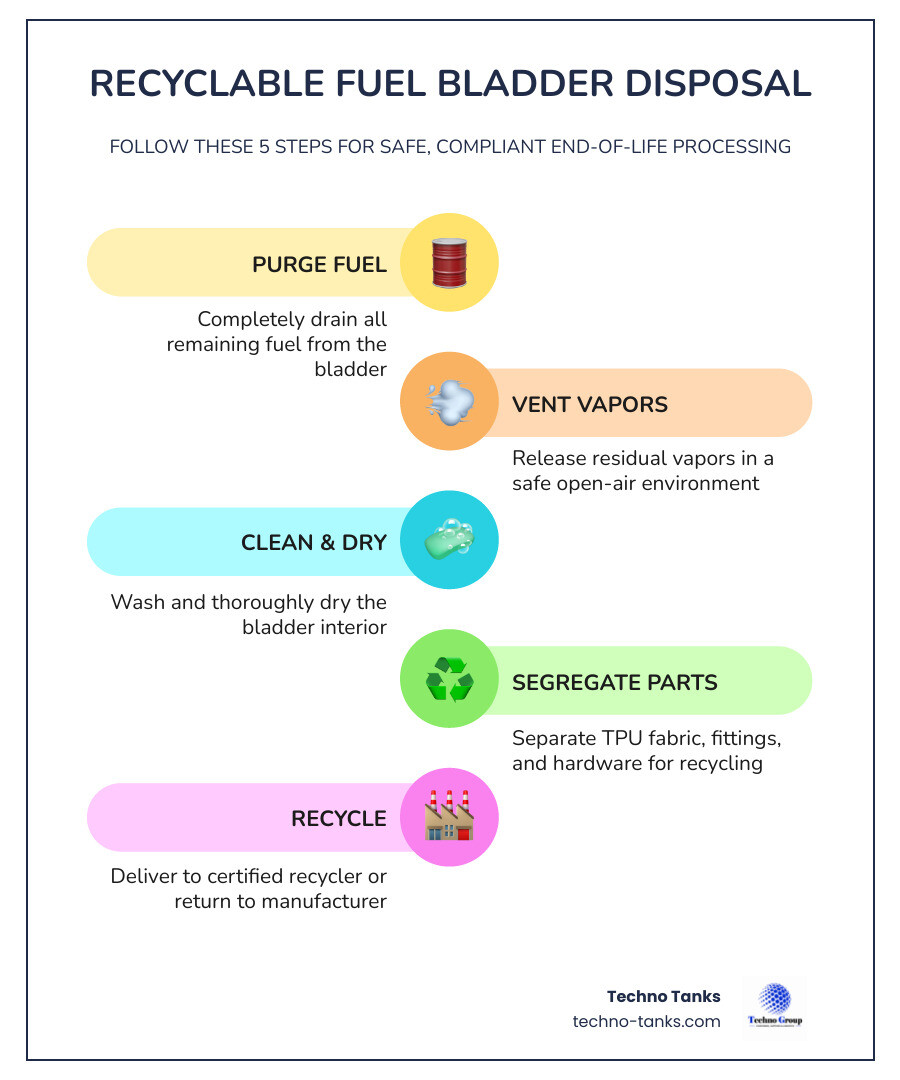
If you’re looking for a quick answer on how to dispose of one responsibly, here’s the core process:
- Purge all remaining fuel from the bladder completely
- Vent residual vapors in a safe, open-air environment
- Clean and dry the bladder thoroughly
- Segregate materials (TPU fabric, fittings, hardware) for appropriate recycling streams
- Contact a certified recycler or return the bladder to the manufacturer for end-of-life processing
Fuel bladders don’t last forever. Even a well-maintained TPU bladder — rated for 8 to 15 years of service — will eventually reach end of life. When it does, disposal isn’t as simple as tossing it in a skip.
Fuel-saturated flexible tanks fall under hazardous waste handling requirements in many jurisdictions. Improper disposal can mean EPA violations, SPCC non-compliance, or environmental liability — none of which you want.
The good news: Techno Tanks marine fuel bladders are made with 100% recyclable materials, which means there’s a right way to close the loop. This guide walks you through exactly how to do it — safely, legally, and with minimal waste.
Common recyclable fuel bladder vocab:
What is a Recyclable Fuel Bladder and How Does It Work?
A recyclable fuel bladder is a highly engineered, flexible containment system designed to store and transport hydrocarbons, lubricants, or water. Unlike traditional rigid tanks, which are manufactured from heavy aluminum, steel, or rotomolded polyethylene, flexible bladders utilize high-tensile base fabrics coated with Thermoplastic Polyurethane (TPU) or advanced polypropylenes.
The core mechanical advantage of a flexible bladder is its collapsible design. When filled, the bladder expands to accommodate its rated capacity. As the fuel is discharged via gravity, siphoning, or low-pressure pumping, the bladder collapses under atmospheric pressure. This eliminates the need for complex internal baffling or air vents that introduce ambient moisture and accelerate fuel spoilage.
When empty, a flexible fuel bladder achieves up to 90% space recovery. This means a 250-gallon tank that occupies substantial deck space when full can be rolled, folded, and stored in a standard vented locker, weighing only a fraction of an empty rigid tank.
Understanding the trade-offs between these systems is critical for marine operators and logistics managers. For a deeper dive into how these systems compare mechanically and operationally, read our comprehensive breakdown on Fuel Bladder vs Fuel Tank.
| Feature | Flexible Recyclable Fuel Bladder | Traditional Rigid Fuel Tank |
|---|---|---|
| Primary Material | TPU-coated Polyester / Polypropylene | Aluminum, Stainless Steel, or HDPE |
| Empty Weight | Extremely low (e.g., 40 lbs for 250 gal) | High (typically 150+ lbs for metal tanks) |
| Space Footprint | Collapsible; saves 90% space when empty | Fixed; occupies the same volume empty or full |
| End-of-Life Profile | 100% recyclable and reusable materials | Difficult to recycle; high scrap processing costs |
| Condensation Risk | Zero (collapses to eliminate air headspace) | High (requires venting; prone to water buildup) |
| Installation | Plug-and-play; deck-mounted tie-downs | Permanent structural mounting required |
Environmental Regulations and Compliance Standards for Disposal
Disposing of any vessel that has contained petroleum products requires strict adherence to environmental regulations. Even though a recyclable fuel bladder is constructed from environmentally friendly TPU or polypropylene, the residual hydrocarbons inside the fabric classify the unwashed bladder as hazardous waste or regulated industrial waste.
In the United States, federal guidelines under the Environmental Protection Agency (EPA) govern the management of container systems that store petroleum. Under 40 CFR 261.4 — Exclusions. – eCFR , specific rules dictate when a container is considered “empty” and exempt from certain hazardous waste regulations. Generally, a container must have all wastes removed using commonly employed practices (such as siphoning or pouring) so that no more than 2.5 centimeters (one inch) of residue remains, or no more than 3% by weight of the total capacity of the container remains for larger systems.
Additionally, state-level regulations can be even more stringent. For example, the New York State Department of Environmental Conservation (NYSDEC) manages petroleum bulk storage and hazardous substance guidelines. Operators must ensure compliance with rules such as those found on Bulk Storage – NYSDEC – Dec.ny.gov to prevent unlawful discharge of residues during decommissioning.
For industrial-scale fuel storage operations (using bladders ranging up to 3,000 gallons or connected in fuel farms), Spill Prevention, Control, and Countermeasure (SPCC) regulations apply. When deploying or decommissioning these large assets, secondary containment is mandatory to capture any potential spills during the fuel transfer or purging process.

Step-by-Step Decommissioning and Recycling Process
Decommissioning a fuel bladder safely requires a systematic approach to prevent environmental contamination and eliminate the risk of combustion. Before beginning, consult our detailed guide on Recycling Fuel Tanks: A Guide to Not Blowing Things Up for safety protocols. Additionally, for operators who also handle smaller portable fuel systems, reviewing resources like Recycling Backpacking Fuel Canisters – PMags.com can provide useful context on venting and purging smaller fuel vessels.
The step-by-step process for preparing a commercial-grade recyclable fuel bladder for end-of-life recycling is as follows:
- Complete Fuel Purging: Drain the bladder to its absolute limit. Because the tank is flexible, you can assist this process by rolling the bladder from the outer edges toward the dual-action aluminum flange and discharge valve.
- Vapor Venting: Open all valves and ports. Place the bladder in a well-ventilated, shaded outdoor area for a minimum of 48 to 72 hours to allow residual volatile organic compounds (VOCs) and vapors to escape.
- Chemical Neutralization: Flush the interior of the bladder with a biodegradable, hydrocarbon-neutralizing degreaser mixed with water. Agitate the solution inside the bladder, drain it into an approved hazardous waste collection container, and repeat until the rinse water runs clear and odorless.
- Hardware Stripping: Use hand tools to remove all metal fittings, including stainless steel ball valves, aluminum flanges, automatic exhaust valves, and D-ring tie-down points. These metals must be recycled separately from the polymer body.
- Material Segregation: Cut the clean, dry bladder fabric into manageable sections using heavy-duty shears. Group the polymer sections by material type (TPU vs. polypropylene) to prepare them for the recycling facility.
Preparing Your Recyclable Fuel Bladder for Safe Transport
Once the bladder has been thoroughly cleaned, neutralized, and stripped of its heavy hardware, it must be packaged securely for transport to a recycling center or back to the manufacturer.
During active service, marine fuel bladders are secured above deck using integrated D-ring points to prevent shifting in rough seas. For transport to a recycling facility, the empty, collapsed material should be rolled tightly and strapped. Never transport a bladder that still contains liquid or unvented fuel vapors. For detailed instructions on handling and securing these systems during their operational lifecycle, consult The Ultimate Guide to Marine Bladder Tanks and Storage.
Processing TPU and Polypropylene in a Recyclable Fuel Bladder
The primary reason Techno Tanks uses Thermoplastic Polyurethane (TPU) is its superior environmental profile compared to traditional PVC. Unlike PVC, which contains harmful phthalates and is difficult to recycle, TPU is highly recyclable.
At the recycling facility, the cleaned TPU-coated polyester fabric is shredded into small flakes. These flakes undergo mechanical recycling, where they are melted down and extruded into pellets. These pellets can then be reused to manufacture industrial hoses, cable sheathing, or new flexible containment systems.
To maximize the operational lifespan of your bladder before it ever needs to undergo this recycling process, implement the maintenance strategies detailed in How to Extend Fuel Bladder Lifespan with 5 Easy Changes.
Frequently Asked Questions about Fuel Bladder Disposal
Can a single bladder hold both diesel and gasoline interchangeably?
No. Material segregation is critical when dealing with flexible polymers. Polyester-based TPU is engineered specifically for diesel, jet fuel, and crude oils, offering exceptional long-term resistance to these hydrocarbons. Conversely, polyether-based TPU is formulated for gasoline and fuels with higher aromatic content.
If you put gasoline into a diesel-rated bladder, the chemical composition of the gasoline will degrade the inner polymer layer, causing it to dissolve, delaminate, and fail prematurely. Always specify your exact fuel type when ordering custom bladders to ensure the correct polymer chemistry is utilized. For further reading on managing fuels safely over short durations, see Don’t Let It Go Stale: A Guide to Short-Term Fuel Storage.
Will a marine fuel bladder float if it falls overboard?
Yes. Petroleum-based fuels typically have a density of roughly 2/3 that of water, which provides natural buoyancy to a filled bladder. In emergency situations, an empty bladder can even be lightly inflated with air to serve as an emergency flotation device for personnel or equipment.
What is the expected service life of a high-capacity flexible bladder?
When manufactured from premium TPU-coated fabrics containing UV stabilizers and hydrolysis resistance, a high-capacity flexible bladder has an expected service life of 8 to 15 years under normal operating conditions. Proper cleaning, dry storage in a vented locker when not in use, and avoiding physical abrasion are key factors in reaching this maximum lifespan.
Conclusion
Transitioning to a recyclable fuel bladder is one of the most effective operational decisions a marine or industrial operator can make to reduce their environmental footprint. By choosing collapsible, 100% recyclable TPU systems over rigid metal or non-recyclable PVC alternatives, you eliminate long-term waste while gaining unmatched spatial efficiency.
Techno Tanks designs and manufactures flexible fuel bladders ranging from 30 to 3,000 gallons, engineered to meet the rigorous demands of offshore cruising, commercial shipping, and remote industrial logistics. Every bladder is built using advanced, recyclable polymers tailored to your specific fuel compatibility requirements.
To explore custom sizing options, discuss technical specifications, or request a precise project quote tailored to your exact operational needs, visit our dedicated Marine Fuel Bladders page today.

