
What Are Offshore Fuel Containment Bladders — and Which One Do You Need?
Offshore fuel containment bladders are flexible, collapsible tanks designed to carry additional gasoline or diesel safely on a vessel’s deck — without the cost, weight, or permanence of installing a second rigid tank.
If you need a quick answer on what to look for:
- Capacity: Standard sizes range from 30 to 250 gallons, with custom builds up to 3,000 gallons
- Material: Look for reinforced TPU-coated polyester with UV resistance and fuel compatibility
- Placement: Must be secured above deck — Coast Guard regulations prohibit below-deck installation
- Tie-down: Use built-in D-ring attachment points; never leave a full bladder unsecured in rough seas
- Fuel types: Compatible with gasoline, diesel, bio-diesel, ethanol, methanol, and more
- Transfer: Gravity feed or siphon flow recommended; explosion-proof pumps available for diesel
- Pricing: Depends on size, configuration, and application — request a quote for accurate pricing
For boat owners, commercial operators, and expedition crews, the core problem is simple: your vessel’s built-in tank limits your range. Rigid auxiliary tanks are expensive to install and take up permanent space. A high-quality marine fuel bladder solves both problems — it stores when flat, deploys when needed, and stows away again when the job is done.
Techno Tanks marine fuel bladders are built with reinforced TPU-coated polyester, a white matte finish to reduce heat absorption on sunny decks, and dual-action aluminum flanges. The 60-gallon model weighs just 21 lbs empty. The 300-gallon model weighs 41.5 lbs empty — yet holds over 1,100 liters of fuel when full.
This guide covers everything operators need to evaluate, select, deploy, and maintain an offshore fuel containment bladder safely and effectively.
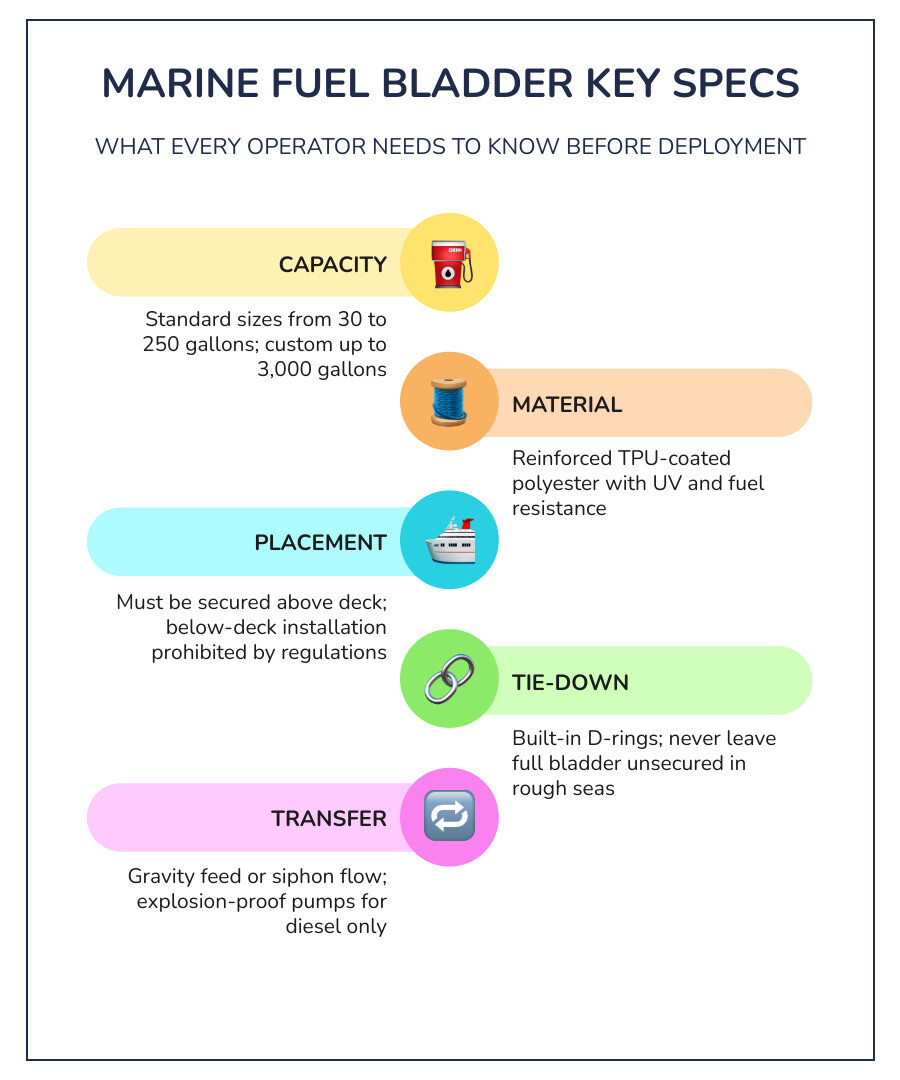
Simple offshore fuel containment bladders word guide:
Why Choose Offshore Fuel Containment Bladders Over Rigid Tanks?
When planning long-distance blue-water crossings or multi-day commercial operations, carrying auxiliary fuel is non-negotiable. However, the method chosen to store this fuel directly impacts vessel safety, deck usability, and overall operating costs.
Historically, operators relied on rigid metallic or heavy plastic auxiliary tanks. Today, professional operators are increasingly choosing flexible, collapsible alternatives. Evaluating a Fuel Bladder vs Fuel Tank highlights the clear operational advantages of flexible containment systems in marine environments.
Unlike rigid tanks, which demand permanent deck space and add unnecessary structural weight even when completely empty, flexible bladders adapt to the volume of liquid they contain. When empty, they can be folded, rolled, and stored in a small locker, returning valuable deck space to the crew.
Range Extension and Auxiliary Fuel Capacity
For offshore sportfishers, research vessels, and commercial fleets, the primary constraint on any voyage is fuel range. Installing a permanent, larger internal tank is often structurally impossible or prohibitively expensive.
Using temporary fuel storage is the most practical way to secure the necessary auxiliary fuel capacity for extended voyages. By carrying extra fuel above deck, operators can run to remote fishing grounds or complete long-distance transits without being forced to refuel at expensive, hard-to-reach coastal fuel docks.
Space-Saving Footprint and Collapsible Design
Deck space is premium real estate on any vessel. A rigid auxiliary tank remains a bulky obstacle long after its fuel has been burned.
In contrast, collapsible marine fuel tanks shrink as fuel is consumed. Once the fuel is transferred to the vessel’s primary internal tanks, the empty bladder can be rolled up like a sleeping bag.
For example, a 300-gallon bladder occupies a substantial 68″ x 63″ deck footprint when full. Once empty, it collapses down completely and can be packed into a storage box measuring just 25.5″ x 20.5″ x 10″, freeing up the entire deck for fishing, hauling gear, or crew movement.
Material Science and Engineering of Marine Bladders
Offshore environments are notoriously harsh. Equipment on deck is subjected to continuous pounding, high-intensity UV exposure, salt water, and chemical degradation from modern fuel blends. To withstand these forces, marine fuel bladders must be engineered to strict military-grade specifications.
The durability of these systems is grounded in advanced polymer engineering. For a deeper look at the chemical resilience of these materials, see the Scientific research on TPU polymer durability in marine environments.
TPU-Coated Polyester and Puncture Resistance
Modern high-performance fuel bladders are constructed from heavy-duty, reinforced thermoplastic polyurethane (TPU) coated polyester. Unlike cheaper PVC or traditional rubber materials, TPU with directional molecule technology offers exceptional tensile strength, flexibility, and puncture resistance.
This advanced material technology is critical when storing volatile liquids on a moving deck where equipment might shift. TPU-coated polyester is chemically compatible with a wide variety of fluids. These bladders are designed to handle:
- Gasoline and high-octane racing fuels
- Diesel, bio-diesel, and #2 / #4 fuel oils
- Ethanol and methanol blends
- Aviation fuels like 100LL
- Lubricants and even potable water
For diesel-specific operations, utilizing dedicated Diesel Fuel Bladders ensures that the seals, dual-action aluminum flanges, and Viton gaskets are optimized for maximum chemical resistance and zero-permeation storage.
Thermal Management and White Matte Finishes
A major challenge with above-deck fuel storage is solar heat absorption. Direct sunlight heats the fuel, causing thermal expansion and rapid gas formation, which can over-pressurize the tank and lead to hazardous venting.
To prevent this, high-quality marine bladders are manufactured with a specialized white matte finish. This design choice serves two critical functions:
- Heat Reduction: The white surface reflects solar radiation, keeping the contained fuel significantly cooler than dark-colored alternatives.
- Reduced Gas Formation: Minimizing fuel temperature substantially reduces vaporization and gas buildup, making the storage of highly volatile fuels on deck much safer.
For operators carrying fuel on sunny, open decks, choosing specialized Gasoline Fuel Bladders with high-reflectivity finishes is a key safety measure.
Deployment, Securing, and Transfer Protocols on Deck
Before deploying an offshore fuel bladder, operators must establish clear procedures for placement, securing, and fuel transfer. Handling a flexible container filled with hundreds of gallons of flammable liquid requires precision and adherence to proven maritime protocols.
To explore integrated systems designed for commercial and private fleets, refer to Techno Tanks’ comprehensive guide on Offshore Fuel Solutions.
Safe Tie-Down Methods for Offshore Fuel Containment Bladders
A full fuel bladder is incredibly heavy. A 60-gallon bladder weighs roughly 150 lbs, while a large 300-gallon bladder weighs approximately 3,000 lbs. Underestimating the dynamic forces of this weight in rough seas is a major safety hazard.
While a full bladder has a low profile and high surface contact that naturally resists sliding, it will shift violently if the vessel encounters heavy swells or sudden maneuvers. Therefore, securing the bladder is mandatory.
Operators must use heavy-duty ratchet straps or marine-grade lashing lines rated for the total loaded weight. These straps are threaded through the built-in D-ring guide points welded directly into the reinforced seams of the bladder.
Always secure the bladder to robust deck cleats or dedicated structural tie-down points. For detailed instructions on securing these systems, read How To Choose The Safest Offshore Fuel Bladder Systems For Your Next Voyage.
Fuel Transfer Methods: Gravity, Siphon, and Pumps
Transferring fuel from an above-deck bladder to the vessel’s main fuel system can be done using several reliable methods:
- Gravity Feed: Because the bladder is secured above deck, gravity naturally pulls the fuel down. Connecting a fuel-rated hose from the bladder’s outlet flange directly to the vessel’s deck fill pipe is the simplest, spark-free method.
- Siphon Flow: A manual siphon pump can easily initiate a continuous siphon flow from the bladder to the main tank.
- 12V/24V Electric Pumps: For faster transfers, or when gravity feed is slow, electric transfer pumps can be used. Critical Safety Rule: For diesel, standard marine pumps are acceptable. However, if transferring gasoline, the pump motor must be certified explosion-proof (such as specialized systems from Reverso or Jabsco) to prevent ignition of volatile fumes.
When purging the last remaining gallons, operators can roll the flexible bladder from the outer edges toward the outlet flange—similar to squeezing a tube of toothpaste—to ensure almost every drop of fuel is successfully transferred. To learn more about selecting the right transfer equipment, visit Fuel Transfer Bladders.
Regulatory Compliance and Safety Considerations
Operating with fuel on deck requires strict adherence to safety standards. Understanding physical and regulatory limitations prevents accidents and keeps your vessel compliant with maritime authorities.
Safety Standards and Best Practices for Above-Deck Placement
The United States Coast Guard (USCG) maintains strict regulations regarding the use of flexible fuel containment systems.
Coast Guard regulations do not permit flexible fuel bladders to be installed below deck or in-hull.
Bladders must be secured above deck on an open, well-ventilated area of the vessel. Above-deck placement ensures:
- Safe Venting: Any vapor venting occurs in open air, preventing the explosive accumulation of fumes in enclosed engine rooms or bilge spaces.
- Visual Inspection: Crew members can easily monitor the bladder for wear, shifting, or leaks.
- Spill Containment: In the unlikely event of a spill during transfer, fuel can be quickly contained, washed down, or cleaned up before entering the vessel’s interior.
Always place a protective rubber mat or heavy-duty liner underneath the bladder before filling. This prevents fiberglass non-skid surfaces, stray screws, or deck debris from abrading the bottom of the bladder over long, vibration-heavy voyages. For more regulatory and transport insights, read about Navigating The Best Offshore Fuel Transport Solutions For Modern Fleets.
Vessel Stability and Buoyancy Dynamics of Offshore Fuel Containment Bladders
Adding significant weight above the waterline alters a vessel’s center of gravity. Operators must calculate how auxiliary fuel weight affects stability, especially on smaller boats.
Because fuel has approximately 2/3 the density of water, a filled bladder will actually float if it is accidentally lost overboard. However, on deck, that same volume of fuel represents a dynamic load. As the boat rolls, the liquid inside a partially empty bladder can shift, creating a “free surface effect” that can destabilize the vessel.
To maintain stability, bladders are best transported either completely full or completely empty. If you must run with a partially full bladder, ensure the tie-down straps are tightened down extra snug to compress the bladder and minimize liquid sloshing.
In emergency situations, an empty, dry fuel bladder can be lightly inflated with air. Thanks to its high displacement and durable construction, it can serve as a highly effective temporary flotation aid for personnel or equipment. To understand how these systems integrate into emergency planning, consult The Ultimate Guide To Marine Emergency Fuel Supply Systems.
Technical Specifications: 60-Gallon vs. 300-Gallon Bladders
The table below compares the physical specifications of two of the most popular bladder sizes to help you determine the best fit for your deck layout and weight capacity.
| Specification | 60-Gallon Marine Fuel Bladder | 300-Gallon Marine Fuel Bladder |
|---|---|---|
| Capacity (Gallons / Liters) | 60 gal / 227 L | 300 gal / 1135 L |
| Empty Weight | 21 lbs / 9.5 kg | 41.5 lbs / 18.5 kg |
| Filled Weight (Approximate) | ~150 lbs / 68 kg | ~3,000 lbs / 1,360 kg |
| Filled Dimensions (L x W x H) | 42″ x 28.5″ x 16″ (107 x 72.5 x 41 cm) | 68″ x 63″ x 19.5″ (172.5 x 160 x 49.5 cm) |
| Storage Dimensions (Boxed) | Compact roll (fits standard locker) | 25.5″ x 20.5″ x 10″ (65 x 52 x 25 cm) |
| Primary Material | Reinforced TPU-coated polyester | Reinforced TPU-coated polyester |
| Hardware / Flanges | Dual-action aluminum / Viton seals | Dual-action aluminum / Viton seals |
Frequently Asked Questions
How is fuel safely transferred from a marine bladder to the main tank?
Fuel is typically transferred via gravity or a siphon system. By running a fuel-rated hose from the bladder’s dual-action aluminum outlet flange directly to your boat’s deck fill, the fuel flows naturally without the need for electrical power.
If using a pump, ensure it is marine-rated. For gasoline transfers, the pump must be certified explosion-proof. For a step-by-step breakdown of safe hookups and vessel integration, see our guide on Fuel Bladder For Boats.
Can a fuel bladder be connected directly to a boat’s engine?
Yes. A marine fuel bladder can be plumbed directly to a vessel’s engine fuel lines, provided you use the correct fuel-rated fittings, adapters, and a high-quality fuel-water separator inline.
However, most operators prefer transferring the fuel directly to the main internal tank first. This keeps the engine drawing from its engineered, baffled internal system and simplifies fuel management.
What are the weight and dimension differences between a 60-gallon and 300-gallon bladder?
A 60-gallon bladder is highly portable, weighing only 21 lbs empty with filled dimensions of 42″ x 28.5″ x 16″.
A 300-gallon bladder is designed for high-capacity needs, weighing 41.5 lbs empty and expanding to 68″ x 63″ x 19.5″ when full.
For full details on sizing and footprints across our entire product line, check out our dimensions resource page.
How do you store and maintain a fuel bladder when not in use?
To maximize the lifespan of your bladder, follow these maintenance steps:
- Completely Empty the Tank: Roll the bladder toward the flange to purge all remaining liquid.
- Rinse and Dry: If switching liquid types or preparing for long-term storage, flush the bladder (using water for water bladders, or an appropriate neutralizing wash for fuel bladders) and let it dry completely.
- Store in a Protected Area: Fold or roll the dry bladder and store it in a cool, dry, and vented locker. Avoid leaving it exposed on deck to extreme weather, sun, and temperature swings when not in use.
For more detailed care tips, refer to our guide on temporary fuel storage.
Conclusion
Whether you are planning an ambitious blue-water transit, extending your commercial fishing range, or securing a reliable backup fuel reserve, offshore fuel containment bladders offer a safe, flexible, and space-saving alternative to rigid auxiliary tanks.
By utilizing military-grade TPU-coated polyester, dual-action aluminum flanges, and heat-reflecting white matte finishes, Techno Tanks designs bladders that withstand the roughest offshore conditions. They deliver maximum range when you need it, and fold away into a locker when you don’t.
Because every vessel, fuel type, and voyage requirement is unique, pricing for these high-performance systems is customized to your specific needs. Ready to extend your vessel’s range safely? Request a quote from Techno Tanks today to get accurate pricing for your custom fuel storage requirements.

