
Why Knowing How to Extend Fuel Bladder Lifespan Can Save You Thousands
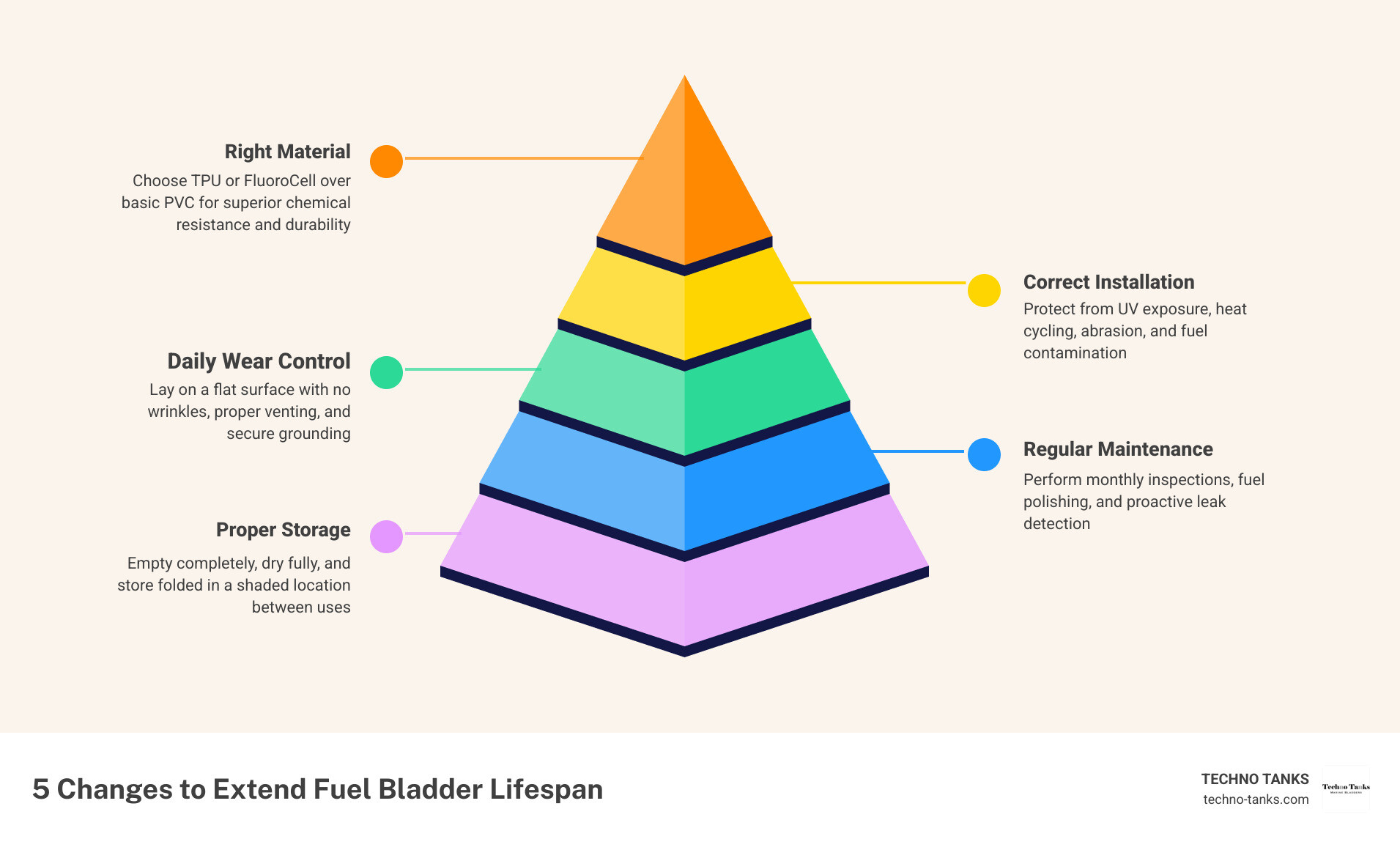
How to extend fuel bladder lifespan comes down to five key changes most boat owners overlook:
- Choose the right material – TPU or FluoroCell over basic PVC
- Install it correctly – flat surface, no wrinkles, proper venting and grounding
- Control daily wear – protect from UV, heat, abrasion, and fuel contamination
- Maintain and inspect regularly – monthly checks, clean fuel, and leak detection
- Store it properly – empty, dry, and folded in a shaded spot between trips
A well-maintained fuel bladder can last 15 to 30 years. A neglected one can fail in a fraction of that time — leaving you stranded offshore or dealing with a costly fuel spill.
Fuel bladders are one of the most practical tools for boaters who need extra range without permanent tank modifications. Drop one in a livewell, a cargo bay, or a protected deck cavity, and you can carry dozens of extra gallons for long offshore runs.
But flexible fuel storage is only as good as how you treat it. These bladders deal with harsh sun, saltwater spray, engine-room heat, constant vibration, and repeated fill-and-drain cycles. Every one of those conditions chips away at the material — faster than most people expect.
The good news? Most premature failures are preventable. Small decisions — the material you choose, how you lay the bladder down, whether you shade it on a hot day — add up to years of extra service life.
I’m Ivan Jimenez, founder of Digital Ivan and Doral SEO, where I build authority content systems for industrial and marine brands, including Techno Tanks — helping them answer the exact questions buyers search for, like how to extend fuel bladder lifespan. In this guide, I’ll walk you through five practical changes that protect your investment and keep your bladder performing trip after trip.
How to extend fuel bladder lifespan terms you need:
Start With Better Materials and the Right Bladder Design
If you want longer service life, start before the first fill-up. Material choice is one of the biggest predictors of how long a bladder will last in real use.
In broad terms, TPU-based bladders usually outperform basic PVC in fuel applications. Research commonly puts TPU in the roughly 8-12 year range in demanding service, while PVC may be better suited to shorter-term use and can fall into the 3-5 year range depending on environment and fuel exposure. Higher-end low-permeation constructions can do far better, with some fuel bladder systems reaching 15-30 years when properly installed and maintained.
That difference comes from chemistry and construction:
- Better resistance to hydrocarbons
- Lower fuel vapor diffusion
- Stronger abrasion performance
- Better repeated folding behavior
- Improved seam durability when reinforced fabrics are used
For a closer look at specifications that matter, see Fuel Bladder Specs.
| Feature | TPU | PVC |
|---|---|---|
| Typical durability | Better for long-term use | Better for short-term or budget use |
| Fuel resistance | Strong | More limited depending on blend |
| Abrasion resistance | Higher | Lower |
| Cold flexibility | Better | More likely to stiffen |
| Repeated folding | Handles cycles better | Can fatigue sooner |
| Expected lifespan | Often 8-12 years or more depending on build | Often 3-5 years in demanding use |
How to extend fuel bladder lifespan by choosing fuel-compatible materials
Not all fuels attack materials the same way. Diesel, gasoline, ethanol blends, and jet fuel each create different stress on liners, coatings, and seams.
The first rule is simple: match the bladder to the exact fuel you store.
That matters because premature failure often starts as slow chemical degradation, not a dramatic puncture. You may first notice:
- Fuel odor increasing over time
- Surface tackiness or stiffness
- Swelling around fittings
- Softening near seams
- Higher vapor loss
Ethanol blends deserve special attention because they can be harder on some materials and can also increase moisture-related contamination risks if fuel handling is sloppy. For long-term reliability, we want materials with low permeability and strong compatibility data, not “close enough.”
Reinforced scrim layers also help. A nylon or polyester fabric core gives the bladder strength, while the outer and inner layers handle barrier protection and wear. The result is a tank that flexes without becoming fragile.
Why TPU, reinforced fabrics, and low-permeation liners last longer
TPU earns its reputation because it balances flexibility with toughness. It resists abrasion well, stays more usable across wider temperature swings, and usually tolerates repeated folding better than PVC. For marine use, where a bladder may be deployed, emptied, rolled, and deployed again, that matters a lot.
Reinforced fabrics improve long-term performance too. High-tenacity woven reinforcement helps distribute loads so stress is not concentrated at one seam or corner. That means less seam creep, less stretch around fittings, and better survival under slosh loads.
Low-permeation liners are another major advantage. Some advanced bladder materials dramatically reduce vapor diffusion, with FluoroCell-style constructions reported to cut emissions to about 1/100th of conventional fuel bladders while also offering a 15-30 year life expectancy in the right application.
If you want to understand why advanced chemical-resistant liners can extend life in harsh fluids, this background piece is useful: Extending bladder life in corrosive applications.
Install It Correctly the First Time
A premium bladder installed badly can die young. A well-built bladder installed on a clean, protected, properly vented surface can last decades. Installation is where many “mystery failures” really begin.
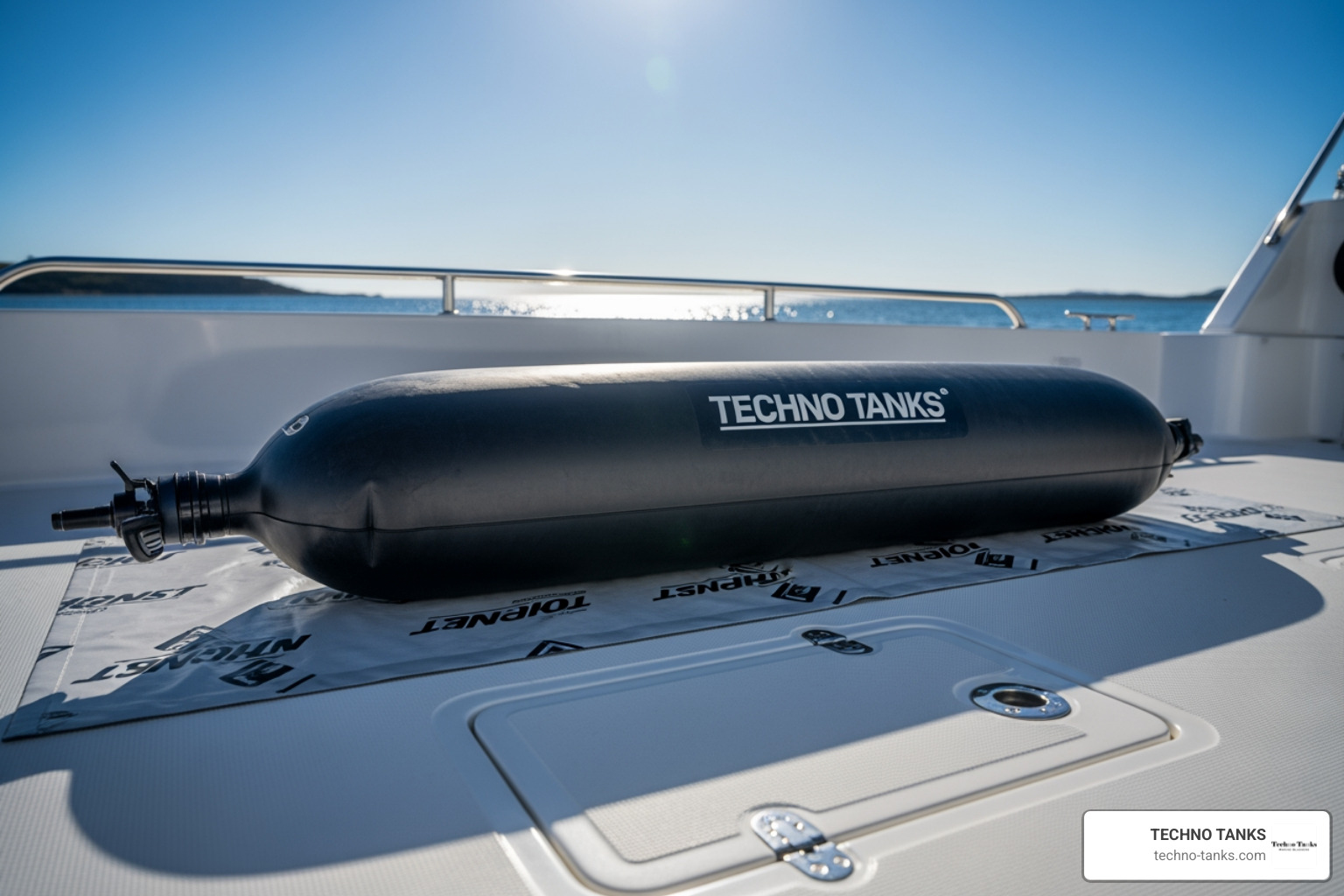
Before choosing dimensions, use a proper footprint and fill-profile review. Our Fuel Bladder Sizing Guide can help. Fittings matter too, especially on boats, so review Everything You Need to Know About Boat Fuel Tank Fittings.
How to extend fuel bladder lifespan with proper site prep and under-protection
The surface under the bladder should be:
- Clean
- Dry
- Free of screws, sharp debris, and splinters
- Fully supportive across the bladder footprint
- Away from constant abrasion points
An underliner is one of the cheapest lifespan upgrades you can make. It adds a sacrificial barrier between the bladder and deck or compartment floor, reducing chafe from non-skid texture, vibration, and trapped grit. It also helps buffer minor temperature swings from hot surfaces.
If the bladder sits on an uneven surface, every fill cycle rubs the same high points. Think of it as slow-motion sandpaper. The bladder usually loses that argument.
Avoid wrinkles, stress points, and bad fitting alignment
Wrinkles are not cosmetic. They are stress concentrators.
A bladder should lay smoothly with full support underneath. If the bottom is twisted, pinched, or forced into a shape it was not built for, you increase the chance of:
- Abrasion at fold lines
- Trapped water or contamination pockets
- Distorted fill readings
- Uneven internal loading
- Premature seam strain
Fittings must also align naturally. Do not pull outlets, nipples, or flanges into place under tension. A fitting that is constantly being “asked” to sit crooked will eventually protest with seepage, cracking, or seam damage. Also make sure the bladder does not block hatches or access you will need later. Future-you deserves at least one favor.
Venting, grounding, and baffling mistakes that shorten service life
Fuel bladders are not pressure vessels. They need correct venting to breathe during filling and emptying.
Bad venting can cause:
- Pressure buildup while filling
- Vacuum collapse while draining
- Structural seam strain
- Fuel transfer problems
- Distorted shape and false “capacity” assumptions
Proper vents or scuppers allow air displacement, reducing backpressure and protecting the bladder. Grounding is equally important because fuel transfer can generate static. Anti-static protection and correct bonding practices reduce fire risk and can help protect fittings and transfer hardware.
Baffles matter most when motion is severe. On boats, slosh loads from chop and offshore pounding can fatigue fittings and seams over time. On land, trailer vibration and transport shock create similar problems. Integrated baffling reduces hydraulic hammer, stabilizes the load, and lowers repeated fatigue.
Control the Biggest Failure Causes During Daily Use
Once installed, the biggest lifespan killers are usually environmental and operational.
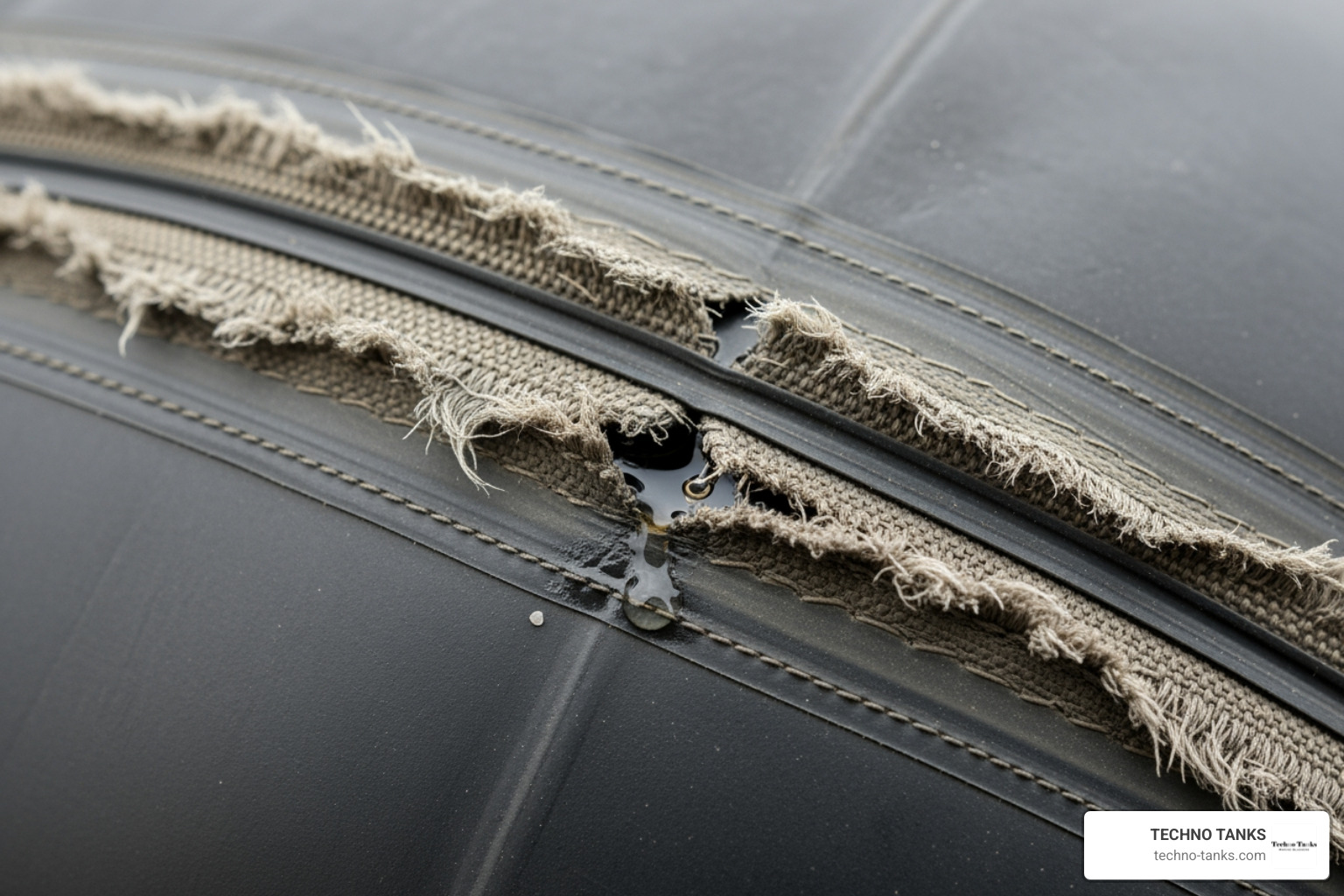
For a broader comparison of flexible versus rigid systems, see Fuel Bladder vs Fuel Tank. For a marine overview, Marine fuel bladders for vessels gives useful context.
The most common causes of premature fuel bladder failure
The repeat offenders are remarkably consistent:
- UV exposure from direct sunlight
- Abrasion from rough decks, grit, and dragging
- Heat cycling and high surface temperatures
- Incompatible fuel or additives
- Improper installation
- Blocked vents causing overpressure or vacuum stress
- Vibration and slosh fatigue
- Contamination from water, sediment, or microbes
- Dirty transfer hoses and containers
- Overfilling
Heat and UV are especially brutal. In many bladder systems, age-related deterioration starts on the top surface because that side gets the most solar and ambient heat exposure. Add salt spray, deck reflection, and dark fabric heating, and the material ages faster than owners expect.
How operating conditions change real-world lifespan
Published lifespan numbers are only a baseline. Real-world performance depends on duty cycle.
A bladder used occasionally, cleaned, shaded, and stored correctly may deliver service closer to the upper end of expected life. A bladder left on deck in full sun, flexed daily, and exposed to contamination may age much faster.
Conditions that shorten life include:
- Extreme cold that stiffens lower-grade materials
- High heat, including engine-room warmth and deck temperatures above ambient
- Offshore pounding and constant marine motion
- Trailer vibration during transport
- Saltwater spray around fittings and hardware
- Long idle periods with contaminated fuel sitting inside
- Seasonal storage with residual moisture
Some military-style and heavy-duty designs are built for below-zero conditions and heat above 120 degrees F, but even then, environment still affects lifespan. Heat does not always cause dramatic failure. Often it just quietly accelerates aging.
Accessories that prevent hidden damage
The right accessories are not upsells. They are insurance.
Helpful lifespan-extending accessories include:
- Underliners to reduce abrasion
- Proper vent valves to prevent pressure strain
- Anti-static straps or bonding provisions
- Level monitoring to avoid overfilling
- Leak detection and visual monitoring
- Corner reinforcements in high-load areas
- Protective covers for UV reduction
Monitoring matters more than many users realize. A small seep at a fitting is easier and cheaper to correct than a fully soaked compartment and a ruined trip.
Maintain, Inspect, and Keep Fuel Clean
Good maintenance is less about doing a lot and more about doing the boring things on schedule. Boring is good. Boring gets you home.
For fuel quality issues, read Stuck with Bad Fuel and Don’t Tank Your Trip with Poor Yacht Fuel Tank Maintenance.
How to extend fuel bladder lifespan with a simple inspection routine
We recommend a quick visual check before use and a more deliberate inspection monthly during active service.
Monthly inspection points:
- Outer skin for chafe, cuts, stiffness, or discoloration
- Seams for lifting, abrasion, or wet spots
- Fittings for looseness, cracking, or fuel staining
- Vent path for blockage or restricted airflow
- Hose connections for strain or rubbing
- Under-bladder area for trapped grit or moisture
- Surrounding containment area for leaks
- Fuel smell after filling or transfer
Visible staining and persistent fuel odor are classic warning signs. In some applications, owners spot dyed fuel traces before they see an actual drip. Catching that early can save the bladder.
If opening a cap produces a strong inrush of air, that can point to a venting problem. Fix that quickly. Repeated vacuum or pressure stress is hard on the whole system.
Fuel polishing, cleaning, and contamination prevention
Dirty fuel does not just hurt engines. It can shorten bladder life too.
Water, sediment, and microbial growth lead to corrosion in connected hardware, clogged filters, sludge buildup, and degraded fuel quality. Regular fuel polishing and tank cleaning help remove those contaminants before they become a bigger problem.
Best practices include:
- Use clean, sealed containers during transfers
- Filter fuel during loading when practical
- Keep water out of fill points and vents
- Remove contaminated fuel promptly
- Schedule fuel polishing if fuel sits for extended periods
- Inspect for microbial growth if water intrusion is suspected
Contamination control also helps downstream components. A quality fuel pump can last 100,000 miles or more when a fuel tank is kept full as much as possible, partly because the fuel helps cool and lubricate the pump. While that stat is about pumps, the lesson applies here too: stable fuel management reduces stress across the whole fuel system.
Transfer fuel safely without damaging the bladder or fittings
Transfers are a common time for accidental damage.
To protect the bladder:
- Support hoses so they do not pull on fittings
- Avoid oversized pumps that create unnecessary strain
- Route hoses without tight bends
- Use clear tubing where visual flow confirmation helps
- Do not yank quick-connects sideways
- Never allow fittings to carry hose weight unsupported
Gravity drain or controlled siphon methods can work well when set up correctly and monitored visually. If you need guidance, see How to Transfer Fuel from a Fuel Bladder and The Best Way to Connect Your Outboard Fuel Line Fast.
Store, Handle, Repair, or Replace at the Right Time
Storage habits have a huge effect on lifespan, especially for seasonal boaters.
For end-of-life handling, see Recycling Fuel Tanks: A Guide to Not Blowing Things Up.
Best storage and handling habits between trips
For long-term storage, the safest habit is usually to empty the bladder completely, let it dry as appropriate, and store it clean and shaded.
Do this:
- Drain fully
- Clean out contamination if present
- Allow moisture to evaporate before folding
- Fold loosely instead of making hard creases
- Store in a shaded, temperature-controlled area
- Keep caps and openings protected from debris
- Place the folded bladder in a clean container or tub
- Lift it rather than dragging it
For short gaps between trips, users sometimes debate full versus empty. If the bladder is staying in service soon and fuel quality is known to be good, stable storage with minimal air space can reduce condensation risk. But for longer layups, stale fuel and contamination become bigger concerns, so empty-and-store is usually smarter.
When repair makes sense and when replacement is smarter
Not every problem means total replacement.
Repair may make sense when you have:
- Small pinholes
- Minor localized damage
- Certain fitting issues
- Limited seam defects, if the construction is repairable
Replacement is usually smarter when you have:
- Widespread top-surface aging
- Large seam failures
- Repeated leaks in multiple areas
- Severe material hardening or cracking
- Major fitting tear-out
- Unknown damage after prolonged abuse
Cost matters, but so does downtime. In some bladder applications, professional repair can cost far less than a new unit, while in others the labor and risk make replacement the better value. The key is getting an honest assessment based on material type, damage location, and age.
How to estimate expected lifespan vs real-world performance
A reasonable planning range depends on material and use case:
- High-quality, well-maintained fuel bladders: often 15-30 years
- TPU in demanding service: often around 8-12 years depending on design and use
- Basic PVC in tougher service: often around 3-5 years
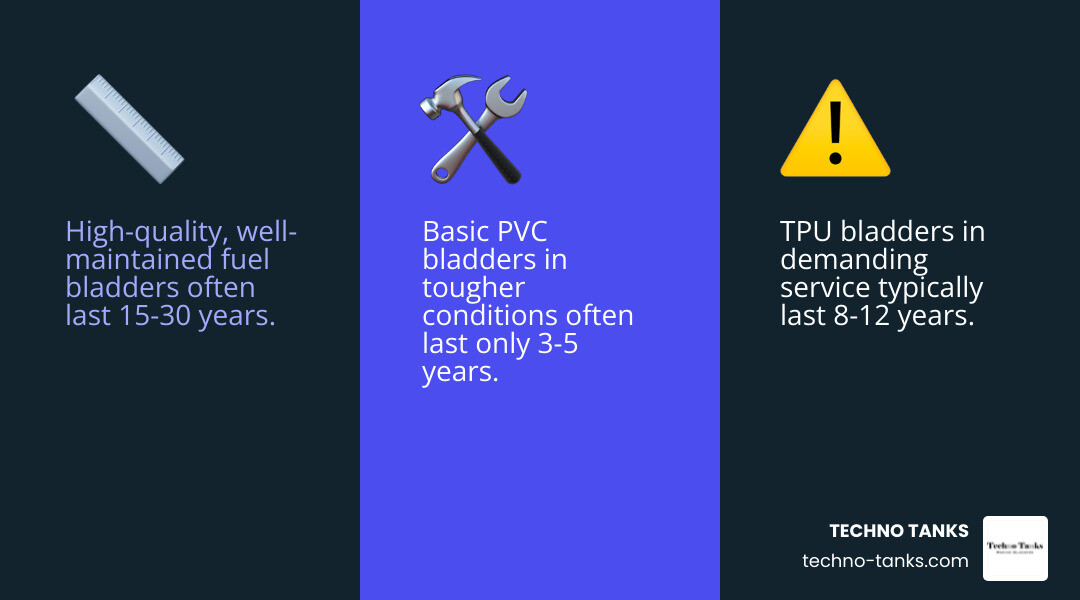
To estimate your likely lifespan, look at:
- Material type
- Fuel type
- UV exposure
- Fill-and-drain frequency
- Installation quality
- Vibration level
- Storage conditions
- Maintenance discipline
Also review support factors before buying:
- Warranty length and exclusions
- ISO manufacturing standards
- Material compatibility data
- Fitting specifications
- Repair support availability
- Any application-specific certifications such as MIL-SPEC where relevant
Frequently Asked Questions about How to Extend Fuel Bladder Lifespan
How long should a fuel bladder last in real use?
In real use, a quality bladder should last much longer than many buyers assume. A well-installed, well-maintained unit can often last 15 years and may reach 20-30 years in favorable conditions. Marine use tends to be harder than sheltered storage because of UV, salt, motion, and abrasion, so installation and maintenance quality matter enormously.
Should you keep a fuel bladder full or empty when not in use?
For short-term use between trips, keeping a bladder in normal operating condition with clean fuel may help limit condensation. For long-term or seasonal storage, emptying it completely, cleaning as needed, drying it, and storing it properly is usually the better move. The exact answer depends on fuel quality, storage duration, and whether the bladder remains in active rotation.
What certifications and support should buyers check before purchasing?
Check for clear manufacturing quality systems such as ISO 9001, application-relevant testing, material compatibility data, fitting specifications, and written warranty terms. In demanding commercial or military applications, MIL-SPEC alignment may matter. Also ask whether repair support, replacement fittings, and technical guidance are available after the sale.
Conclusion
If you remember nothing else, remember this checklist:
- Buy better material
- Install on a clean, protected surface
- Control UV, heat, abrasion, and contamination
- Inspect monthly and keep fuel clean
- Store it empty, dry, and shaded when off duty
That is the real answer to how to extend fuel bladder lifespan.
At Techno Tanks, we build recyclable TPU marine fuel bladders in capacities from 30 to 3000 gallons, designed to help boats and yachts extend range for fishing and cruising without permanent tank modifications. If you are comparing options for your next setup, start with More info about marine fuel bladder options.
And if you want a practical look at how auxiliary bladders can increase offshore range, this article is worth a read: Increase your range with auxiliary fuel bladders.
A fuel bladder should not be a disposable problem. With the right material, correct installation, and a little routine care, it can be one of the longest-serving pieces of gear on your boat.

