
What a Fuel Bladder Is — and Why Serious Operators Choose Them
A fuel bladder is a flexible, collapsible container designed to store and transport fuel safely — without the weight, cost, or permanence of a rigid tank.
Quick answer for buyers:
| Need | Fuel Bladder Advantage |
|---|---|
| Extended offshore range | Add capacity without modifying your hull |
| Backup or auxiliary fuel | Deploy on deck, remove when not needed |
| Space-efficient storage | Folds flat when empty |
| Custom sizing | Built to fit your vessel’s exact dimensions |
| Fuel compatibility | Compatible with gasoline, diesel, kerosene, and more |
For boat owners, yacht operators, and commercial marine crews, the core appeal is straightforward: more range, more flexibility, and no permanent installation required.
Rigid tanks are fixed. They take up space whether they’re full or empty, and modifying them is expensive. A flexible fuel bladder solves both problems — it holds fuel when you need it and disappears when you don’t.
Fuel weights between 150 and 3,000 lbs depending on capacity, so proper securing and placement matters. These are serious pieces of equipment for serious operations — not casual accessories.
Pricing varies based on capacity, fuel type, configuration, and any custom requirements. Request a quote to get accurate pricing for your specific application.
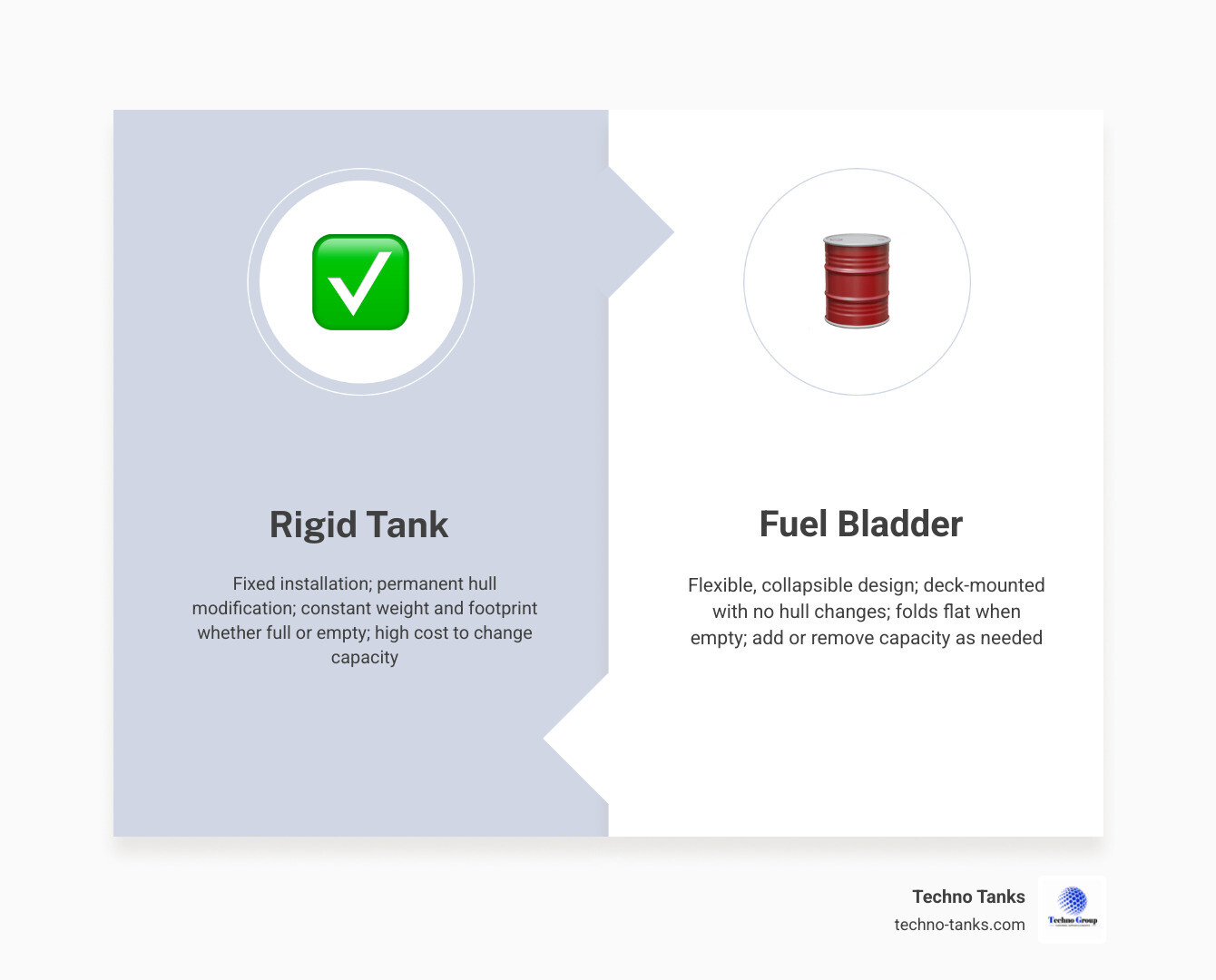
Fuel bladder terms simplified:
Understanding the Fuel Bladder: Design, Materials, and Rigid Tank Comparisons
At its core, a fuel bladder represents the evolution of flexible containment. Instead of relying on welded metal or molded plastic, which are susceptible to cracking, corrosion, and structural fatigue under constant dynamic stress, flexible bladders utilize advanced elastomer-coated fabrics.
High-performance bladders are typically constructed from thermoplastic polyurethane (TPU) or heavy-duty TPU-coated polyester. In specialized military and industrial applications, materials meeting strict specifications (such as MIL-T-52983 grade urethane) are employed to ensure maximum mechanical strength and resistance to extreme environmental conditions.
The manufacturing process is highly precise. Premium bladders do not rely on standard adhesives that can degrade when exposed to hydrocarbons. Instead, they are manufactured using homogeneous vulcanization or 100% radio-frequency (RF) welded seams. This process fuses the layers of fabric at the molecular level, creating a unified bond with exceptional tensile strength. The result is a puncture-resistant, highly durable vessel designed to withstand the physical forces of offshore transits and high-performance racing.
Despite their strength, misconceptions persist regarding the durability of flexible fuel systems. Some operators worry about puncture risks or material degradation over time. However, modern engineering has largely debunked these concerns. To learn more about the realities of flexible fuel storage, read about the Bladder Tanks for Boats 6 Common Myths About Their Drawbacks.
Key Differences Between a Rigid Tank and a Flexible Fuel Bladder
When choosing between a rigid tank and a flexible fuel bladder, operators must weigh several critical operational factors:
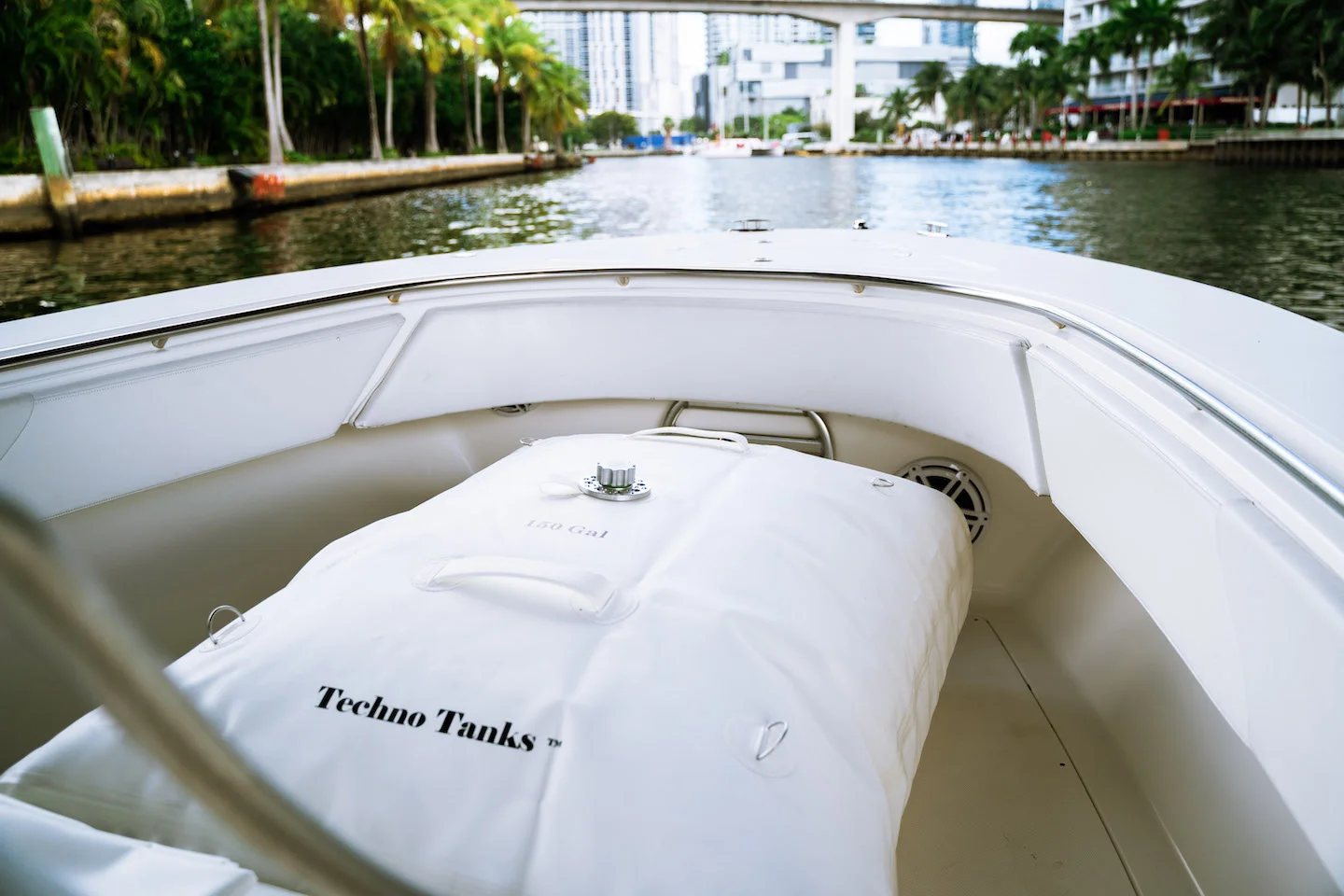
- Footprint and Space Efficiency: A rigid tank occupies a permanent physical footprint within the hull or deck space. Whether it contains one gallon of fuel or one hundred, the volume it occupies remains identical. Conversely, a fuel bladder features a collapsible design. It expands as it is filled and automatically shrinks as fuel is consumed, eventually collapsing completely flat when empty. This allows operators to reclaim valuable deck space once the auxiliary fuel has been transferred.
- Weight Savings: Rigid metal tanks (especially steel or heavy-gauge aluminum) add significant dead weight to a vessel or vehicle. A flexible bladder constructed from TPU-coated polyester is exceptionally lightweight when empty, minimizing the impact on overall vessel performance and fuel efficiency.
- Ease of Installation: Installing a permanent rigid tank often requires extensive structural modifications, deck removal, and complex plumbing. A flexible bladder can be deployed directly on deck or within designated compartments without structural alterations, providing a highly cost-effective alternative.
For an in-depth breakdown of these two systems, refer to the Beginners Guide to Fuel Bladders for Boats and explore our comprehensive comparison of Fuel Bladder vs Fuel Tank.
Material Specifications and Fuel Compatibility
Fuel compatibility is a paramount safety consideration. Storing fuel in an incompatible container can lead to material degradation, delamination, and catastrophic leaks.
High-quality flexible bladders are engineered to be chemically compatible with a wide range of hydrocarbons, including:
- Diesel Fuel: Highly compatible with standard TPU and urethane-coated fabrics.
- Gasoline: Requires specialized fuel-resistant inner liners to prevent the permeation of aromatic hydrocarbons and gasoline vapors.
- Jet Fuel (Jet A, JP-4, JP-5, JP-8): Compatible with military-spec urethane materials.
- Kerosene and Light Oils: Highly stable in standard elastomer bladders.
Because gasoline vapor pressure can build rapidly on hot days, gasoline-specific bladders are constructed with specialized barrier films to contain volatile organic compounds (VOCs). When selecting a system, operators must verify that the bladder’s material specifications align with the exact fuel type being stored.
For specific fuel applications, explore our dedicated solutions for Diesel Fuel Bladders and Gasoline Fuel Bladders.
Marine and Offshore Deployment: Sizing, Plumbing, and Safety
For offshore sportfishers, long-range cruisers, and commercial workboats, range extension is the primary driver for deploying a fuel bladder. Whether preparing for a canyon fishing tournament or a transatlantic yacht transit, having access to auxiliary fuel capacity can make the difference between a successful voyage and a hazardous situation.
To plan effectively, operators must understand the physical dimensions and capacities of the equipment they are deploying. Marine bladders generally fall into two categories: Pillow Style (which feature a low-profile, wide footprint designed to sit securely on deck) and Space Saver designs (which have a more compact footprint and utilize height to maximize volume in tight spaces).
| Capacity (US Gallons) | Style | Filled Dimensions (L x W x H) | Weight (Empty) | Best Use Case |
|---|---|---|---|---|
| 30 | Space Saver | Custom Compact | ~12 lbs | Small center consoles, day trips |
| 100 | Pillow Style | 48″ x 60″ x 12″ | ~25 lbs | Mid-sized sportfishers, canyon runs |
| 200 | Space Saver | 68″ x 68″ x 10″ | ~45 lbs | Workboats, tight deck layouts |
| 300 | Pillow Style | 68″ x 63″ x 19.5″ | ~41.5 lbs | Large yachts, long-range offshore transits |
Choosing the correct size requires calculating your engine’s fuel burn rate, your planned transit distance, and the available physical deck space. For detailed assistance, consult The Ultimate Guide to Marine Bladder Tanks and Storage and check our Offshore Fuel Solutions page. You can also view our full range of Marine Fuel Bladders.
How to Secure and Vent a Marine Fuel Bladder
A filled fuel bladder is a massive dynamic load. Because fuel has a density of approximately 6.1 to 7.2 lbs per gallon depending on the fuel type, a 200-gallon bladder weighs well over 1,300 lbs. In rough seas, an unsecured bladder becomes a highly dangerous projectile that can damage the vessel’s structure or injure the crew.
Securing the Bladder
Every marine bladder must be secured using heavy-duty tie-down straps rated for the total wet weight of the bladder. These straps should be routed through the integrated D-rings or tie-down grommets built into the bladder’s perimeter.
- Do not rely on bungee cords or light-duty ropes.
- Ensure the deck surface beneath the bladder is completely clean and free of sharp objects, sand, or debris. Using a protective ground cloth or rubberized matting is highly recommended to prevent friction wear.
- Adjust strap tension as fuel is drained. As the bladder collapses, the straps will slacken and must be tightened to maintain security.
Venting and Mounting
United States Coast Guard (USCG) regulations do not permit in-hull locations for portable fuel bladders. They must be mounted above deck in a well-ventilated area. Above-deck mounting ensures that any fuel spilled during filling can be easily cleaned up and prevents the dangerous accumulation of explosive vapors in the bilge.
Because a flexible bladder collapses as fuel is drawn out, it does not require active atmospheric venting during discharge. The atmospheric pressure acting on the exterior of the bladder naturally collapses the fabric, pushing the fuel toward the outlet without creating a vacuum. However, during the filling process, air must be allowed to escape to prevent over-pressurization.
Direct Engine Connection vs. Transfer Pump Systems
When integrating a fuel bladder into a boat’s fuel system, operators must choose between running the engines directly from the bladder or using a transfer pump to move fuel into the vessel’s primary rigid tanks.
Option 1: Direct Engine Connection
Using quick-connect fittings and a manifold valve system, operators can route the engine’s fuel suction line directly to the bladder.
- Pros: Highly convenient; eliminates the step of transferring fuel; allows the operator to burn the bladder fuel first and roll up the empty tank early in the trip.
- Cons: Requires precise plumbing and high-quality fittings to ensure air does not enter the fuel lines.
Option 2: Fuel Transfer Pump Systems
An external electric or manual pump is used to transfer fuel from the bladder into the boat’s main deck fill.
- Pros: Safer from a system-integrity standpoint; keeps the engine plumbing completely standard; reduces the risk of drawing air into the engines.
- Cons: Requires carrying an auxiliary pump and hoses; takes time to perform the transfer (typically 10 to 15 minutes depending on pump flow rate).
For step-by-step instructions on plumbing and transfer methods, read How to Transfer Fuel from a Fuel Bladder and explore our Fuel Transfer Bladders solutions.
Maintenance, Lifespan, and Regulatory Compliance
A high-quality fuel bladder is a long-term investment. With proper care, a service life of 10+ years is achievable. However, because these systems are exposed to harsh marine environments, UV radiation, salt water, and mechanical abrasion, proactive maintenance is essential.
Key Maintenance Practices
- UV and Hydrolysis Protection: Modern bladders incorporate UV stabilizers and hydrolysis-resistant additives in their coatings. However, prolonged, unnecessary exposure to intense sunlight will eventually degrade any polymer. When not in use, the bladder should be drained, cleaned, and stored out of the sun.
- Regular Inspection: Before every deployment, inspect the seams, fabric, and fittings for signs of wear, stress cracking, or delamination.
- Leak Management: In the rare event of a minor leak or puncture, high-quality polyurethane and urethane bladders can often be repaired using specialized patch kits and RF welding or heavy-duty adhesives. To understand when a repair is safe and viable, consult Fuel Bladder Leaks: Why Repairs Make Sense.
For a complete checklist on maximizing the longevity of your equipment, refer to How to Extend Fuel Bladder Lifespan with 5 Easy Changes.
Regulatory and Environmental Compliance
Because hydrocarbons are classified as hazardous materials, operators must comply with environmental protection guidelines. The Environmental Protection Agency (EPA) and Spill Prevention, Control, and Countermeasure (SPCC) regulations require secondary containment (such as containment berms or bunds) for stationary land-based fuel bladders to prevent environmental contamination in the event of a spill.
For large-scale or temporary stationary fueling setups, secondary containment is not just a best practice — it is a legal requirement. Learn more about compliant setups on our Temporary Fuel Storage page. For heavy-duty industrial and military-spec operations, standard configurations for large-scale land deployment must incorporate robust secondary containment berms and high-tensile elastomer bladders to ensure environmental safety.
Frequently Asked Questions About Flexible Fuel Storage
Can flexible tanks be mounted below deck?
No. United States Coast Guard (USCG) safety regulations strictly prohibit the installation of portable or flexible fuel bladders in below-deck compartments or within the hull. Below-deck spaces lack the natural ventilation required to safely disperse fuel vapors. If a leak or vapor venting occurs below deck, it can lead to a highly dangerous accumulation of explosive gases in the bilge, presenting a severe fire and explosion hazard. All flexible fuel systems must be securely lashed above deck in well-ventilated areas.
Do flexible systems require venting when drawing fuel?
No. One of the primary advantages of a flexible fuel bladder is its collapsible design. When fuel is drawn out by the engine’s fuel pump or an external transfer pump, the atmospheric pressure acting on the exterior of the bladder naturally collapses the fabric. This prevents a vacuum from forming inside the container, allowing for a continuous, smooth fuel draw without the need for an open atmospheric vent. This closed-system operation also minimizes the release of fuel vapors into the surrounding air.
How do you safely store an empty containment unit?
To prevent material degradation and mold growth, follow these steps before storing an empty bladder:
- Drain completely: Roll the bladder toward the discharge fitting to evacuate all remaining fuel.
- Rinse and clean: Rinse the exterior with fresh water to remove salt residue and dirt. If storing long-term, flush the interior according to manufacturer instructions to remove residual fuel vapors.
- Dry thoroughly: Allow the bladder to dry completely inside and out to prevent hydrolysis and mold.
- Fold and store: Fold or roll the bladder flat (avoiding sharp creases) and store it in a dry, cool, well-ventilated locker or storage bag away from direct sunlight and pests.
Conclusion
For serious operators demanding extended range, operational flexibility, and reliable fuel transport solutions, a high-quality fuel bladder is an invaluable asset. By replacing the permanent weight and structural complexity of rigid tanks with advanced, collapsible TPU technology, crews can confidently undertake long-range transits and offshore expeditions.
At Techno Tanks, we specialize in manufacturing premium flexible fuel bladders and collapsible storage systems tailored to the exact demands of marine, commercial, and industrial operators. Whether you need a standard deck-mounted bladder or a highly customized configuration built to fit unique dimensions, our team delivers engineering you can trust.
Ready to extend your range and optimize your vessel’s capabilities? Explore our Collapsible Fuel Tanks and consult our Fuel Bladder Sizing Guide to find the perfect fit.
To receive accurate pricing tailored to your specific fuel storage, transfer, and capacity requirements, Request a Quote for Custom Fuel Bladders today.

