
What Are Auxiliary Fuel Bladder Systems — and Which One Is Right for Your Vessel?
Auxiliary fuel bladder systems are collapsible, flexible tanks designed to extend a vessel’s operational range by carrying additional gasoline or diesel without the cost, weight, or permanence of a rigid auxiliary tank.
Here is a quick overview of what they are and how to choose the right one:
| Factor | What to Know |
|---|---|
| What they are | Flexible, collapsible tanks for temporary or supplemental fuel storage on deck or in compartments |
| Common capacities | 30 gallons to 3,000+ gallons for marine use |
| Key materials | TPU (polyester for diesel, polyether for gasoline), military-grade urethane-coated fabric |
| Typical use cases | Offshore fishing, cruising, commercial vessels, patrol boats, expedition craft, emergency reserve |
| Mounting | Secured above deck using D-rings and tie-down straps |
| Key advantage over rigid tanks | Folds flat when empty, no structural modification required, flexible sizing |
| Pricing | Varies by size, fuel type, and configuration — request a quote for accurate pricing |
For serious marine operators, the choice between a standard pillow-style bladder, a space-saver model, or a fully custom solution depends on your vessel, your range requirements, and how you plan to use and store the bladder when it is not in use.
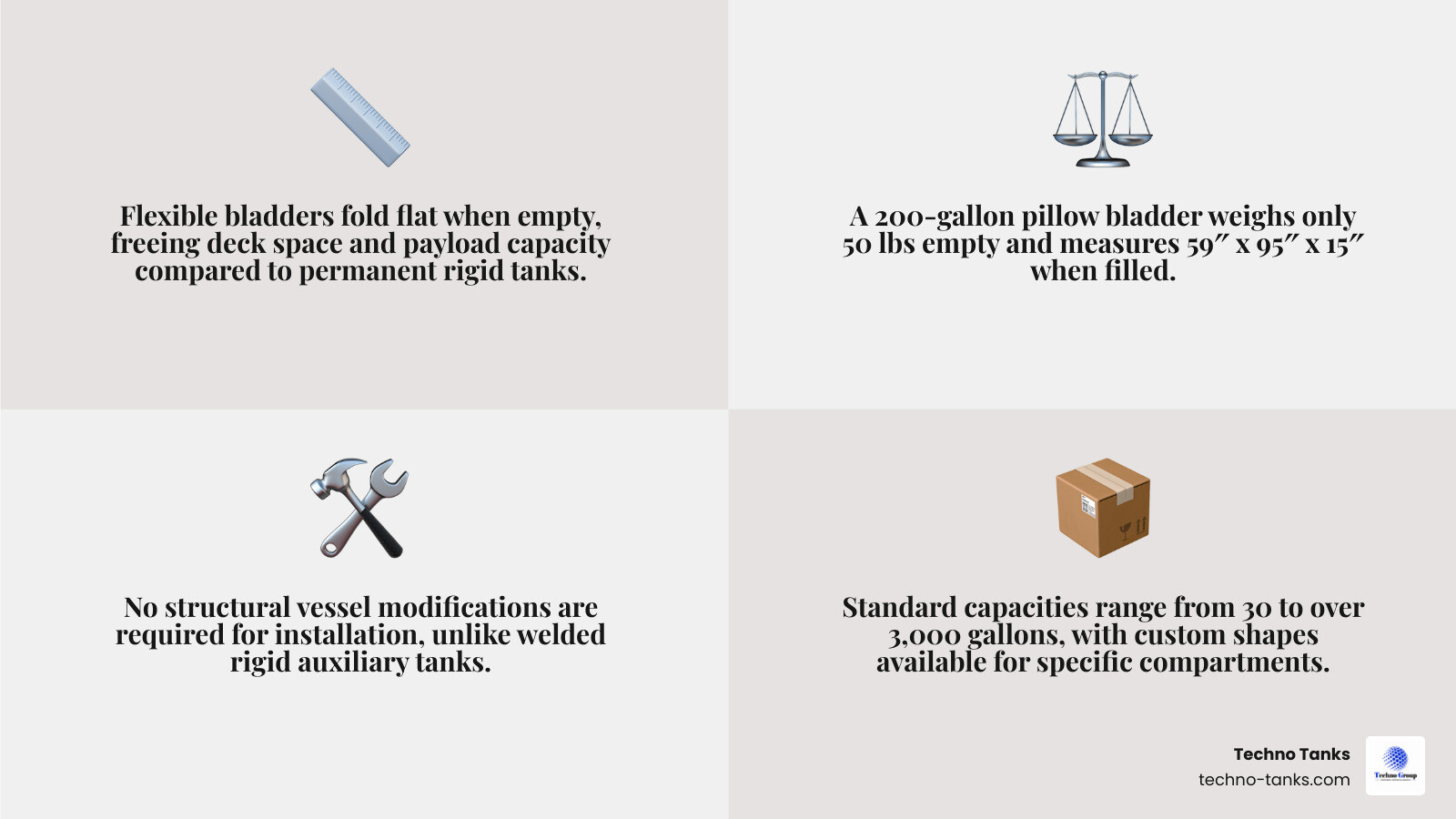
A 200-gallon pillow-style bladder, for example, measures roughly 59″ x 95″ x 15″ when filled and weighs 50 lbs empty — practical for offshore fishing trips or island-hopping routes where fuel docks are unreliable. At the larger end, containerized systems can hold 15,000 gallons across multiple bladders for military or commercial logistics operations.
The range of options is wide. The right choice comes down to capacity, fuel type compatibility, deck space, securing method, and whether you need a standard off-the-shelf bladder or a custom shape built to fit a specific locker or compartment.
This guide compares the main types of marine auxiliary fuel bladder systems so you can make an informed buying decision.
Why Auxiliary Fuel Bladders Outperform Rigid Auxiliary Tanks
When planning long-distance voyages or remote offshore operations, expanding a vessel’s fuel capacity is a primary logistical challenge. Traditionally, operators turned to permanent aluminum or fiberglass tanks. However, modern auxiliary fuel bladder systems offer significant operational advantages over rigid alternatives.
The primary limitation of a rigid auxiliary tank is its permanent footprint. Whether installed below deck or welded directly onto the deck, a rigid tank permanently consumes valuable payload capacity and physical space.
In contrast, flexible fuel bladders offer a dynamic footprint. When filled, they securely hold the required fuel volume; once empty, they can be drained, rolled up, and stored in a small locker, reclaiming up to 90% of the deck space they previously occupied. This is particularly crucial for vessels that require temporary range extension for a single transit but need a clear deck for operations, such as commercial fishing, research, or search and rescue.
Weight distribution is another critical factor at sea. Rigid tanks create a fixed center of gravity that remains constant regardless of whether the tank is full or empty. Flexible bladders sit low to the deck, distributing the weight of the fuel evenly across a larger surface area. As the fuel is consumed, the bladder naturally collapses, eliminating the dangerous free-surface effect (sloshing) that can destabilize a vessel in heavy seas.
To help evaluate the best option for your vessel, refer to The Complete Guide to Marine Bladder Tanks and Storage and analyze the direct comparison in Fuel Bladder vs Fuel Tank.
| Operational Feature | Flexible Auxiliary Fuel Bladder | Rigid Auxiliary Tank |
|---|---|---|
| Space Recovery | Reclaims up to 90% of deck space when empty | Permanent footprint; cannot be removed or collapsed |
| Weight Distribution | Sits low; collapses to prevent fuel sloshing | Fixed height; susceptible to free-surface liquid movement |
| Installation Complexity | Plug-and-play; secured via temporary tie-downs | Requires structural modification, welding, or plumbing |
| Material Degradation | High-grade TPU resists corrosion, cracking, and rust | Aluminum corrodes in salt air; fiberglass can crack over time |
| Customization Cost | Highly cost-effective for custom shapes and sizes | High fabrication and structural integration costs |
| Decommissioning | Easily rolled, packed, and stored in a vented locker | Demands extensive labor to drain, cut, or unbolt |
By choosing a flexible bladder, operators gain the ability to adapt their vessel’s capacity to the specific demands of each voyage. For more strategies on mitigating range limitations on extended transits, consult Range Anxiety: Top Solutions for an Extended Cruising Range.
Key Specifications and Material Standards for Marine Fuel Bladders
Marine environments demand materials that can withstand intense UV exposure, constant salt-spray, thermal expansion, and mechanical abrasion. Standard industrial bladders are not engineered to handle these dynamic forces. High-quality auxiliary fuel bladder systems are constructed using heavy-duty, military-grade polyurethane (TPU) coated fabrics.
These materials are joined using radio frequency (RF) welding. Unlike thermal sealing or gluing, which can weaken over time when exposed to hydrocarbon solvents, RF welding bonds the polyurethane coatings at the molecular level. This creates a seam that is stronger than the parent material itself, preventing leaks even under extreme pressure and constant vessel vibration.
To prevent catastrophic failures, the fabric must exhibit high tensile strength and puncture resistance. When deployed on deck, a bladder may experience friction against non-skid surfaces, structural edges, or dropped equipment. Premium bladders utilize double-layer welding technology, which adds a reinforcement strip over the primary weld to absorb kinetic energy during rough transits.
For a deeper look into material durability and how these systems perform in rugged environments, read Top Collapsible and Flexible Diesel Fuel Bladders for Yachts and Trucks.
Material Selection for Auxiliary Fuel Bladder Systems
A critical mistake in selecting an auxiliary fuel bladder is assuming a single material is compatible with all fuel types. Hydrocarbons interact differently with polymer chains, and choosing the incorrect material can lead to internal degradation, delamination, or fuel contamination.
- Polyester TPU: This formulation is engineered specifically for diesel, jet fuel, and light oils. It provides exceptional resistance to microbial growth, which is common in diesel storage, and maintains its flexibility in temperatures ranging from -30°C to +70°C.
- Polyether TPU: This material is formulated for gasoline and fuels containing ethanol or ether additives. Polyether TPU resists the highly corrosive solvents found in modern gasoline blends, preventing the inner layer from dissolving or swelling.
Mixing these applications—such as putting gasoline into a polyester TPU diesel bladder—will cause rapid chemical breakdown. When selecting a bladder, operators must specify their exact fuel chemistry to ensure long-term reliability. For a comprehensive breakdown of TPU specifications, refer to The Ultimate Guide to 30 Gallon TPU Tanks and Bladders.
Sizing and Capacity of Auxiliary Fuel Bladder Systems
Auxiliary fuel bladders are available in a wide range of standard and custom capacities to match the scale of any maritime operation.
- Small-Capacity Bladders (30 to 100 Gallons): Ideal for center consoles, small commercial workboats, and short-range patrol vessels. These bladders are highly portable, weighing as little as 10 to 20 lbs when empty.
- Medium-Capacity Bladders (150 to 500 Gallons): Commonly used by sportfishers, long-haul transport vessels, and cruising yachts. A 200-gallon pillow-style bladder is a popular choice, offering a balanced footprint that fits neatly on most cockpit soles or foredecks.
- Large-Capacity Bladders (1,000 to 3,000+ Gallons): Deployed on commercial tugs, research vessels, and defense platforms for transoceanic voyages or remote supply operations.
In addition to capacity, the geometry of the bladder is crucial. Pillow-style bladders distribute weight across a wider, flatter area, making them exceptionally stable. Space-saver models utilize a taller, box-like profile to minimize the physical deck footprint, allowing operators to maximize usable deck space for fishing, cargo, or crew movement.
For detailed dimensions and selection criteria, consult the Fuel Bladder Sizing Guide and explore Everything You Need to Know About Portable Marine Tanks.
Operational Guidelines: Installation, Securing, and Venting on Deck
Operating an auxiliary fuel bladder safely requires strict adherence to proper deck installation, securing protocols, and venting procedures. Because a filled bladder can weigh anywhere from 200 lbs to over 20,000 lbs, an unsecured bladder represents a severe safety hazard that can damage the vessel’s structure or compromise its stability.
1. Deck Placement and Surface Preparation
Before placing the bladder on deck, inspect the area thoroughly. Remove any debris, sharp objects, or grit that could abrade the TPU fabric. It is highly recommended to lay down a protective heavy-duty ground tarp or neoprene mat beneath the bladder to act as a barrier against friction.
2. Securing the Bladder
Never rely on the weight of a full bladder to keep it in place. In heavy seas, vertical acceleration can easily cause a bladder to shift.
- Use Built-In Tie-Down Points: High-quality bladders feature reinforced D-rings or heavy-duty webbing loops integrated into the perimeter seams.
- Utilize Dedicated Ratchet Straps: Secure the bladder to structural deck cleats, pad eyes, or heavy-duty tie-down tracks. Ensure the straps are tensioned evenly to prevent localized stress on any single D-ring.
- Avoid Over-Tensioning: Straps should be snug enough to prevent movement but not so tight that they deform the bladder’s natural shape or put excessive stress on the welded seams.
3. Venting and Fueling Best Practices
As a bladder is filled, air must be allowed to escape to prevent over-pressurization. Conversely, as fuel is drawn out, the bladder collapses naturally, minimizing the need for complex vacuum venting.
- Use a Splash-Free Vented Cap: Ensure the fill port has a reliable venting mechanism to manage thermal expansion.
- Position the Vent Properly: Keep the vent clear of any obstructions and ensure it is oriented to prevent water intrusion.
- Purge Trapped Air: When filling is complete, gently roll the empty portions of the bladder toward the vent to purge any remaining air pockets before sealing. This ensures maximum stability and fuel density.
For a complete checklist of deck preparation and offshore safety protocols, read Don’t Get Stranded: Best Marine Fuel Bladder Tank Options for Offshore Trips and Fuel Your Wanderlust with These Top-Rated Auxiliary Tanks.
Regulatory Compliance and Safety Standards at Sea
Deploying auxiliary fuel bladder systems requires a clear understanding of maritime safety regulations and environmental compliance. Because these systems carry flammable or combustible liquids, regulatory bodies enforce strict guidelines to prevent environmental contamination and onboard hazards.
The United States Coast Guard (USCG) and international maritime authorities maintain clear positions on the use of flexible fuel bladders:
- Above-Deck Placement Only: Coast Guard regulations strictly prohibit the installation of flexible fuel bladders in below-deck compartments or within the hull of recreational or standard commercial vessels. This is due to the risk of fuel vapor accumulation in enclosed spaces, which creates an explosion hazard. All bladders must be carried on open decks where natural ventilation can safely disperse any escaping fumes.
- No Direct Below-Deck Plumbing: Fuel transfer must be handled via secure above-deck connections. Gravity feeding or siphoning to the primary deck fill is the safest and most common method. For diesel systems, 12V or 24V transfer pumps with explosion-proof motors can be used.
- Secondary Containment: Depending on your operating jurisdiction and the volume of fuel carried, environmental regulations (such as the EPA’s SPCC guidelines) may require secondary containment. Using a portable containment berm or a bladder liner ensures that any minor spills during the refueling process are contained and do not reach the water.
To ensure your vessel remains fully compliant and safe during offshore transits, refer to the detailed safety breakdowns in The Ultimate Guide to Marine Emergency Fuel Supply Systems and review the cost-effective compliance strategies outlined in Boat Range Extender Tanks That Won’t Sink Your Budget. For broader technical context on auxiliary installations, operators can also reference federal guidelines such as the FAA’s [PDF] AC 25-8 – Auxiliary Fuel System Installations or vehicle safety interpretations like Interpretation ID: nht79-3.8 – NHTSA .
Frequently Asked Questions about Marine Fuel Bladders
Can a single fuel bladder hold both diesel and gasoline interchangeably?
No. A single fuel bladder cannot be used interchangeably for both gasoline and diesel. As discussed in the material specifications, polyester TPU is engineered specifically for diesel, while polyether TPU is formulated to withstand the highly corrosive solvents and ethanol additives found in gasoline.
Using a diesel bladder to store gasoline will cause the internal polymer layers to degrade, dissolve, and contaminate your fuel system. Always verify the bladder’s material compatibility and dedicate the unit to a single fuel type. For more details on gasoline-specific storage, read Gasoline Fuel Bladders.
Are fuel bladders permitted below deck on marine vessels?
No. Coast Guard and international maritime regulations do not permit the installation of flexible fuel bladders below deck on standard vessels. Enclosed spaces lack the natural ventilation required to prevent the accumulation of hazardous fuel vapors.
Bladders must be secured above deck in well-ventilated areas to ensure any vapor emissions are safely dissipated by open air. To learn more about above-deck configurations and long-range planning, consult Offshore Fuel Solutions.
How do you secure a full bladder in rough sea conditions?
A full bladder must be secured using heavy-duty, marine-grade ratchet straps rated for the maximum weight of the filled bladder. Connect these straps to the bladder’s integrated stainless steel or composite D-rings and anchor them directly to structural tie-down points on the vessel, such as cleats or pad eyes.
Never operate a vessel with an unsecured or partially secured bladder, as the shifting weight can severely compromise vessel stability. For step-by-step securing instructions, refer to Get a Grip on Your Range with Custom Boat Fuel Bladders.
Conclusion
Choosing the right auxiliary fuel bladder system is a critical decision for marine operators who require extended range, payload flexibility, and operational safety. By opting for a high-quality flexible bladder over a rigid auxiliary tank, you gain the ability to carry supplemental fuel when needed and reclaim your deck space once the job is done.
Whether you require a standard pillow-style bladder for offshore fishing or a custom-engineered shape designed to fit a specific deck configuration, selecting the correct material—such as polyester TPU for diesel or polyether TPU for gasoline—is vital to ensuring long-term durability and safety at sea.
At Techno Tanks, we manufacture high-performance, flexible fuel bladders and collapsible storage systems ranging from 30 to 3,000 gallons. Our products are engineered with military-grade TPU and advanced RF-welded seams to withstand the harshest marine environments.
Because every vessel and mission is unique, we recommend contacting our technical team to discuss your specific range requirements, fuel compatibility, and space constraints. Techno Tanks fuel bladder pricing depends on size, fuel type, configuration, application, custom requirements, and project scope.
Ready to extend your vessel’s capabilities? Visit our Marine Fuel Bladders page or contact us today to request a custom quote tailored to your next voyage.

