
What Are Collapsible Marine Tanks — and Why Do Serious Operators Use Them?
Collapsible marine tanks are flexible, foldable fuel or water storage containers designed to fit the spaces rigid tanks simply cannot — and for offshore operators, expedition crews, and commercial marine users, that difference is significant.
Quick answer:
- What they are: Flexible bladder-style containers made from fuel-resistant materials (typically TPU or reinforced PVC) that hold diesel, gasoline, or water onboard
- How they work: They expand fully when filled and collapse flat when empty, conforming to irregular hull spaces, under-berth compartments, and deck layouts
- Who uses them: Boat owners extending range, yacht operators needing auxiliary capacity, commercial vessels, offshore support craft, and emergency-response teams
- Why they matter: No permanent installation required, custom sizing available, lighter than rigid tanks, and storable when not in use
- Capacity range: From under 50 gallons for small vessel auxiliaries up to 20,000+ gallons for large-scale marine and industrial operations
Rigid tanks are fixed in size, fixed in location, and fixed in cost. When your fuel requirements change — or when your available space is irregular — a rigid tank works against you.
Collapsible marine tanks solve a different problem. They give operators more range, more flexibility, and more control over how and where fuel is stored, without cutting into hull structure or committing to a permanent installation.
This guide covers everything decision-makers need to know: materials, applications, compliance, sizing, maintenance, and how to choose the right configuration for your vessel and mission.
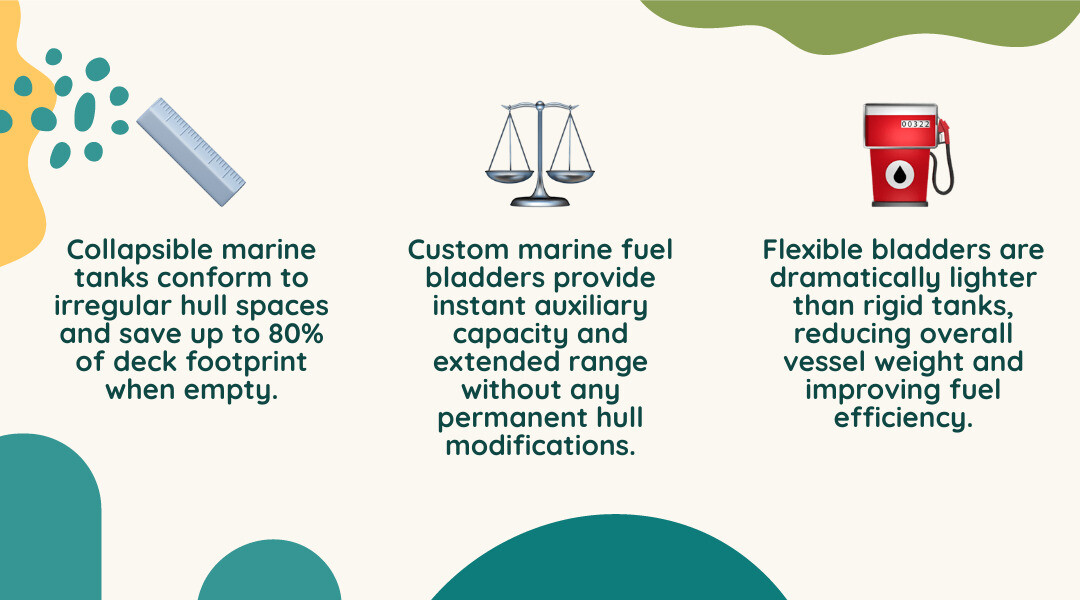
Collapsible marine tanks vocabulary:
Understanding Collapsible Marine Tanks and How They Work
To understand why collapsible marine tanks have become an industry standard for offshore operations, it is necessary to look at how they are engineered. Unlike traditional rigid tanks made of aluminum, stainless steel, or rotomolded polyethylene, flexible tanks do not rely on a fixed structural frame. Instead, they use fluid pressure and high-strength elastomeric materials to maintain their integrity.
When empty, these tanks fold flat, requiring only a fraction of their filled volume for storage. When filled, they take on a stable, low-profile pillow shape or a boxy “space saver” profile, depending on their construction. This flexibility allows them to conform directly to the compartment, bilge, or deck area where they are positioned.
Engineering Behind Collapsible Marine Tanks
The durability of a flexible marine tank depends entirely on material science. Modern collapsible tanks are constructed using advanced Thermoplastic Polyurethane (TPU) or heavy-duty reinforced PVC elastomers. For fuel applications, premium TPU is the industry standard due to its exceptional resistance to hydrocarbons, microbial growth, and long-term fuel exposure.
Key engineering properties of high-quality collapsible marine tanks include:
- Tensile Strength: High-strength woven polyester or nylon base fabrics are coated on both sides with TPU. This composite structure provides the physical strength required to hold thousands of pounds of liquid under dynamic marine conditions.
- RF Welded Seams: Rather than using glues or thermal adhesives, the seams of these bladders are joined via Radio Frequency (RF) welding. RF welding uses electromagnetic energy to fuse the polymer molecules of the mating sheets together at a molecular level, creating a single, continuous bond that is actually stronger than the surrounding material.
- Hydrocarbon and UV Stability: The specialized polyurethane coatings are formulated to resist degradation from constant exposure to diesel, gasoline, and harsh marine environments, including intense UV radiation and salt spray.
For a deeper dive into how these flexible engineering materials compare to rigid options, read about Flexible Tanks vs Rigid Tanks: Why Custom Bladders Win Every Time.
Rigid Tanks vs. Collapsible Marine Tanks
The functional differences between rigid and flexible tanks go far beyond material composition. They fundamentally change how a vessel handles, how its space is utilized, and how its range is managed.
- Weight Distribution: A traditional rigid tank represents a permanent weight penalty, even when empty. Furthermore, as a rigid tank empties, the liquid inside sloshes back and forth, shifting the vessel’s center of gravity. Collapsible marine tanks, on the other hand, shrink as liquid is drawn out, which significantly reduces fluid movement (slosh) and maintains better vessel stability.
- Custom Footprint: Rigid tanks require dedicated, rectangular, or molded spaces. Collapsible tanks can be custom-fabricated to fit odd-shaped bow compartments, under-berth lockers, or narrow side decks.
- Portability: When a mission is complete, a collapsible tank can be drained, rolled up, and stowed in a locker, freeing up valuable deck or cabin space.
| Feature | Traditional Rigid Tanks | Collapsible Marine Tanks |
|---|---|---|
| Material | Aluminum, Steel, Polyethylene | High-strength TPU / Reinforced Elastomers |
| Empty Weight | Heavy; remains constant | Extremely lightweight; folds flat |
| Space Efficiency | High footprint; cannot be removed | Zero footprint when empty; rolls up |
| Slosh Mitigation | Requires internal baffles | Natural mitigation as bladder collapses |
| Installation | Permanent, complex, requires structural integration | Temporary or semi-permanent; highly adaptable |
| Sizing | Fixed standard sizes or expensive metal fabrication | Highly customizable to fit irregular spaces |
To explore this comparison further, see our detailed breakdown of Fuel Bladder vs Fuel Tank.
Key Applications for Flexible Marine Storage Systems
The adaptability of collapsible marine tanks makes them invaluable across a wide range of maritime sectors. From recreational sportfishers heading to distant canyons to commercial operators supporting offshore oil fields, these flexible systems solve critical volume and logistical challenges.
For a comprehensive overview of how these systems are deployed for long-range voyages, read about Collapsible Marine Fuel Tanks for Extended Offshore Trips.
Extended Range and Offshore Fuel Solutions
For vessels planning long-distance blue-water cruising, the standard fuel capacity built into the hull is often the primary limiting factor. Installing a permanent, larger rigid tank is frequently cost-prohibitive or structurally impossible.
- Diesel Fuel Bladders: Cruising yachts and commercial vessels often place large diesel bladders on the bow or cockpit decks to carry the auxiliary fuel needed for long ocean crossings. Once the auxiliary fuel is transferred to the main tanks, the bladder is rolled up and stowed, returning the deck to its original configuration.
- Gasoline Fuel Bladders: Center console fishing boats running far offshore require reliable gasoline storage. Specialized gasoline-compatible TPU bladders allow these vessels to carry backup fuel safely on deck, ensuring they can reach distant fishing grounds and return with an adequate safety margin.
To learn more about optimizing your boat’s configuration for maximum range, refer to The Complete Guide to Marine Bladder Tanks and Storage.
Secondary Fuel Systems and Fuel Transfer Logistics
Beyond simple range extension, collapsible tanks are widely used for operational logistics and temporary fluid management:
- Fuel Transfer Logistics: In remote commercial and military operations, large collapsible tanks (ranging up to thousands of gallons) are used as temporary shore-side or vessel-deck staging stations to facilitate ship-to-shore fuel transfers.
- Gravity-Fed and Pumped Auxiliary Systems: Onboard fuel bladders can be integrated directly into the vessel’s fuel management system. They can be plumbed to feed the main fuel tanks via a simple gravity-drain setup or integrated with a dedicated 12V or 24V transfer pump.
- Temporary Storage During Maintenance: When main fuel tanks require inspection, cleaning, or repair, collapsible tanks can be quickly deployed on deck or dockside to temporarily hold the fuel, avoiding the need for expensive vacuum-truck pump-outs.
Regulatory Compliance and Safety Standards
Operating with fuel on the water requires strict adherence to safety protocols and regulatory guidelines. Because collapsible tanks are portable and flexible, they are subject to specific rules regarding construction, testing, and stowage.
Fuel Transport and Stowage Regulations
When carrying auxiliary fuel, operators must understand the legal and safety frameworks governing portable tanks. For commercial vessels, the United States Coast Guard (USCG) and international regulatory bodies maintain strict oversight.
- Federal Regulations: Commercial operators must ensure compliance with federal codes, such as part 64—marine portable tanks and cargo handling systems – eCFR , which governs the design, testing, and securing of portable tanks used for hazardous liquids on vessels.
- Stowage Best Practices: Gasoline and diesel have very different physical properties. Gasoline, being highly volatile, requires exceptional care. For practical insights from experienced cruisers on how to handle portable fuel, see the discussions on the Regulations For Stowing Gasoline – Portable – Cruisers Forum .
- Safety and Use Guidelines: Portable tanks must be constructed to withstand pressure changes and physical impacts. For a complete safety checklist, consult Your Guide to Portable Fuel Tank Marine Safety and Use .
Operational Best Practices: Installation, Securing, and Maintenance
A collapsible marine tank is only as reliable as its installation and maintenance. Because these tanks are flexible, they must be properly secured to prevent movement in rough seas, which can damage the bladder or destabilize the vessel.
Filling and Venting Procedures
Properly filling and venting a flexible tank is critical to preventing leaks and structural failure:
- Deck Preparation: Before placing the bladder, ensure the deck or compartment is completely free of sharp objects, screws, or debris. A heavy-duty protective underlayment mat should always be placed beneath the tank.
- Securing the Tank: Use high-strength ratchet straps or heavy-duty cargo netting. Lay the straps on the deck before placing the bladder, and then crisscross them over the top once the bladder is filled to create a cradling effect. This prevents the bladder from sliding or shifting under high G-forces.
- Managing Expansion: Fuel expands as temperatures rise. Always leave a 5% to 10% expansion void when filling a bladder. Ensure the tank’s venting system is clear and unobstructed to prevent pressure buildup.
For practical steps on integrating these bladders into your vessel’s fuel system, read about how to Keep Your Boat Buzzing with These Foldable Marine Fuel Transfer Tanks.
Cleaning and Long-Term Storage
To maximize the lifespan of a collapsible marine tank, proper post-use care is essential:
- Draining and Rinsing: Completely drain any remaining fuel or water. For water bladders, rinse the interior to prevent mold, mildew, or algae growth.
- Drying: Allow the tank to air-dry completely in a shaded area. Storing a damp tank can lead to material degradation and foul odors.
- Folding and Stowing: Fold the tank flat according to the manufacturer’s guidelines, avoiding sharp creases that could stress the material. Store it in a cool, dry, UV-protected compartment.
For fresh water applications, using a high-quality flexible tank made of UV-resistant materials is crucial to prevent contamination. For an example of specialized water storage design, see the Flexible Water Tank 150L – 74x150cm Collapsible Marine Water Storage Grey — Marisol Marine Company .
Sizing, Customization, and Procurement Decisions
Selecting the right collapsible marine tank involves balancing your vessel’s physical layout with your specific range or storage goals. Because every vessel has a unique hull shape and compartment configuration, a one-size-fits-all approach rarely works.
When choosing a tank, consider the following configurations:
- Pillow Style Bladders: These are low-profile, wide-footprint tanks designed primarily for open deck areas. Their low center of gravity makes them exceptionally stable in rough seas.
- Space Saver Bladders: These feature a more vertical, boxy profile, making them ideal for tight compartments, lazarettes, or under-seat lockers where deck footprint is limited.
- Custom Sizing: For odd-shaped compartments, live wells, or fish boxes, custom-engineered bladders can be built to match your exact dimensions, maximizing every cubic inch of available space.
To explore custom options and see how other operators have configured their auxiliary fuel systems, read The Best Custom Marine Fuel Tanks to Keep You Cruising.
Procurement and Pricing
Techno Tanks fuel bladder pricing depends on size, fuel type, configuration, application, custom requirements, and project scope. Because these systems are highly specialized and often custom-engineered for specific vessels, buyers should request a quote for accurate pricing based on their specific fuel storage, transfer, sizing, and use-case requirements.
Frequently Asked Questions
Are collapsible marine tanks safe for gasoline and diesel?
Yes, provided they are constructed from compatible, high-grade materials. Diesel-compatible bladders are typically made from standard polyurethane (TPU) elastomers. Gasoline, which is highly volatile and contains aggressive solvents like ethanol, requires specialized, multi-layer TPU formulations designed specifically to resist fuel permeation and chemical breakdown. Always verify the manufacturer’s fuel-compatibility rating before filling a tank.
How do you secure a collapsible tank on a moving vessel?
A flexible tank must never be allowed to slide or shift. Secure the bladder by placing a high-friction protective mat on the deck, laying down heavy-duty tie-down straps, placing the bladder on top, and then tightening the straps over the filled bladder in a crisscross pattern. For larger deck bladders, cargo netting rated for marine use provides an excellent cradling effect that distributes physical loads evenly.
What is the typical lifespan of a flexible marine bladder?
A premium TPU marine bladder manufactured under strict quality standards (such as ISO 9001:2015) can easily last 5 to 10+ years with proper care. Lifespan is highly dependent on UV exposure, physical abrasion protection, and proper storage practices. Many professional-grade marine bladders are backed by a comprehensive five-year warranty against manufacturing defects.
Conclusion
Collapsible marine tanks represent a fundamental shift in how modern vessel operators manage fuel and water storage. By offering a lightweight, space-saving, and highly customizable alternative to rigid metal or plastic tanks, these flexible systems allow operators to significantly extend their vessel’s range, optimize deck space, and maintain excellent stability in challenging offshore conditions.
Whether you need a compact auxiliary fuel bladder for weekend offshore runs or a heavy-duty, custom-engineered fuel-transfer system for commercial marine logistics, Techno Tanks delivers high-performance, flexible TPU solutions tailored to your exact operational requirements.
Ready to optimize your vessel’s range and storage capabilities? Request a custom quote from Techno Tanks to get accurate pricing and sizing options designed specifically for your next offshore mission.

