
What Are Collapsible Marine Bladders — and Do You Need One?
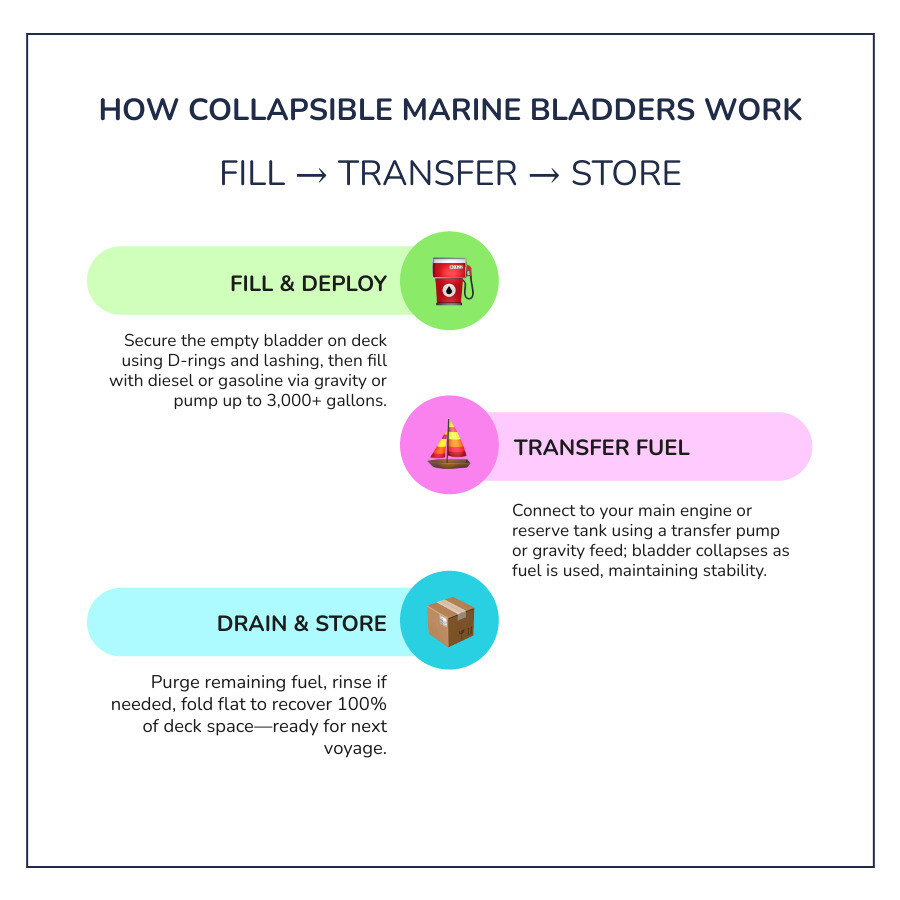
Collapsible marine bladders are flexible, fuel-resistant containers designed to store and transfer gasoline or diesel aboard vessels without requiring permanent tank installation. They expand fully when filled and fold flat when empty, recovering virtually all the deck or storage space they occupy.
Quick answer for operators evaluating collapsible marine bladders:
- What they are: Flexible TPU or reinforced polyurethane fuel tanks that collapse flat when empty
- Capacity range: Typically 30 to 3,000+ gallons, with custom sizes available
- Primary use: Auxiliary fuel capacity, range extension, and backup fuel supply on deck
- Key advantage over rigid tanks: No permanent installation, significantly lower weight, and compact storage when not in use
- Fuel compatibility: Diesel and gasoline (material grade must match fuel type)
- Mounting: Secured above deck using D-rings and lashing — Coast Guard regulations prohibit below-deck flexible fuel tank placement on recreational vessels
- Lifespan: 5 to 10 years with proper care and storage
For boat owners, yacht operators, commercial marine crews, and offshore expedition teams, running short on fuel range isn’t just inconvenient — it’s a serious operational constraint. Remote destinations, deep-water fishing grounds, and extended offshore passages all demand more capacity than most factory-installed rigid tanks can provide.
Installing a second permanent tank is expensive, structurally complex, and often impossible on vessels where hull space is already committed. A collapsible marine bladder solves this problem directly: carry the extra capacity you need, then fold it away when the trip is done.
This guide covers everything operators need to evaluate, size, install, and maintain a collapsible marine bladder — from material selection and fuel compatibility to deck securing, maintenance, and custom sizing for non-standard vessel configurations.
Collapsible marine bladders word list:
Understanding Flexible Fuel Containment Technology
At its core, flexible fuel containment relies on advanced material engineering to solve a basic physical problem: how to store large volumes of liquid without dedicating permanent, rigid space to it. Unlike rigid metal or plastic tanks, which occupy the exact same footprint whether they are 100% full or completely empty, collapsible fuel tanks adapt dynamically to their contents.
When you fill a collapsible marine bladder, the flexible fabric skin expands to accommodate the liquid volume. As the fuel is consumed or transferred to the vessel’s main tanks, the bladder collapses under atmospheric pressure. This means that as your fuel payload decreases, your reclaimed deck space increases. Once completely drained, a high-quality bladder can be folded or rolled up, achieving a massive volume reduction. For example, a large-format flexible tank can fold down to a mere fraction of its filled dimensions, making it incredibly easy to stow in a lazarette or dry storage locker.

This technology is particularly vital for marine operators who need temporary offshore fuel solutions. By using auxiliary fuel transfer bladders, captains can safely plan longer transits, secure lower fuel prices at commercial ports before departure, and avoid the logistical headache of mid-voyage refueling stops.
Why Operators Choose Collapsible Marine Bladders Over Rigid Tanks
For serious maritime operators, every pound of weight and every square inch of space on board must be strictly managed. When comparing a fuel bladder for boats to a traditional rigid auxiliary tank, the advantages of flexibility become clear.
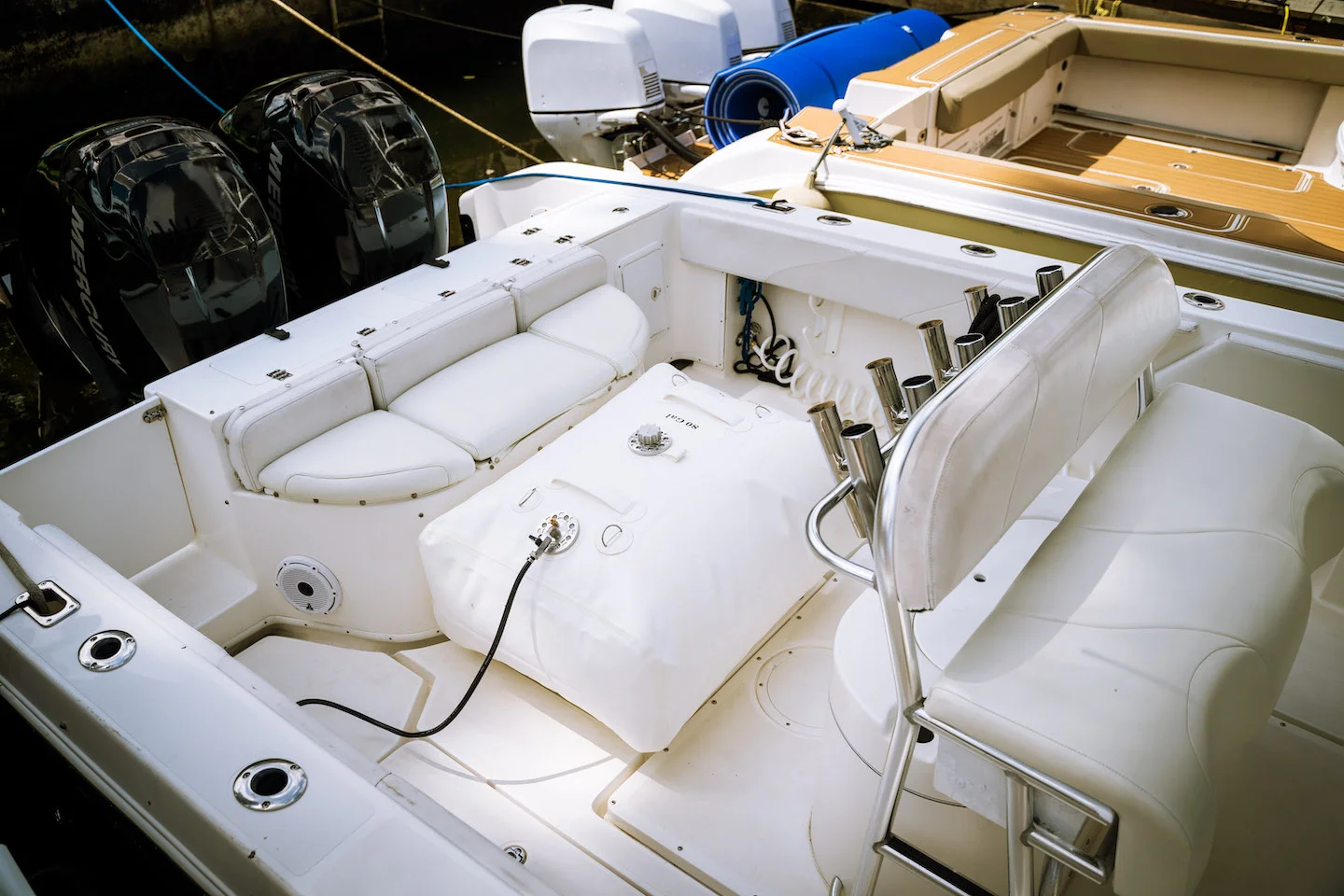
First, consider weight distribution. Rigid steel or aluminum tanks add significant permanent dry weight to a vessel, even when empty. A rigid auxiliary tank also forces a permanent compromise in boat design, permanently altering the vessel’s center of gravity. In contrast, a flexible bladder only adds weight when filled. Once the fuel is transferred to the main tank, the empty bladder (which weighs very little—for example, a Techno Tanks 80-gallon marine fuel bladder weighs only 24.5 lbs empty) can be folded and stored, restoring the vessel’s optimal trim and performance.
Second, the structural modifications required to install a secondary rigid tank can be prohibitively expensive and intrusive. It often requires cutting into deck fiberglass, rerouting structural bulkheads, or modifying the hull. A collapsible bladder requires zero permanent modifications. You simply roll it out, secure it using existing deck cleats or D-rings, and fill it.
| Feature / Metric | Flexible Marine Bladder | Rigid Auxiliary OEM Tank |
|---|---|---|
| Footprint When Empty | Collapses flat; can be rolled up and stored | Occupies 100% of its physical volume permanently |
| Dry Weight | Extremely lightweight (e.g., 300-gal model is only ~41.5 lbs) | Heavy steel, aluminum, or thick rotationally molded plastic |
| Installation Complexity | Zero structural changes; deploys on deck in minutes | Requires extensive hull/deck modification and plumbing |
| Weight Distribution | Highly dynamic; weight is eliminated as fuel is consumed | Permanent weight load on the hull regardless of fuel level |
| Relative Cost | Highly cost-effective alternative to custom metal fabrication | Expensive custom fabrication, structural labor, and welding |
This fundamental contrast highlights why many operators prefer a flexible solution when evaluating fuel bladder vs fuel tank options for auxiliary range extension.
Pillow Style vs. Low-Profile Collapsible Marine Bladders
When selecting a bladder, operators generally choose between two primary design configurations: Pillow Style and Space Saver (or low-profile) designs.
- Pillow Style Bladders: These are the traditional, low-profile flexible tanks. They expand outward into a rounded, pillow-like shape. Because they distribute liquid weight over a wider, flatter surface area, they offer excellent natural stability on open decks. However, their wide footprint means they require a larger flat deck area to sit properly.
- Space Saver Bladders: These models are engineered with a taller, more rectangular dimensional profile. By utilizing a narrower footprint and slightly taller vertical expansion, they are optimized to fit into tighter deck spaces, narrow side passages, or restricted compartments.
To maintain vessel stability and prevent dangerous liquid shifting in rough seas, high-quality space-saver bladders often incorporate internal baffling systems. These baffles restrict the rapid movement of fuel from side to side, minimizing the “free surface effect” which can otherwise compromise a boat’s handling in heavy swells. When choosing between these styles for your marine fuel bladders setup, you must carefully measure your available deck space and evaluate the sea conditions you expect to encounter.
Custom Collapsible Marine Bladders for Unique Vessel Configurations
No two boat decks are configured exactly the same. Sport-fishing cockpits, yacht foredecks, and commercial workboat platforms all present unique layout challenges. If standard dimensional footprints do not align with your deck layout, custom fuel bladders offer a tailored solution.
Custom manufacturing allows you to specify exact lengths, widths, heights, and fitting locations. This ensures that you can maximize your vessel’s carrying capacity without blocking access to critical deck machinery, mooring cleats, or escape hatches. Whether you need a long, narrow bladder to fit runnels along the gunwales, or a specific wedge shape for a bow platform, custom-engineered bladders ensure that every available inch of deck space is utilized safely and efficiently.
Material Science: Durability, Fuel Compatibility, and Safety Standards
The safety of any flexible fuel system depends entirely on the chemistry and construction of its containment material. Because marine environments expose equipment to extreme heat, salt water, intense UV radiation, and constant mechanical vibration, standard industrial plastics or cheap PVC materials are entirely unsuitable for fuel storage.
Modern high-performance collapsible fuel tanks are manufactured using advanced Thermoplastic Polyurethane (TPU). TPU is a highly sophisticated elastomer that combines the physical strength of hard plastics with the elastic flexibility of rubber.
During manufacturing, TPU is molecularly bonded to a heavy-duty fabric base (typically high-tensile woven polyester or nylon). This multi-layered construction provides exceptional puncture resistance, tear strength, and seam integrity. However, not all TPU is created equal:
- Polyester-based TPU: This formulation is highly stable and chemically resistant to hydrocarbons. It is the gold standard for storing diesel, gasoline, jet fuel, and light oils. It prevents fuel molecules from permeating through the fabric, eliminating the “fuel smell” common with lower-grade materials.
- Polyether-based TPU: This material is formulated specifically for hydrolysis resistance (the breakdown of material due to contact with water). It is food-grade, FDA-compliant, and designed for potable drinking water storage. While excellent for water, it is not chemically compatible with petroleum-based fuels.
Thermoplastic Polyurethane (TPU) vs. PVC Materials
When shopping for flexible tanks, you may encounter cheaper alternatives made from Polyvinyl Chloride (PVC). While PVC is highly economical and suitable for temporary wastewater or non-potable water storage, it should never be used for long-term fuel storage or in demanding marine environments.
TPU-laminated models vastly outperform PVC alternatives in several key operational metrics:
- Tensile and Tear Strength: TPU exhibits up to three times the puncture resistance of standard PVC, which is critical when a bladder is subjected to deck friction and engine vibrations.
- Temperature Tolerance: TPU remains highly flexible in extreme cold (down to -40°C) and stable in extreme heat (up to 90°C), whereas PVC can become brittle in cold weather and soften dangerously under direct summer sunlight.
- Chemical Permeation: PVC is prone to plasticizer migration, meaning the fuel will gradually leach the softening agents out of the PVC fabric, making the tank stiff, brittle, and prone to cracking over time. TPU is inherently stable and retains its elasticity for its entire service life.
Safety Features, Best Practices, and Marine Compliance
Carrying auxiliary fuel on water requires strict adherence to safety protocols. First and foremost, United States Coast Guard regulations prohibit flexible fuel bladders from being used below deck or inside enclosed hull compartments on recreational vessels. Because flexible tanks do not have rigid venting channels that route fumes safely outside the hull, placing them in an enclosed space creates a catastrophic risk of explosive gas accumulation.
Therefore, bladders must always be mounted above deck in well-ventilated areas. To ensure safe operation, look for the following engineering features:
- Heat-Reducing Finishes: High-quality bladders are manufactured in a white matte finish. This is not just for aesthetics; white materials reflect solar radiation, drastically reducing heat absorption and minimizing fuel expansion and gas vapor formation on hot sunny decks.
- Venting and Anti-Siphon Features: Bladders should feature high-quality, dual-action valves or pressure-relief caps that allow safe venting of expanded fuel vapors without allowing water to enter the tank.
- Static Grounding: When transferring highly flammable fuels like gasoline, static electricity is a major hazard. Operators must ensure that the bladder, the transfer pump, and the vessel’s main tank are fully bonded and grounded to prevent static discharge sparks.
Sizing, Installation, and Maintenance Guidelines
Selecting the right bladder size requires balancing your desired range extension with your vessel’s physical and weight capacities. Fuel is heavy; gasoline weighs approximately 6.1 lbs per gallon, while diesel weighs roughly 7.1 lbs per gallon.
If you fill a 300-gallon marine fuel bladder with diesel, you are adding over 2,100 lbs of liquid weight to your deck. Before ordering, consult your vessel’s maximum payload capacity and ensure your deck structure can safely handle the localized load.
For a detailed walkthrough on matching tank dimensions to your deck footprint and weight limits, refer to our comprehensive fuel bladder sizing guide or read the ultimate guide to fuel bladder sizing. Standard capacities range from 30 to 300 gallons for typical recreational and sport-fishing boats, while commercial vessels can utilize massive temporary fuel storage bladders up to 3,000 gallons or more.
Step-by-Step Installation and Securing on Deck
To install a collapsible bladder safely, follow this step-by-step procedure:
- Prepare the Deck: Thoroughly clean the designated deck area. Ensure there are no sharp objects, protruding screws, fishing hooks, or abrasive debris. Always lay down a heavy-duty protective rubber liner or ground mat under the bladder to prevent friction wear against the non-skid deck surface.
- Position the Empty Bladder: Place the empty bladder in its exact usage location before filling it. Once filled, even a small 80-gallon bladder weighs over 500 lbs and is virtually impossible to reposition safely by hand.
- Secure the Tie-Downs: Thread heavy-duty ratchet straps or marine-grade lashing lines through the integrated top-mounted D-rings on the bladder. Secure these straps to robust structural deck cleats or heavy-duty pad eyes. Never skip this step. Even if a full bladder feels stable on a calm dock, rough seas or sudden maneuvers will cause an unsecured 1,000-lb liquid mass to slide violently, risking hull damage or crew injury.
- Fill the Bladder: Connect your fuel source to the inlet flange. Fill the bladder slowly, checking for proper expansion and ensuring that the tie-down straps remain snug but not overly constricted as the bladder expands.
- Establish the Transfer Connection: To transfer fuel during your voyage, you can utilize a simple gravity-feed system if the bladder is elevated, or connect a specialized, explosion-proof 12V fuel transfer pump. For detailed deck setups, see our guide on collapsible marine fuel tanks for extended offshore trips.
Maintenance, Purging, and Long-Term Storage
To maximize the lifespan of your flexible tank, proper post-voyage care is essential. Follow these best practices for smooth sailing the ultimate guide to collapsible marine fuel systems:
- Purge the Remaining Fuel: To get every last drop of fuel out of the bladder, roll the tank flat from the outer edges toward the discharge valve. This squeezing action channels the remaining liquid directly to the outlet.
- Rinse and Clean: Wash the exterior of the bladder with fresh water and mild soap to remove salt spray, fish blood, and grime. If storing the bladder for an extended period, ensure the interior is completely drained of fuel vapors.
- Dry Thoroughly: Allow the bladder to dry completely in a shaded, well-ventilated area. Storing a damp bladder can lead to mold growth and surface degradation.
- Fold and Store: Fold the bladder loosely—avoid sharp, hard creases that can stress the TPU material over time. Store the folded bladder in a cool, dry, and vented locker away from direct sunlight, sharp tools, and rodents.
Frequently Asked Questions About Collapsible Marine Bladders
Can marine bladders be used for both diesel and gasoline?
Yes, high-quality marine bladders can hold both diesel and gasoline, but you must select the correct material formulation and fitting package. Polyester-based TPU is highly compatible with both fuel types. However, because gasoline is highly volatile and has a much lower flashpoint than diesel, gasoline systems require specialized spark-proof fittings and meticulous static grounding protocols.
Never mix fuel types in the same bladder without a thorough commercial cleaning and vapor purging process. For a deeper look at fuel-specific storage properties, consult the complete guide to marine bladder tanks and storage or explore our dedicated resources on diesel fuel bladders and gasoline fuel bladders.
Will a filled marine fuel bladder float if it falls overboard?
Yes. Because petroleum fuels are significantly less dense than water (fuel density is approximately two-thirds the density of seawater), a filled fuel bladder possesses natural positive buoyancy. If a bladder accidentally goes overboard, it will float on the surface rather than sinking.
Furthermore, because of their flexible, heavy-duty TPU construction, these tanks can withstand significant impacts without rupturing. In emergency situations, an empty bladder can even be lightly inflated with air to serve as an improvised, highly buoyant flotation device for the vessel or crew.
What is the typical lifespan and maintenance of a high-quality bladder?
With proper care, a premium TPU marine bladder has an expected operational lifespan of 5 to 10 years. The primary factors that accelerate material degradation are prolonged, unprotected UV exposure, physical abrasion against rough decks, and storing the bladder while damp or containing residual fuel vapors.
By using a protective underlayment, securing the bladder tightly to prevent sliding, and storing it dry in a vented locker when not in use, you can easily maximize its service life.
Conclusion
Whether you are planning a long-distance offshore crossing, heading out to remote deep-sea fishing grounds, or managing commercial maritime logistics, carrying auxiliary fuel safely is paramount. Standard rigid tanks are heavy, expensive, and permanently compromise your onboard space.
Collapsible marine bladders from Techno Tanks offer a safe, durable, and highly efficient alternative. Built with advanced TPU technology, these tanks expand to provide the range extension you need, then collapse flat to return your deck space once the job is done.
Ready to extend your vessel’s cruising range? Techno Tanks fuel bladder pricing depends on size, fuel type, configuration, application, custom requirements, and project scope. For accurate pricing tailored to your specific vessel layout and fuel storage needs, visit our custom fuel bladders page or contact us today to request a personalized quote.

