
What Are Long Range Boat Fuel Bladders — and Which One Do You Need?
Long range boat fuel bladders are flexible, collapsible fuel tanks designed to carry additional gasoline or diesel aboard vessels without permanently modifying the hull or installing rigid tankage.
If you need a fast answer, here’s what matters most:
- What they are: Flexible, fuel-grade containers made from military-spec TPU or coated fabric that store diesel or gasoline on deck or in vented compartments
- Who uses them: Offshore anglers, yacht operators, commercial marine crews, expedition teams, and patrol vessel operators needing auxiliary fuel capacity
- Common capacities: 30 gallons up to 300 gallons in standard sizes, with custom builds available well beyond that range
- Two main formats: Pillow-style (deck-mounted, low-profile) and Space Saver (compact footprint for tighter compartments)
- Key advantage over rigid tanks: No permanent installation, folds flat when empty, and can be deployed or stowed quickly
- Pricing: Depends on capacity, configuration, fuel type, and custom requirements — request a quote for accurate pricing
Whether you’re planning an extended offshore run, reducing dependence on expensive fuel stops along a long passage, or simply want backup capacity for a remote destination, a fuel bladder gives you range flexibility that a fixed tank cannot.
As one experienced offshore operator put it when describing long-distance passages through the Bahamas and beyond: “The extra fuel gives you peace of mind and the ability to avoid inclement weather” — meaning you can wait for the right weather window instead of being forced to move.
Techno Tanks manufactures marine fuel bladders in sizes from 30 to 300 gallons as standard, with custom sizes available on special order to match specific vessel layouts and operational requirements.
Basic long range boat fuel bladders vocab:
Understanding Long Range Boat Fuel Bladders vs. Rigid Tanks
For serious vessel operators, planning a long-distance transit or an extended offshore voyage presents a classic engineering challenge: how to carry enough fuel without compromising the vessel’s performance, safety, or permanent layout. Traditionally, the only ways to increase fuel capacity were to install larger permanent metal or fiberglass tanks—which requires major structural modifications—or to carry rigid plastic drums on deck.
Flexible containment solutions have fundamentally changed this equation. Unlike rigid tanks, a marine fuel bladder is designed to be temporary and highly adaptable. When full, it securely holds auxiliary fuel on deck or in dedicated, well-ventilated compartments. As the fuel is consumed and transferred to the vessel’s main tanks, the bladder collapses. Once empty, it can be rolled or folded flat and stored in a small locker, completely freeing up valuable deck space.
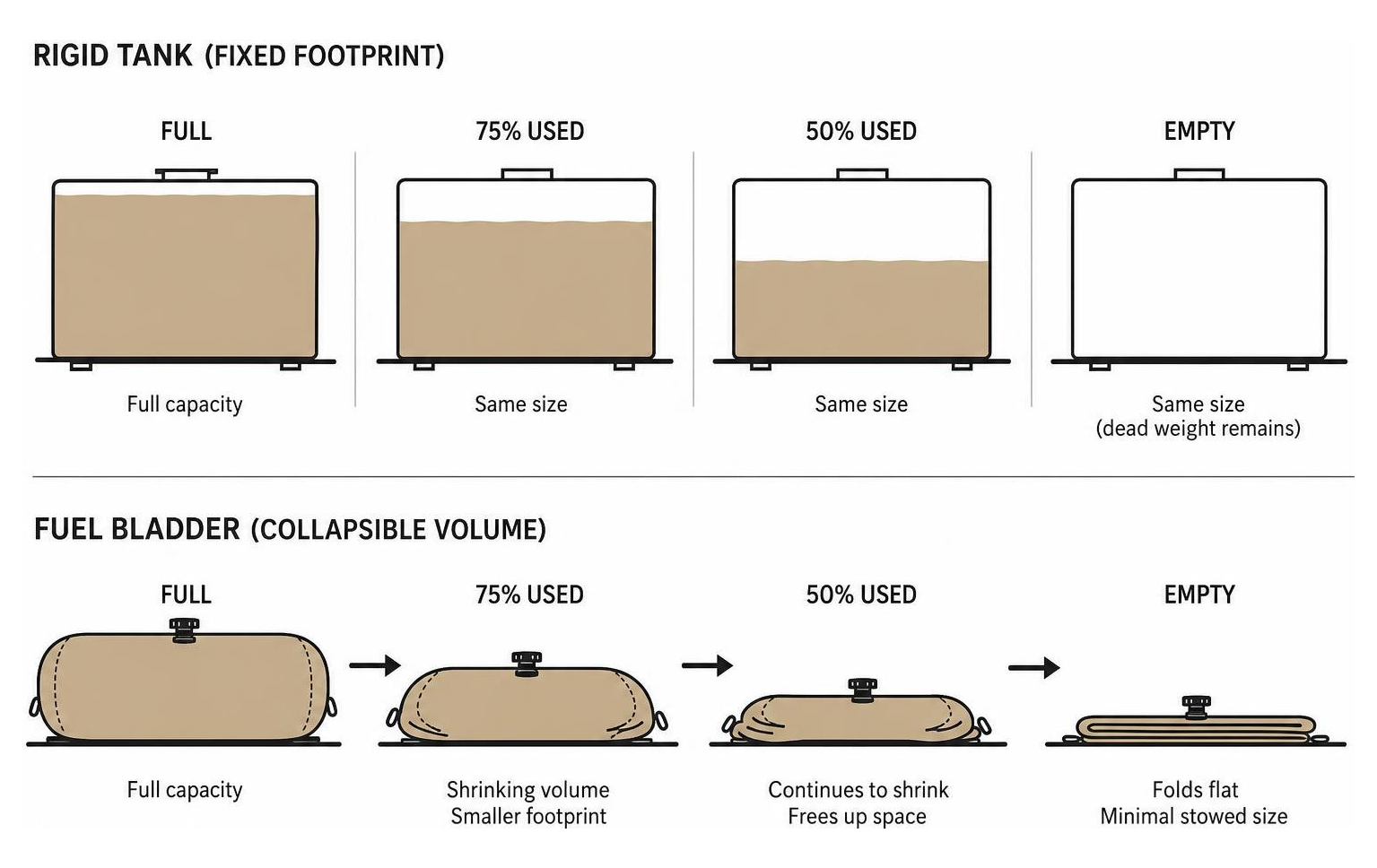
From a naval architecture standpoint, this collapsible nature provides significant advantages for weight distribution. With a rigid auxiliary deck tank, the weight of the tank structure remains high on the vessel even after the fuel is gone, which can negatively affect the boat’s center of gravity and rolling period in rough seas. A flexible fuel bladder, however, eliminates this dead weight and can be stowed low and close to the centerline once empty. This flexibility helps operators manage “range anxiety” safely, ensuring they can complete long passages without permanently altering their vessel’s handling characteristics. For a deeper look at managing vessel dynamics during extended voyages, see Going the Distance without Running Your Yacht Dry.
Technical Specifications: Materials, Construction, and Fuel Compatibility
To survive the punishing conditions of offshore environments, long range boat fuel bladders must be engineered to incredibly high standards. They are subjected to constant salt spray, intense UV radiation, extreme temperature fluctuations, and the physical stresses of fuel sloshing in rough seas.
High-quality marine fuel bladders are constructed from advanced Thermoplastic Polyurethane (TPU) or heavy-duty coated fabrics. TPU is preferred in professional marine applications due to its exceptional tensile strength, puncture resistance, and flexibility even in freezing temperatures.
Manufacturing these bladders requires specialized techniques to ensure they remain completely leak-proof. Rather than using standard adhesives, which can degrade over time when exposed to fuels, manufacturers utilize high-frequency hot-melt welding. This process fuses the material seams at a molecular level, creating a bond that is actually stronger than the surrounding fabric. Double marine-grade sealing strips are then applied to the seams to provide an extra layer of protection against leaks and vapor transmission. To learn more about how these rugged materials perform under extreme offshore conditions, explore Collapsible Marine Fuel Tanks for Extended Offshore Trips.
Material Standards for Long Range Boat Fuel Bladders
When evaluating a fuel bladder for long-range marine use, the grade of the material is the most critical factor. Professional-grade bladders utilize military-grade TPU fabrics, often featuring a 2000D (denier) base fabric weave. This tight, high-strength weave provides the structural backbone necessary to withstand the high dynamic loads of shifting fuel.
Additionally, the outer layers of the bladder are treated with specialized coatings:
- UV Stabilizers: Prevent the polymer chains in the TPU from breaking down under constant exposure to harsh sunlight.
- Anti-Static Additives: Reduce the risk of static electricity buildup during fuel transfer, which is a critical safety consideration, particularly when handling gasoline.
- Salt-Spray and Hydrolysis Resistance: Ensures that constant exposure to salt water and humidity does not cause the material to delaminate or weaken over its service life.
These material standards ensure that the bladder remains supple, puncture-resistant, and vapor-tight over years of repeated deployments. For guidance on matching these material standards to your specific vessel type, refer to Get a Grip on Your Range with Custom Boat Fuel Bladders.
Fuel Compatibility and Chemical Resistance
A high-quality TPU marine fuel bladder must exhibit excellent chemical resistance to a wide range of petroleum products and alternative fuels. Using a bladder with incompatible fuel can lead to material softening, delamination, and catastrophic failure.
Techno Tanks fuel bladders are engineered for broad chemical compatibility, making them suitable for storing and transferring the following approved liquids:
- Diesel Fuel: Standard marine diesel, ultra-low sulfur diesel (ULSD), and heavier fuel oils (#2 and #4).
- Gasoline: Standard marine gasoline, including blends with ethanol or methanol additives.
- Bio-Diesel: Various blends of renewable bio-diesel fuels.
- Aviation Fuels: 100LL (low lead) aviation gasoline and aviation kerosene, which are frequently carried by support vessels or used for auxiliary equipment.
- Lubricants: Marine engine oils and hydraulic fluids.
- Potable Water: Specialized food-grade TPU variations are also available for drinking water storage (though a bladder used for fuel must never be cross-contaminated with water).
Understanding chemical compatibility is essential for maintaining a safe vessel. For a comprehensive overview of emergency fuel storage and handling, check out The Ultimate Guide to Marine Emergency Fuel Supply Systems.
Sizing, Configurations, and Selecting the Right Bladder
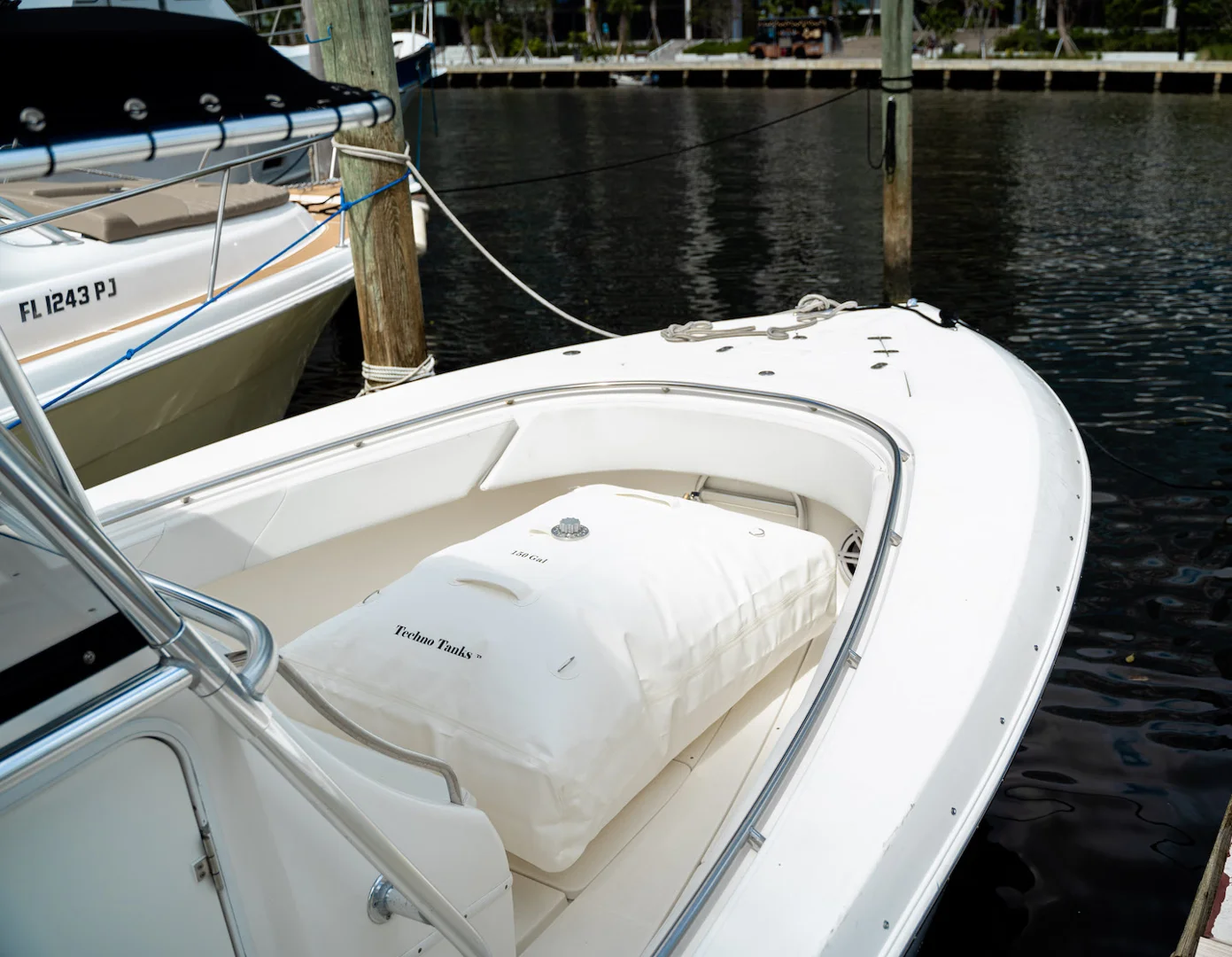
Selecting the right size and configuration of a fuel bladder depends on three main variables: your engine’s fuel burn rate, the additional range you require, and the physical space available on your vessel. Standard marine bladders are typically available in capacities ranging from 30 gallons up to 300 gallons, though custom industrial configurations can scale up to 3,000 gallons or more for commercial workboats and large yachts.
When planning your layout, it is vital to consider the filled dimensions of the bladder. A bladder that is too large for its designated deck area can overhang hatches, block gunwale access, or interfere with critical deck hardware.
| Bladder Style | Typical Capacity Range | Primary Placement | Key Advantage | Best For |
|---|---|---|---|---|
| Pillow-Style | 30 to 300+ Gallons | Open bow deck, cockpit floor, swim platform | Low profile, excellent weight distribution | Large sport-fishers, open deck transits |
| Space-Saver | 50 to 300 Gallons | Confined deck areas, side decks, cockpit corners | Compact footprint, taller vertical profile | Mid-sized center consoles, restricted deck layouts |
| Custom Sized | Built to Spec | Dedicated lockers, stringer spaces, USV cabins | Optimizes irregular or tight compartments | Unmanned vessels, custom yachts, commercial craft |
To determine the exact capacity and dimensions required for your next voyage, you can consult the Yacht Fuel Bladder Systems: High Capacity Solutions for Long Distance Voyages guide.
Pillow-Style vs. Space-Saver Designs
The two primary configurations of marine fuel bladders are pillow-style and space-saver designs. Each serves a distinct operational purpose:
Pillow-Style Bladders have a low-profile, wide footprint. When filled, they look like a large cushion. Because they distribute the weight of the fuel over a larger surface area, they keep the vessel’s center of gravity as low as possible. This makes them highly stable and ideal for placement on open bow decks or cockpit floors.
Space-Saver Bladders utilize a more rectangular, upright geometry. They are designed to provide maximum fuel capacity while occupying a minimal footprint on the deck. This design is ideal for vessels with narrow side decks, tight cockpit corners, or for placement inside large, vented lockers, live wells, or fish holds. To prevent the fuel from sloshing and shifting the weight of the vessel in rough seas, high-quality space-saver bladders are often available in baffled configurations. For a budget-conscious analysis of these two options, see Boat Range Extender Tanks That Won’t Sink Your Budget.
Custom Sizing for Long Range Boat Fuel Bladders
While standard sizes fit many recreational and commercial vessels, unique hull shapes and specialized applications often require custom engineering. Custom-sized fuel bladders can be designed to fit precisely into specific areas of a vessel, such as between engine-room stringers, inside unused fish boxes, or within the tight interior compartments of Unmanned Surface Vessels (USVs) and autonomous marine working craft.
Customization options typically include:
- Modifying length, width, and filled height to match exact compartment dimensions.
- Custom placement of inlet ports, outlet valves, and manual venting systems.
- Heavy-duty reinforced tie-down handles or D-ring placement to match the vessel’s existing deck cleats or pad eyes.
- Integration of internal baffling systems to manage fuel slosh in high-speed or rough-sea applications.
For operators looking to design a tailored fuel system that integrates seamlessly into their vessel’s layout, The Best Custom Marine Fuel Tanks to Keep You Cruising provides excellent engineering insights.
Installation, Securing, and Safe Operation Underway
Operating a vessel with several hundred gallons of auxiliary fuel on deck requires strict adherence to safety and securing protocols. A full 300-gallon fuel bladder weighs approximately 2,100 pounds (based on fuel being roughly 2/3 the density of water). If a load of that size shifts underway, it can easily damage deck hardware, compromise vessel stability, or cause serious injury to the crew.
To secure a fuel bladder properly:
- Positioning: Always place the bladder in its final location before filling it. A filled bladder is nearly impossible to move or adjust safely.
- Deck Protection: Lay down a deck protective liner beneath the bladder to prevent abrasion against non-skid deck surfaces or protruding hardware.
- Tie-Downs: Utilize the integrated stainless steel or heavy-duty TPU D-rings on the bladder. Secure the tank to load-rated deck pad eyes or heavy cleats using high-strength, marine-grade ratchet straps in a crisscross pattern.
- Footprint Frames: For high-speed or offshore operations, some crews construct temporary aluminum footprint frames with welded brackets to prevent the bladder from sliding laterally.
For real-world discussions on how offshore anglers secure and manage their auxiliary fuel systems under various sea conditions, you can review the Extended range fuel bladder’s | Grady White Boat Owner’s Forum .
Fuel Transfer Methods and Systems
Transferring fuel from your auxiliary bladder to your vessel’s main tanks while underway must be done carefully to prevent spills and avoid introducing air into the engine’s fuel lines.
There are three primary methods for transferring fuel:
- Gravity Transfer: If the bladder is secured on an elevated deck or bow section, gravity can be used to feed fuel directly into the main deck fill. This is a simple, highly reliable method that requires no electrical power.
- Siphon Flow: A manual hand siphon pump can be used to initiate a siphon from the bladder’s outlet valve to the main tank fill.
- Electric Transfer Pumps: For larger volumes, a dedicated 12V or 24V fuel transfer pump is highly efficient. When transferring gasoline, it is critical to use an explosion-proof, ignition-protected marine fuel pump rated for gasoline use.
Using quick-disconnect fittings on the bladder’s outlet hose allows for clean, fast connections without the risk of dripping fuel onto the deck. To explore advanced auxiliary plumbing layouts and pump configurations, refer to Going the Distance with Extra Fuel Systems.
Safety Regulations and Storage Best Practices
Safety must always be the top priority when carrying temporary fuel storage on board. It is important to note that United States Coast Guard (USCG) regulations generally prohibit the permanent installation of flexible fuel bladders below deck in enclosed engine spaces for gasoline. Bladders should be secured above deck in an open, well-ventilated area to allow any fuel vapors to dissipate safely into the atmosphere.
When the voyage is complete and the bladder is empty, proper storage is key to ensuring a long service life:
- Purging: To get every last drop of fuel out of the bladder, roll the tank gently from the outer edges toward the outlet fitting.
- Cleaning: Rinse the exterior of the bladder with fresh water to remove salt residue. If storing long-term, ensure the interior is drained completely.
- Folding and Storage: Once dry, fold or roll the bladder loosely. Store it in a cool, dry, and well-ventilated locker away from direct sunlight, sharp objects, and extreme heat.
For additional safety checklists and storage tips to protect your auxiliary equipment, see Fuel Your Wanderlust with These Top Rated Auxiliary Tanks.
Frequently Asked Questions About Marine Fuel Bladders
Can marine fuel bladders be used for both gasoline and diesel?
Yes, provided the bladder is constructed from high-grade TPU or fuel-compatible elastomers that are chemically resistant to both hydrocarbons. Techno Tanks bladders are fully compatible with both gasoline and diesel, as well as bio-diesel and aviation fuels. Always verify that the specific bladder model and its fittings are rated for your intended fuel type before filling, and ensure that anti-static precautions are taken when handling gasoline.
How do you secure a fuel bladder in rough seas?
A full fuel bladder must be completely secured using heavy-duty, load-rated ratchet straps connected to structural deck points (such as cleats or welded pad eyes). The straps should be tensioned in a crisscross pattern over the bladder to eliminate any movement. In rough seas, baffled configurations are highly recommended because they limit the internal movement of the fuel, which reduces sloshing and helps maintain the vessel’s lateral stability.
What is the typical lifespan of a flexible marine fuel bladder?
With proper care, regular inspection, and appropriate storage, a professional-grade marine fuel bladder manufactured under strict ISO 9001:2015 quality standards can last between 5 to 10 years. To maximize lifespan, always use a protective deck liner to prevent abrasion, wash the bladder with fresh water after use, and store it dry and loosely folded in a ventilated compartment away from direct UV exposure when not in use.
Conclusion
For offshore mariners, commercial operators, and long-distance cruisers, long range boat fuel bladders represent a highly practical, safe, and cost-effective alternative to permanent rigid tank installations. By providing temporary auxiliary capacity that can be easily stowed away when empty, these flexible systems allow you to optimize your vessel’s range, take advantage of bulk fuel pricing, and navigate safely around challenging weather windows.
Whether you need a standard 30-gallon pillow bladder for weekend offshore fishing runs or a custom-engineered 300-gallon space-saver system for a commercial vessel or autonomous craft, Techno Tanks has the engineering expertise to keep you moving.
To find the perfect solution for your next voyage, read our guide on Range Anxiety: Top Solutions for an Extended Cruising Range or Request a Quote for Custom Marine Fuel Bladders today to get detailed pricing and sizing configurations tailored to your vessel.
For more details on marine fuel safety and handling guidelines, you can also explore external resources like the BoatUS Foundation.

