
What Are Bulk Marine Tanks? (Commercial Shipping vs. Aquarium Setups Explained)
Bulk Marine Tanks 101: Everything You Need for a Thriving Saltwater Aquarium

If you’ve landed here searching for bulk marine tanks, here’s a quick breakdown of what the term actually covers — and why the answer depends heavily on your context:
| Search Intent | What It Means |
|---|---|
| Commercial shipping | Large-scale rigid steel or stainless steel tanks built into vessels for fuel, chemicals, or liquid cargo |
| Offshore fuel storage | Fixed or floating bulk storage systems measured in hundreds to thousands of cubic meters |
| Saltwater aquarium setups | Hobbyist “marine tanks” stocked with reef or saltwater species — a completely different product category |
| Flexible/auxiliary fuel storage | Collapsible fuel bladders used to extend range or add backup capacity on working vessels |
The term “bulk marine tanks” spans a surprisingly wide range of applications. At one end, you have industrial-scale systems — think 9,450 cbm stainless steel fuel tanks installed on 19,000 TEU container ships, or 3,000 cbm liquid ammonia tanks built for 210,000 DWT bulk carriers. At the other end, you have reef hobbyists searching for a saltwater aquarium setup.
This guide focuses on the commercial and operational side — what bulk marine tanks are, how they’re built, how they’re sized, and where flexible fuel bladders fit as a practical alternative to permanent rigid systems for operators who need more range, backup capacity, or deployable fuel storage without the weight and cost of fixed infrastructure.
Whether you’re evaluating rigid containerized tanks, large-scale liquefied gas storage, or a collapsible fuel bladder for a working vessel, this guide covers what you need to make an informed decision.
Understanding Bulk Marine Tanks: Commercial Shipping vs. Aquarium Setups
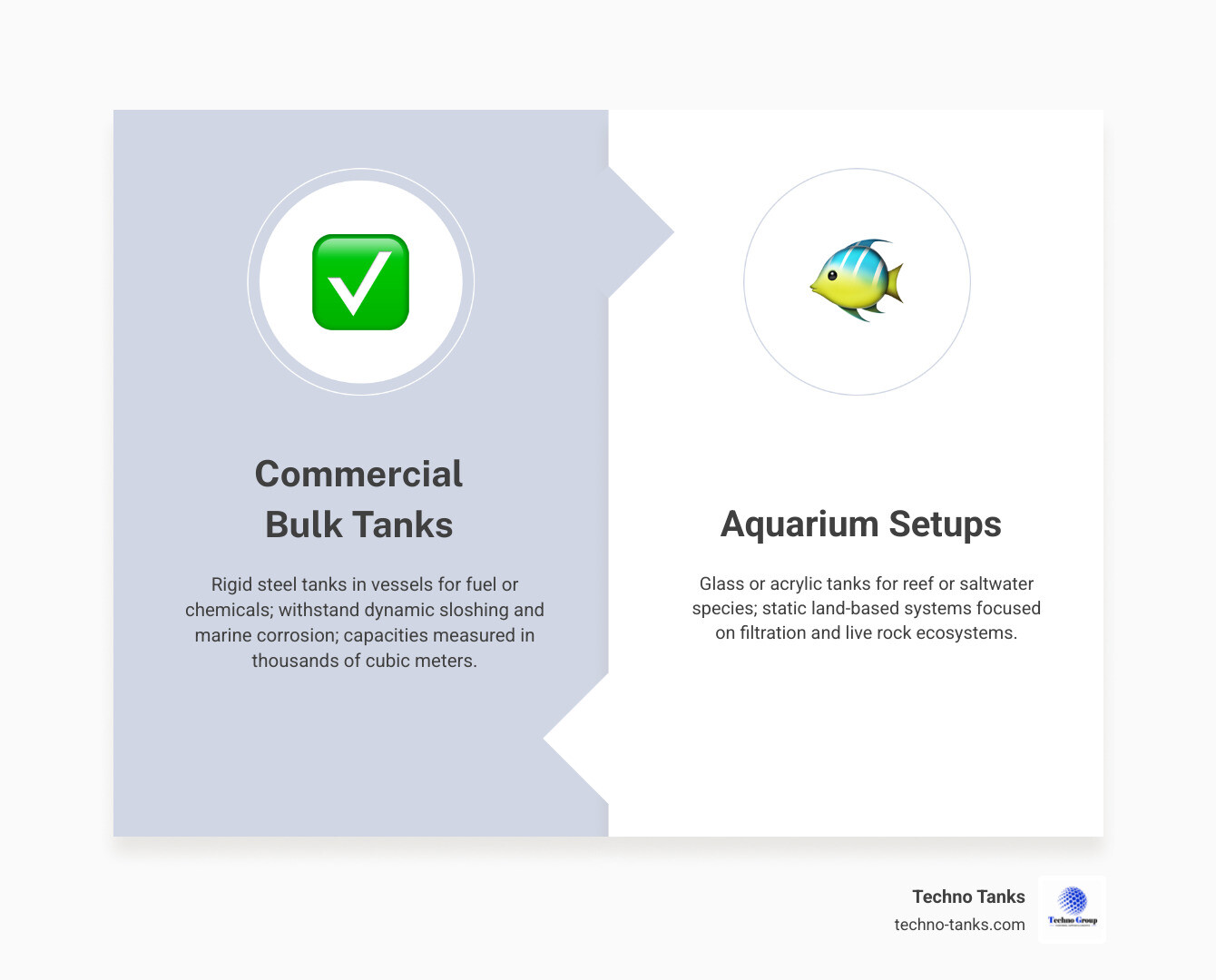
While a saltwater hobbyist associates “marine tanks” with acrylic glass, sump filtration, and live rock, commercial maritime operators view a bulk marine tank as a critical, highly engineered asset. In industrial shipping, offshore operations, and commercial transport, these systems must withstand extreme physical stresses, highly corrosive environments, and constant movement.
Unlike static land-based storage tanks, which sit on reinforced concrete foundations, bulk marine tanks are subject to dynamic forces. Dynamic sloshing — the violent movement of liquids inside a tank caused by a ship’s pitch, roll, and yaw — can compromise vessel stability and cause severe structural fatigue.
Furthermore, marine corrosion from constant saltwater exposure requires specialized metallurgy or advanced synthetic materials. Understanding these core differences is essential for selecting the right storage system, whether you are managing large-scale cargo or looking to deploy auxiliary systems. For a deeper look into marine storage design, see The Ultimate Guide to Marine Bladder Tanks and Storage and explore standard portable configurations in Everything You Need to Know About Portable Marine Tanks.
Defining Bulk Marine Tanks in Maritime Operations
In commercial operations, bulk marine tanks are categorized by their structural type, integration level, and the specific cargo or fuel they are designed to carry. They range from integrated deep tanks that form part of the vessel’s hull to independent, deck-mounted containerized tanks.
To help operators evaluate their options, the table below compares traditional rigid steel tanks with modern flexible fuel bladders:
| Feature | Rigid Steel Bulk Tanks | Flexible Bladder Tanks |
|---|---|---|
| Structural Impact | High weight; requires permanent structural reinforcement | Lightweight; distributes load dynamically |
| Footprint | Permanent; cannot be cleared when empty | Collapsible; rolls up to save deck space |
| Installation Cost | High capital expenditure; requires shipyard welding | Low; rapid deployment and integration |
| Sizing Flexibility | Fixed dimensions; custom modifications are expensive | Custom-tailored to fit specific deck spaces |
| Sloshing Mitigation | Requires heavy internal baffles | Naturally collapses as liquid is discharged, eliminating free-surface effect |
The Limitations of Rigid Bulk Marine Tanks
Traditional rigid tanks have served the maritime industry for decades, but they present distinct operational challenges. The primary drawbacks are weight constraints and fixed volume. A rigid steel tank adds significant deadweight to a vessel even when empty, directly reducing fuel efficiency and cargo capacity.
Furthermore, rigid structures concentrate stress at their mounting points during heavy seas. If an operator needs auxiliary fuel capacity for a specific long-range transit, installing a permanent rigid tank is rarely cost-effective or practical.
This is where flexible, collapsible systems offer a superior alternative, allowing operators to scale their fuel capacity dynamically. To understand why modern vessels are increasingly adopting these systems, read Why You Should Use Techno Tanks and Marine Fuel Bladder for Marine Bulk Liquids.
Types of Bulk Marine Tanks in Shipping and Offshore Industries
The global transition toward cleaner energy and specialized chemical transport has driven rapid diversification in bulk marine tank designs. Today’s commercial fleet utilizes highly specialized containment systems optimized for alternative fuels, liquefied gases, and hazardous chemicals.
Recent engineering milestones highlight this shift. For instance, the maritime industry has achieved major breakthroughs in alternative fuel storage, such as the delivery of the world’s first 3,000 cbm liquid ammonia fuel tanks for a 210,000 DWT zero-carbon bulk carrier. For details on this project, see the industry report on how CIMC SOE Delivers World’s First 3,000 cbm Liquid Ammonia Fuel Tanks for Zero-Carbon Bulk Carrier.
Simultaneously, ultra-large container vessels are adopting stacked configurations to maximize space, as seen in the launch of the world’s largest stacked marine LNG stainless steel tanks designed for MSC’s 22,000 TEU vessels. Read more about this engineering feat in the coverage of how Watts Energy Launches World’s Largest Stacked Marine LNG Stainless Steel Tank Series for MSC’s 22,000 TEU Vessels.
Liquefied Gas and Alternative Fuel Storage
As green shipping regulations tighten, vessels must adapt to store low-flashpoint fuels like Liquefied Natural Gas (LNG), liquid ammonia, and methanol. These substances require cryogenic or semi-pressurized storage conditions:
- LNG Tanks: Typically constructed from specialized low-temperature alloys such as NV-304L stainless steel. These tanks operate at cryogenic temperatures (-163°C) and require advanced insulation to minimize boil-off gas.
- Liquid Ammonia Tanks: Ammonia is an excellent zero-carbon fuel carrier but is highly corrosive and toxic. Modern designs utilize independent C-type tanks, which offer high pressure resistance without requiring secondary barriers.
- Methanol Tanks: Methanol is liquid at ambient temperatures, making it easier to store than LNG or ammonia, but it requires specialized internal coatings to prevent corrosion and chemical degradation.
An excellent example of large-scale manufacturing in this space is China’s first domestic production of ultra-large stainless steel ship fuel tanks. These 9,450 cbm capacity tanks are designed for dual-fuel container vessels, measuring approximately 40 meters in length and weighing up to 1,120 tons each. Learn more about this development from the CIMC SOE Breaks Ground on China’s First Ultra-Large Stainless Steel Ship Fuel Tanks for MSC – iMarine announcement.
Chemical and Liquid Cargo Storage
For liquid chemicals and petroleum products, land-based terminals and floating storage vessels rely on rigorous construction standards to prevent environmental contamination.
Onshore tank farms, such as those operating massive liquid bulk storage sites, rely on API 650 certified atmospheric storage tanks equipped with cathode protection and automated radar level measurements. For an overview of industrial tank farm infrastructure, view the technical specifications at Our Facilities – Masstank B.V..
Offshore and floating transshipment vessels also provide critical buffer storage. For example, floating storage vessels can provide over 40,000 cbm of capacity distributed across multiple cargo compartments to facilitate ship-to-ship transfers and multi-modal logistics. To explore how floating bulk storage operates, refer to the Marcor Bulk Vessel – Marcor overview.
Technical Specifications, Sizing, and Regulatory Standards
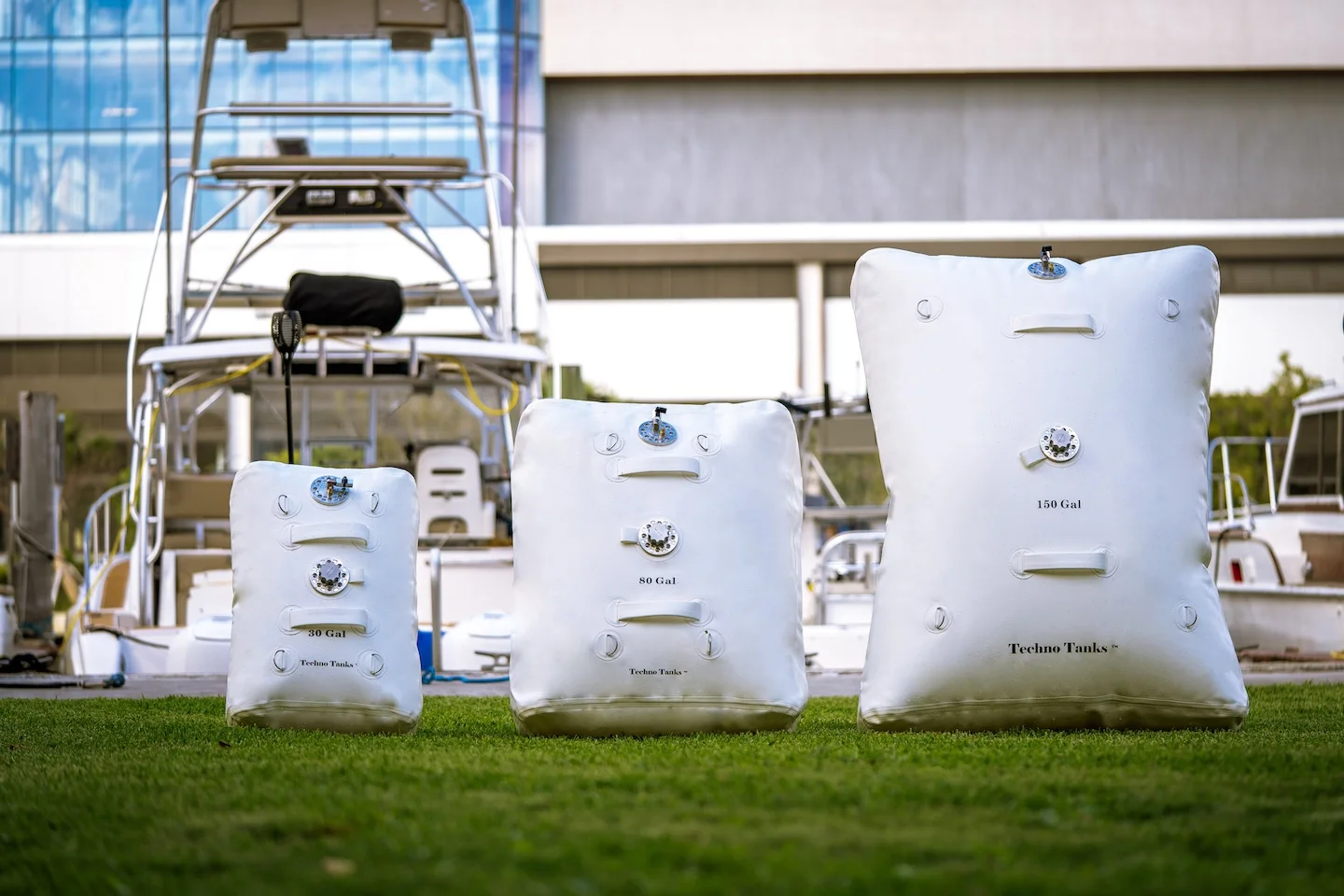
Whether deploying rigid containerized tanks or flexible auxiliary systems, operators must closely analyze technical specifications, payload capacities, and regulatory frameworks to ensure safe operations.
Standard Containerized and Stacked Designs
For intermodal transport and temporary deck storage, containerized bulk tanks provide a highly standardized, secure solution. A common size used in maritime logistics is the 25ft bulk liquid storage tank.
These units are engineered to fit standard shipping footprints while maximizing volume. They feature high-strength steel frames, integrated manifolds, and insulation to handle diverse liquid payloads. For a complete look at these standardized container designs, review 25ft Bulk Liquid Storage Tank Containers | SCF and compare them with other systems in The Ultimate List of Expert Fuel Storage Systems.
Flexible and Collapsible Auxiliary Storage Sizing
For operators of commercial vessels, workboats, and offshore supply ships, rigid containerized tanks are often too heavy or bulky. Flexible fuel bladders made from advanced Thermoplastic Polyurethane (TPU) offer a highly efficient, space-saving alternative.
These bladders can be custom-sized to match the exact deck dimensions or hold configurations of a vessel. Available in capacities ranging from 30 to 3,000 gallons, they allow operators to carry extra fuel for extended voyages and simply roll them up when empty, freeing up valuable deck space.
To determine the ideal capacity and dimensions for your vessel, refer to Popular Marine Fuel Bladder Sizes and Their Uses and check out smaller footprint options in The Best 30 Gallon Marine Tanks for Fresh Water and Fuel.
For a complete breakdown of material specifications, operating guidelines, and sizing logic, consult these resources:
- The Ultimate Guide to 30 Gallon TPU Tanks and Bladders
- Beginners Guide to Fuel Bladders for Boats
- Marine Bladder Operating Instruction Tips
Safety, Environmental, and Regulatory Compliance
Operating bulk marine tanks of any size requires strict compliance with environmental laws and safety standards. Key regulatory focus areas include:
- Vapor Recovery: During loading and unloading, volatile organic compounds (VOCs) must be captured to protect air quality. For current federal guidelines on marine loading operations, see the National Emission Standards for Marine Tank Vessel Loading ….
- Spill Prevention and Bulk Storage: Petroleum bulk storage is heavily regulated to prevent leaks. For regional compliance frameworks governing bulk storage, consult the [PDF] 6 NYCRR PART 613 PETROLEUM BULK STORAGE guidelines.
- Logistical Innovations: Military and commercial entities are actively exploring “tank-free” concepts to reduce heavy footprint dependencies. For insights into these operational shift experiments, read the Early Experiments are Proving Out Tank-Free Marine Corps Concept article.
Frequently Asked Questions about Bulk Marine Tanks
What is the capacity of a standard 25ft bulk liquid storage tank?
A standard 25ft bulk liquid storage tank container typically has a capacity of 37,000 liters (37 m³). It features a tare weight of approximately 6,200 kg and can support a maximum payload of 63,000 kg, resulting in a Maximum Gross Weight (MGW) of 69,200 kg. These tanks are highly valued in industrial maritime logistics due to their double-stackable design and standard footprint.
How do flexible fuel bladders compare to rigid bulk marine tanks?
Flexible fuel bladders provide a temporary, space-saving alternative to rigid tanks. Unlike rigid steel or plastic tanks, which occupy a fixed volume regardless of whether they are full or empty, a flexible bladder collapses as fuel is consumed. This eliminates the “free-surface effect” (sloshing) and allows the bladder to be rolled up and stored when not in use. To compare rigid plastic options with flexible systems, check out Why a 30 Gallon Plastic Tank is Your Storage MVP.
What materials are used for large-scale alternative fuel marine tanks?
Large-scale tanks designed for alternative fuels like LNG or liquid ammonia typically utilize high-performance NV-304L stainless steel or specialized nickel alloys. These materials provide outstanding low-temperature impact toughness, corrosion resistance, and structural integrity under cryogenic or high-pressure conditions.
Conclusion
As global shipping enters a transformative era — with BIMCO forecasting a massive 256% surge in new product tanker deliveries to support the global energy transition — selecting the right fuel storage and transport systems has never been more critical.
For commercial operators, marine transport coordinators, and offshore decision-makers, rigid bulk tanks are not always the most practical or cost-effective option. Flexible fuel bladders and collapsible fuel tanks from Techno Tanks offer a highly durable, adaptable, and space-saving solution to extend vessel range, carry backup fuel, or manage temporary liquid transfers safely.
Because every commercial operation has unique requirements, Techno Tanks fuel bladder pricing depends on size, fuel type, configuration, application, custom requirements, and overall project scope. For accurate pricing tailored to your specific maritime application, Request a Quote for Custom Marine Fuel Bladders today.

